
 E-Paper



Ben Shelton cracked the Carlos Alcaraz code: How the American turned 0-3 into his biggest win
It was Ben Shelton's first win over a top-three opponent and came after four hours and 28 minutes of tennis, with the match ending at a historic 3:30 a.m.

 Prefer HTon Google


On one of the longest-ever days at the US Open, with all four quarter-final matches going the distance, Ben Shelton vs Carlos Alcaraz had the makings of the match of the tournament, perhaps even the match of the year. The intrigue began from the moment this quarter-final was confirmed on Sunday.
One of the most significant numbers behind Alcaraz’s US Open run last year was his serve, which he had revamped at the start of the season, unintentionally replicating Novak Djokovic’s motion. This time, perhaps because of the wrist injury that kept him out for more than four months earlier this season, his serve numbers had dipped. The speed had dropped, too.
A leaner Alcaraz had therefore leaned more heavily on another weapon in his run to the quarter-finals: his return. That made the match-up against Shelton especially tantalising. The American had been serving impressively throughout the tournament, regularly unleashing 150 mph thunderbolts, and was also confident of matching Alcaraz’s raw physicality.
Deep Dive

Shelton had never beaten Alcaraz, losing all three of their previous meetings, including a four-set defeat at last year’s French Open. So when the world No. 8 lost the opening set in a gruelling tie-break after both men had secured late breaks, the pattern appeared set to continue.
Alcaraz was 25-0 at the US Open when he had won the opening set and was also carrying an 18-match Grand Slam winning streak.
But Shelton had other plans.
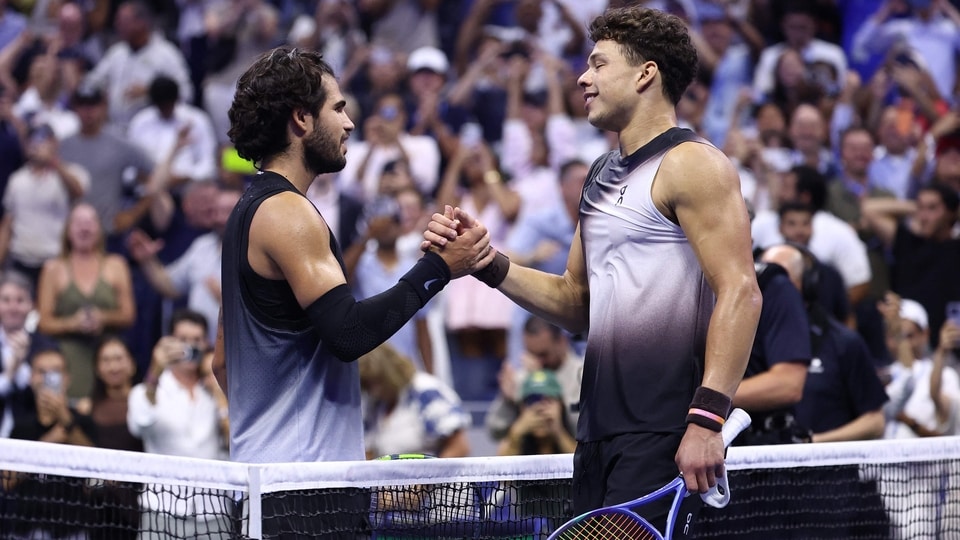
Combining devastating serving, variation and athleticism with a solid defensive game and remarkable consistency across five sets, the 23-year-old not only fought back but also held off Alcaraz’s late surge to secure the biggest victory of his career.
It was his first win over a top-three opponent and came after four hours and 28 minutes of tennis, with the match ending at a historic 3:30 a.m.
The turning point
After a focused start, Alcaraz’s intensity flatlined. His first-serve points won dropped from 69 per cent in the opening set to 48 per cent in the second. His legs began to feel heavy; he struggled to keep the ball in play and found it increasingly difficult to sustain longer exchanges.
Shelton pounced.
He did exactly what he had said he planned to do: dictate points from the return, make Alcaraz play through extended exchanges and prevent him from taking control with his forehand.
The Spaniard made 17 unforced errors in the second set and was broken three times. A run of nine consecutive games won by Shelton sent the American into a two-sets-to-one lead.
“I thought I was smart with how I went about my return games,” Shelton said. “I made him play a lot... to be able to hang in there in the rallies, have a game plan from the ground and be able to execute that game plan.”
Alcaraz’s fightback
The seven-time Grand Slam champion was not going quietly into the night. He raised his level in the fourth set, drawing on his championship pedigree, and broke Shelton twice.
His serve numbers returned to 75 per cent on first-serve points won, he did not lose a point at the net, won half of the receiving points available to him (9/17) and cut his unforced errors to just four.
But it came at a cost.
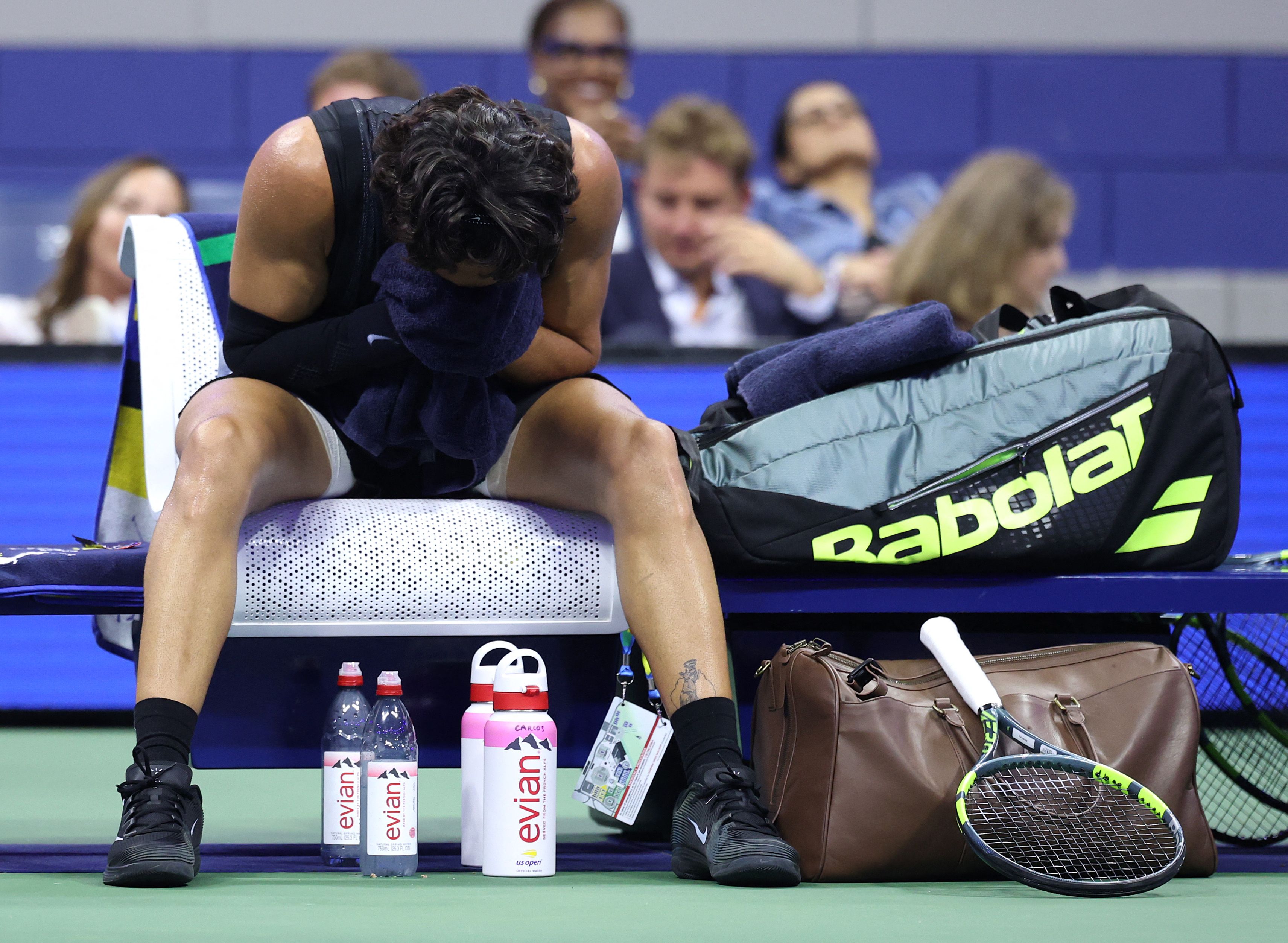
At the changeover, Alcaraz was seen vomiting into a towel multiple times, a physical scare strikingly similar to Novak Djokovic’s during his shock first-round exit. It underlined just how much the late finish and long lay-off were taking out of the Spaniard.
The final push
Neither player blinked on serve in the decider, sending the match into a deciding tie-break.
Shelton looked rattled in patches, allowing Alcaraz to claw his way back into the contest and take a slender 5-3 lead. But when the biggest moments arrived, the American did not flinch.
He closed out the biggest win of his career with a 146 mph ace on match point at 3:33 a.m., the latest finish in US Open history.
“He is a beast,” Alcaraz said afterwards. “Shelton is an unbelievable player, powerful. He just manages to play really, really well in every situation. So credit to him.”
The biggest takeaway perhaps for Shelton was that he held his nerves throughout and did not flinch in the face of a final pushback from Alcaraz, who had raised his level back.
The numbers behind the upset
Alcaraz actually out-hit Shelton on winners, 38 to 34. But Shelton was significantly cleaner, committing only 35 unforced errors to Alcaraz’s 53.
He also edged the return battle, winning 38 per cent of receiving points compared with Alcaraz’s 35 per cent, and won more second-serve points, 57 per cent to 51 per cent.
Shelton finished with 169 total points won to Alcaraz’s 164. The margin was tiny, but it was enough to separate the American from the reigning champion.
Shelton is now only the second man to beat Alcaraz in a five-set Grand Slam match, joining Matteo Berrettini, who defeated him at the 2022 Australian Open.
For a player who came into the match 0-3 against the Spaniard, it was proof that a fourth meeting can look nothing like the first three.


