
 E-Paper



Through wins and losses, Murray keeps digging
Few top players go as far down as the Challenger circuit in a bid to make a comeback. Murray did exactly that. He just wants to play on

 Prefer HTon Google


As Andy Murray’s serve was broken in what turned out to be the penultimate game of his straight-sets second round defeat to qualifier Taro Daniel on Thursday, he flung his racquet to the court, yelling towards his box. Few could argue, though, that the sight of the 34-year-old fighting to keep his emotions in check inside a tennis court is still better than him fighting back tears away from it.
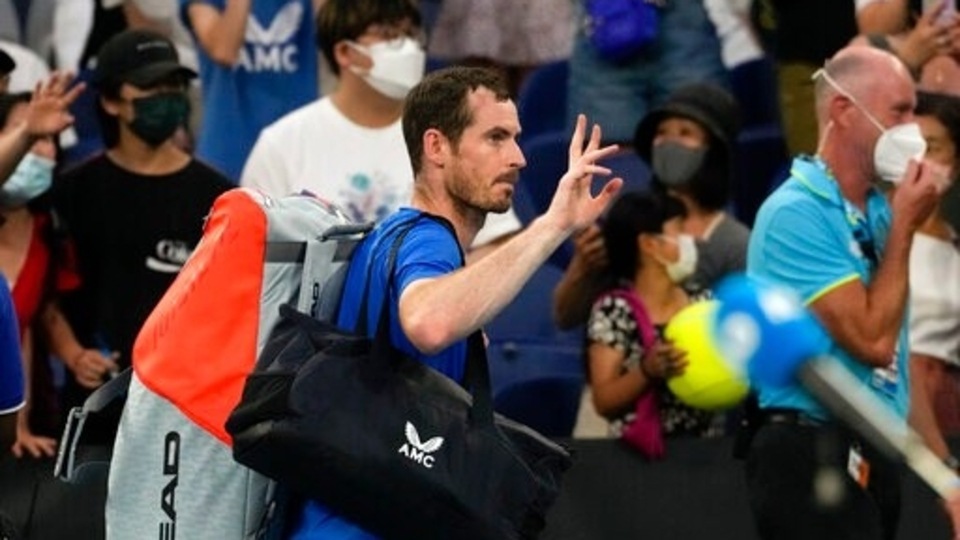
The Andy Murray resurgence tale is as much about wins and losses (he’s had five victories in eight matches this year so far) as it is about a three-time Grand Slam champion digging deep and right at the bottom to find his way up again in his career’s last leg.
The Australian Open, coincidentally, has been a key pit stop in that three-year period.
Cast your mind back to the 2019 Australian Open. To that emotional press conference before his opening match where Murray announced a possible retirement due to his physical struggles. Three days later, post his five-set defeat to Roberto Bautista Agut, it indeed looked like one.
“If it was my last match, it was an amazing way to end,” Murray said on court. Even a video tribute of his fellow pros congratulating him on an amazing career was played out on screen.
Except, it wasn’t the end. Fast forward to the 2021 Australian Open. Set for the postponed season-opening Slam, Murray was forced to withdraw due to the quarantine hassles after testing Covid positive before flying to Melbourne. He dashed off to Biella, which was hosting a Challenger event in the same week that the Grand Slam began.
Here was a former world No. 1, with two Wimbledon, one US Open and 46 ATP singles titles, with multiple hip surgeries that included a metal joint being fitted for the latest resurfacing procedure in 2019, playing on the Challenger Tour at 33.
While his contemporaries were battling for a Grand Slam trophy among the elite in Australia’s most prestigious tournament, Murray was toiling in professional tennis’ second-tier event in the north of Italy, making the final while competing with players ranked above 150.
Later in the season, days after producing a spectacular show with the third-ranked Stefanos Tsitsipas in his five-set opening round defeat at the US Open, Murray again dropped back down to the Challenger circuit, accepting a wild card to play in Rennes. It wasn’t new for Murray to take the Challenger route in his quest to progress to the top levels of the sport after hip issues threatened to bring everything to a halt. In August 2019, a few months after his hip surgery, Murray played a Challenger event for the first time in 14 years in Mallorca, the hometown of his rival Rafael Nadal, who—playing the US Open at the same time—offered him his boat on a day off there.
But Murray was more interested in playing tennis. As much as possible, no matter the level. It was the only way, Murray knew, he could get more game time, a few wins to boost his rankings that had fallen below the top-100 and, most importantly, find his rhythm while playing a string of matches. “It’s just to get matches. I want to keep playing, competing and get my body used to playing two, three, four matches in a week again,” Murray said before the Rennes Challenger.
It’s a path not too many top players have chosen to walk down in the past—Andre Agassi perhaps is the most notable exception—in the hope of reviving their careers. Certainly not Murray’s Grand Slam champion contemporaries. Novak Djokovic, the same age as Murray, last played a Challenger in 2005.
“It's really incredible,” Somdev Devvarman, India’s former top-ranked pro who plied regularly on the Challenger circuit, told Australian Open’s official broadcasters Sony a few days ago. “This time last year, he (Murray) was out there playing a Challenger. A lot of former pros questioned it… And what did Andy Murray do? He got back to the drawing board. It's incredible to see him playing at a high level again. It’s not top-10 tennis, but high enough.”
Those questions by former players revolved around Murray getting a wild card into a Challenger instead of a young upcoming player, or the need for him to continue playing in the first place after everything he had been through physically and emotionally. “There’s a lot of people telling me to stop playing tennis, that it’s sad, and they don’t want to see me playing like this, and he can’t stay fit, and he can’t do this, why is he still doing this,” Murray told The Guardian last June. “And I say, ‘Don’t be sad for me. I like doing this, and I’m choosing to do it’.”
It's been an up-and-down ride for Murray since his return in August 2019: one too many first-round defeats; the 2019 ATP Antwerp title victory, the disrupted 2020 season where he beat Alexander Zverev but lost in the US Open second round; a typically inconsistent 15-14 win-loss record in 2021. Murray’s optimistic start to this season that saw a final run in Sydney last week has been followed by a 6-4, 6-4, 6-4 defeat in the second round in Melbourne to the inspired world No 120 Daniel, the lowest-ranked player to beat him in a Slam.
The latest downward curve to the upswing has left Murray “frustrated”, and with a challenge to step it up at the big stage. “This is a really important year for me for a number of reasons, and I want to perform well in the big events,” Murray, who also changed his coach at the end of last year, said on Thursday.
Trust Murray to keep at it for a while longer.


