
 E-Paper



Atif Syed: “The more I explored Aligarh’s past, the richer the story became”
On his biography of Aligarh that traces its history from the Dor Rajputs and Qutbuddin Aibak’s conquest to the Mughal period, the aftermath of 1857 and the AMU

 Prefer HTon Google


You’ve spent over two decades working in the technology sector in the US. How did you become interested in the history of Aligarh?
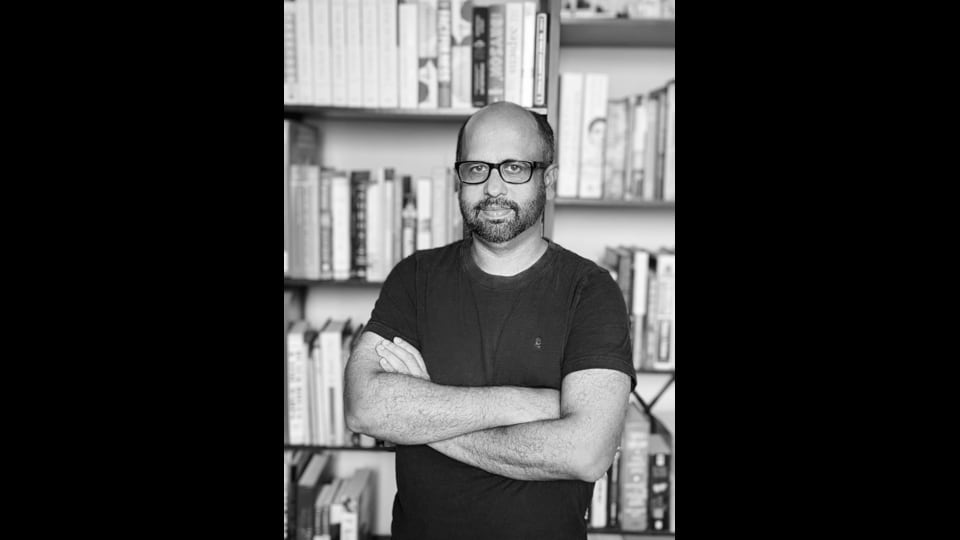
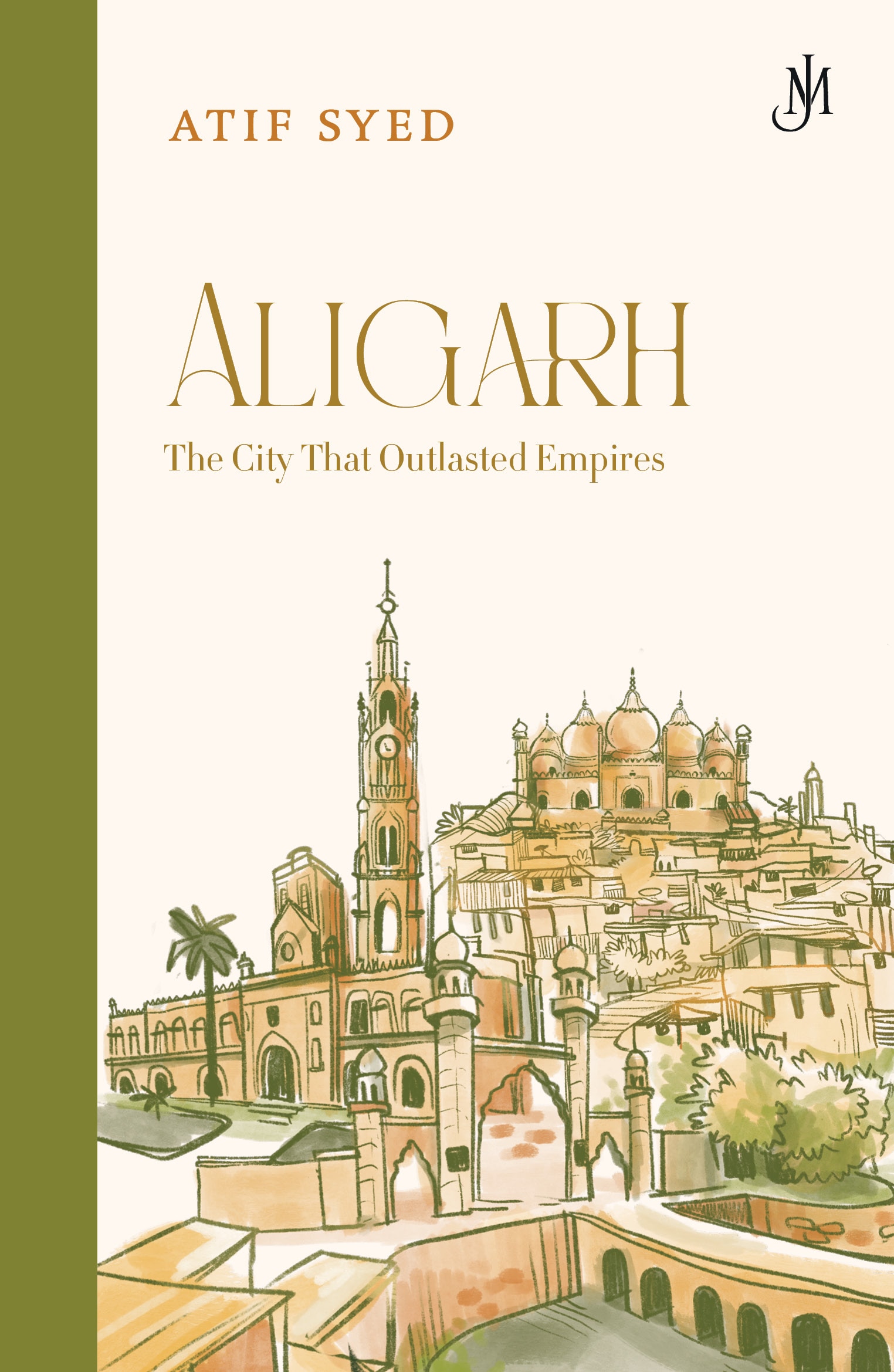
History has always fascinated me. Growing up in Aligarh, I always found myself drawn to its historical sites such as Aligarh Fort and the older parts of the town. What happened before the Aligarh Movement and the founding of Aligarh Muslim University? What was the city like during the Mughal period, or when it was under the Marathas? Where did the name Russell Ganj come from? These questions always consumed me. However, when I began searching for books on Aligarh, I found works centered almost entirely on more recent and popular topics, such as Sir Syed Ahmad Khan and the Aligarh Movement. While significant, these accounts left centuries of earlier history unexplored, and Aligarh’s story felt incomplete to me. Finding no such book, I started taking notes, with no serious intention of writing one myself. But the more I explored its past, the richer and more layered the story became. As I gathered more information, I came across figures like the Aligarh-born George Puech, who became an Urdu poet in the nineteenth century, and events such as the lavish feast thrown for Babur in Koil (Aligarh’s old name). There were tales of French families who had lived in different parts of the town and how they survived during the Indian uprising of 1857, and of the Mughal governor Sabit Khan, who reshaped the town’s urban landscape. Over time, I realised my path was clear: Aligarh’s story needed to be told and that is when I decided to pursue writing a book. I believe my technical background helped me bring greater “engineering rigour” to the research for this book.
You argue that the real early history of Aligarh has remained obscure in the absence of a definitive historical record. Why do you think that is the case?
There is hardly any documented history of Aligarh before Qutbuddin Aibak’s conquest. I wanted to know more about the Dor Rajputs – their lifestyle, and their time living in the Koil fortress (once located in the Upper Kot area of Aligarh city, not to be confused with Aligarh Fort). I was also unable to find enough sources on the Buddhists and Jains of this early period, likely due to a lack of surviving chronicles from that era. What little detail exists, such as the Manpur copperplate on the Dor Rajputs, has to be mined for every scrap of information, with the rest pieced together from archaeological evidence. Still, I have tried my best to build a coherent story of the city from whatever information I could find, and to place it in sequence with the later events that follow.
What kinds of new archival material were you able to access?
I should qualify the word “new” in the question; while much of this archival material was new to me, it is certainly not new to history. My documented sources span centuries and encompass a broad range of material, including British gazetteers, history journals, autobiographies like the Baburnama and Tuzuk-i-Jahangiri, and Persian-to-English translations of texts such as Hasan Nizami’s Taj-ul Ma’asir. Other sources include a 1953 paper by Abdul Halim in the Journal of Indian History detailing Aligarh’s French families, as well as a PhD thesis written about the city by Howard Hirt over 70 years ago – a valuable work that had previously received very little attention.
Additionally, I contacted a photographer, and together we captured over 1,000 images for the project. I personally visited and photographed several historic sites as well. While page limits meant we could only include a select few, many of the images featured in this book are appearing in print for the very first time.
You write that Aligarh’s past, going back to Koil under the Dor Rajputs, is far richer and more layered than conventional accounts allow. Were there particular documents, sites, or other sources that helped you reconstruct this neglected history and offer a new understanding of the city?
As I have mentioned, conventional accounts have mostly been limited to the Aligarh Movement or Aligarh Muslim University. Little work has been done prior to that, except for a few exceptions such as Jamal Muhammad Siddiqi’s Aligarh District: A Historical Survey. He has done an incredible job, and it’s unfortunate that this book is hardly talked about. I have referred to his work in several places in my own book. There are also many journals and documents that have been very valuable, such as those that discuss the Siege of Kamona and Ganaura in 1807 and its aftermath, especially concerning the Lalkhani family, or those that explore the French families of Aligarh and how they became part of the local social fabric for over a century.
What were the main challenges you faced while researching and accessing archives, local records, and sites related to the city’s past?
The biggest challenge was that material related to Aligarh is scattered across books, archives, and journals. I not only had to find out from multiple sources what was happening in Koil (the former name of Aligarh), but also had to put those events in chronological order. On top of that, I had to ensure the content came together in a coherent manner, so it read as a story rather than a list of facts. For example, events that happened in the Aligarh district during the Delhi Sultanate era are scattered across multiple documents and archival sources. I had to piece together different fragments of information, confirm their timeline, and weave them into the narrative so they didn’t feel out of place.
Any sources, collections, or locations you wished you could have accessed but were unable to, and how did those gaps shape the final narrative?
There are a few examples of this. For instance, I was unable to secure an English translation of Akhbar-ul Jamal, the eighteenth-century chronicle by Raje Muhammad Kolvi. Because it was written in classical Persian, I reached out to translators in Iran as well as some in the Department of Persian at Aligarh Muslim University. Despite my best efforts, a translation never materialized, forcing me to rely on secondary sources for this. Additionally, many physical locations mentioned in the book are no longer traceable, such as the Ilah Baksh Tomb, a well built by Sabit Khan, and another one constructed during Aurangzeb’s reign. I am not sure if they were destroyed or just hidden among the bylanes of the densely populated parts of the old city that I could never reach.
Aligarh Muslim University’s overwhelming presence has come to define the city in the popular imagination. How does that dominance overshadow other important histories of Aligarh?
There has been so much focus on the history of Aligarh Muslim University, Sir Syed Ahmad Khan, and the Aligarh Movement that we have mostly ignored the city’s past before that era. Finding little to no material on Aligarh’s earlier history was one of the reasons that motivated me to take on the journey of writing this book.
I would add that we do have to recognize that Aligarh Muslim University and the Aligarh Movement played a pivotal role in the city’s history. However, my argument is that to better understand the Aligarh Movement and the University, we have to look more broadly at the city’s past – to understand the circumstances that led Sir Syed Ahmad Khan to choose Aligarh as the place to start a new institution. To tell the complete story of Aligarh, we have to go much further back, to the origins of the city: the Dor Rajputs, the Delhi Sultanate, the Mughals, the Marathas, the Jats, the French mercenaries, and the British.
Is there an aspect of Aligarh’s history that your book only touched briefly, something previously unwritten or under-researched, that you hope other scholars will now take up and explore in greater depth?
I wish more material were available from the Mughal era. The reigns of Jahangir, Shah Jahan, and Aurangzeb spanned just over a century, yet historical sources from this period offer surprisingly little about Koil. Given the transformational role Sabit Khan played in the town’s history, I hope future scholars will dedicate more research to his life than has been done thus far.
Majid Maqbool is an independent journalist. He lives in Kashmir.


