
 E-Paper



Apple builds on green commitments with recycled materials rising to 30% across products
Apple’s goal to achieve 100% carbon neutrality by 2030 appears to be on track, with its latest data pointing to big progress in its sustainability efforts.

 Prefer HTon Google


Apple has long spoken about its goal of becoming 100% carbon neutral across its supply chain and products by 2030. Now, as part of its latest progress update, the company says that 30% of the materials used in all products shipped in 2025 came from recycled sources. Apple credits this to closer collaboration with its global supply chain, alongside deeper changes in how its products are designed and built.

Quick glance
- 30% of materials in Apple products (2025) came from recycled sources.
- 100% recycled cobalt used in all Apple batteries.
- 100% recycled rare earth elements used in all magnets.
- MacBook Neo is the most carbon-neutral device yet.
- Over 60% drop in greenhouse gas emissions since 2015.
- 100% renewable energy across Apple’s global facilities.
- 15,000+ metric tonnes of plastic avoided in the last five years.
- 55% of corporate water use replenished, 17 billion gallons saved by suppliers.
How Apple is tackling sustainability, at large
Apple says it now uses 100% recycled cobalt across all its batteries and 100% recycled rare earth elements in magnets across product lines. These are critical materials in modern electronics, and shifting them to recycled sources marks a significant change in how devices are manufactured.
Packaging is another area where Apple has made visible progress. The company says it has now fully moved to fibre-based packaging, eliminating plastics entirely. This means boxes are not just made from recycled materials, but are also easier to recycle after use. Apple even points out design tweaks, like larger product boxes that can collapse into smaller pieces, making them easier to dispose of responsibly.
The environmental gains extend beyond materials. Apple claims its greenhouse gas emissions in 2025 are down more than 60% compared to 2015 levels, despite continued business growth. Over the past five years, it has also avoided more than 15,000 metric tonnes of plastic use, which it equates to roughly 500 million plastic water bottles.
On the energy front, Apple’s all its global facilities now run on 100% renewable energy. Across its supply chain, it has procured over 20 gigawatts of renewable energy. Water conservation is also part of the effort, with the company replenishing 55% of its corporate water use and suppliers collectively saving 17 billion gallons.
MacBook Neo: Apple’s lowest-carbon MacBook yet
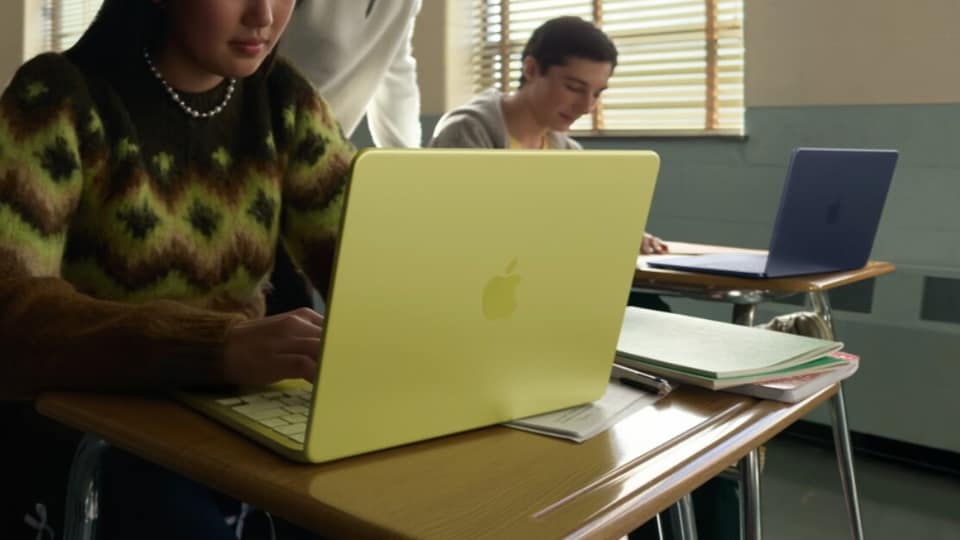
A good example of these changes coming together is the new MacBook Neo. Apple calls it its lowest-carbon MacBook yet, with 60% recycled content overall, the highest for any Apple device so far. This includes 100% recycled cobalt in the battery and 100% recycled rare earth materials in its magnets. Even manufacturing processes are evolving, with a new anodisation technique that allows for up to 70% water reuse. Apple says this method will expand to more products going forward, which seems promising.
Dealing with waste and recycling
When it comes to waste, Apple says it is steadily moving towards a “zero waste” goal. In 2025, it achieved a 75% waste diversion rate through recycling, composting, and reduction efforts. Its Fifth Avenue store in New York became its first location to earn a true zero-waste certification, meaning it diverts over 90% of its waste away from landfills.
Across its supply chain, Apple says it diverted around 6,00,000 metric tonnes of waste from landfills in 2025 alone, with over 400 supplier facilities participating in its zero-waste programme.
Recycling also plays a key role at the end of a product’s life. When users trade in or recycle their devices, Apple works to recover as many usable materials as possible. To improve this process, the company recently introduced “Cora”, an electronics recycling line in California that uses precision shredding and advanced sensors to improve material recovery rates.
Alongside this, Apple is developing “A.R.I.S”, a machine learning-powered detection system that helps recyclers identify and sort electronic waste more efficiently. Interestingly, this software runs on Apple’s Mac mini and is already being used by recycling partners to make the process more scalable across the industry.


