
 E-Paper



How will the world look in 2070? 7 ChatGPT prompts to imagine the future
Curious about 2070? ChatGPT imagines mind-blowing visions of the future.

 Prefer HTon Google


What will the world look like in 2070? While no one can say with certainty what the future holds, the various AI tools can offer an imaginative glimpse of how cities, homes, transport, workplaces and everyday life could evolve.

I asked ChatGPT to share prompts imagining how the world may look after four decades. Here are the results:
Also Read: 1980s AI photo trend: Step-by-step guide to create your own retro portraits using ChatGPT
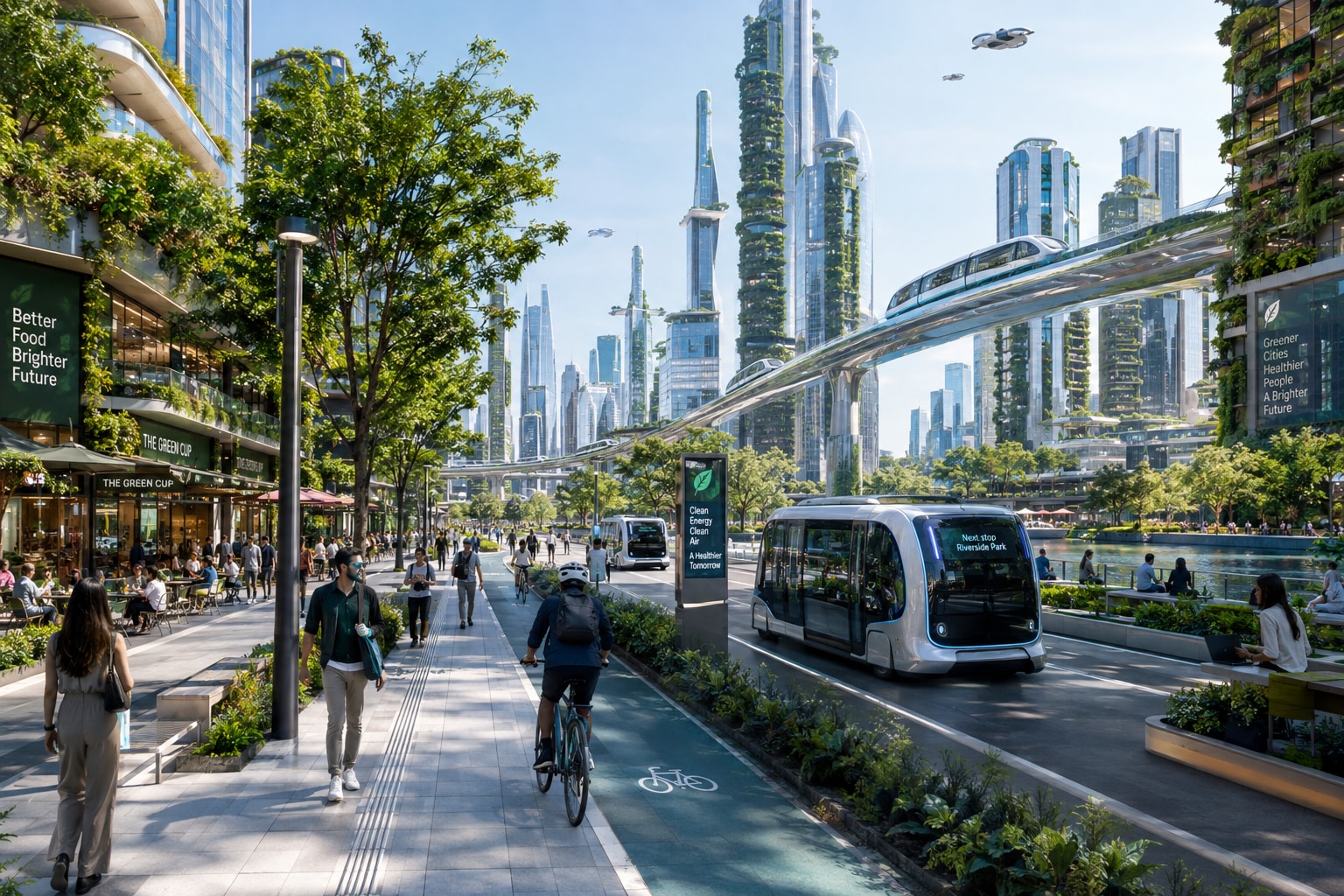
#1: Create a photorealistic vision of a major global city in 2070, with sustainable skyscrapers, vertical gardens, clean public spaces, autonomous transportation, pedestrian-friendly streets and advanced but believable technology. Show a diverse population going about everyday life. Avoid exaggerated sci-fi elements and make the scene feel like a plausible future city.
#2: Show the interior of a modern family home in 2070, featuring adaptive furniture, energy-efficient technology, smart windows, indoor greenery, robotic household assistance and discreet AI-powered devices. Make the home warm, comfortable and lived-in rather than overly futuristic, with a realistic family using the space.
#3: Imagine a workplace in 2070 where humans work alongside advanced AI systems and robots. Show employees collaborating in a bright, flexible office with holographic-style interfaces, immersive digital workspaces and automated systems, while keeping human interaction at the centre. Make the technology believable and understated.
#4: Create a realistic classroom in 2070 where students learn through a combination of physical interaction, immersive digital technology and AI-assisted teaching. Show diverse students collaborating with one another and interacting with a teacher, with futuristic learning tools integrated naturally into the classroom.
#5: Create a realistic international airport in 2070 with automated check-in, biometric-free futuristic visual interfaces, autonomous baggage systems, electric ground transportation and energy-efficient architecture. Show travellers moving through the terminal naturally, with minimal queues and technology integrated into the environment.
Also Read: 5 viral ChatGPT 1980s prompts: Turn modern photos into pre-smartphone era snaps
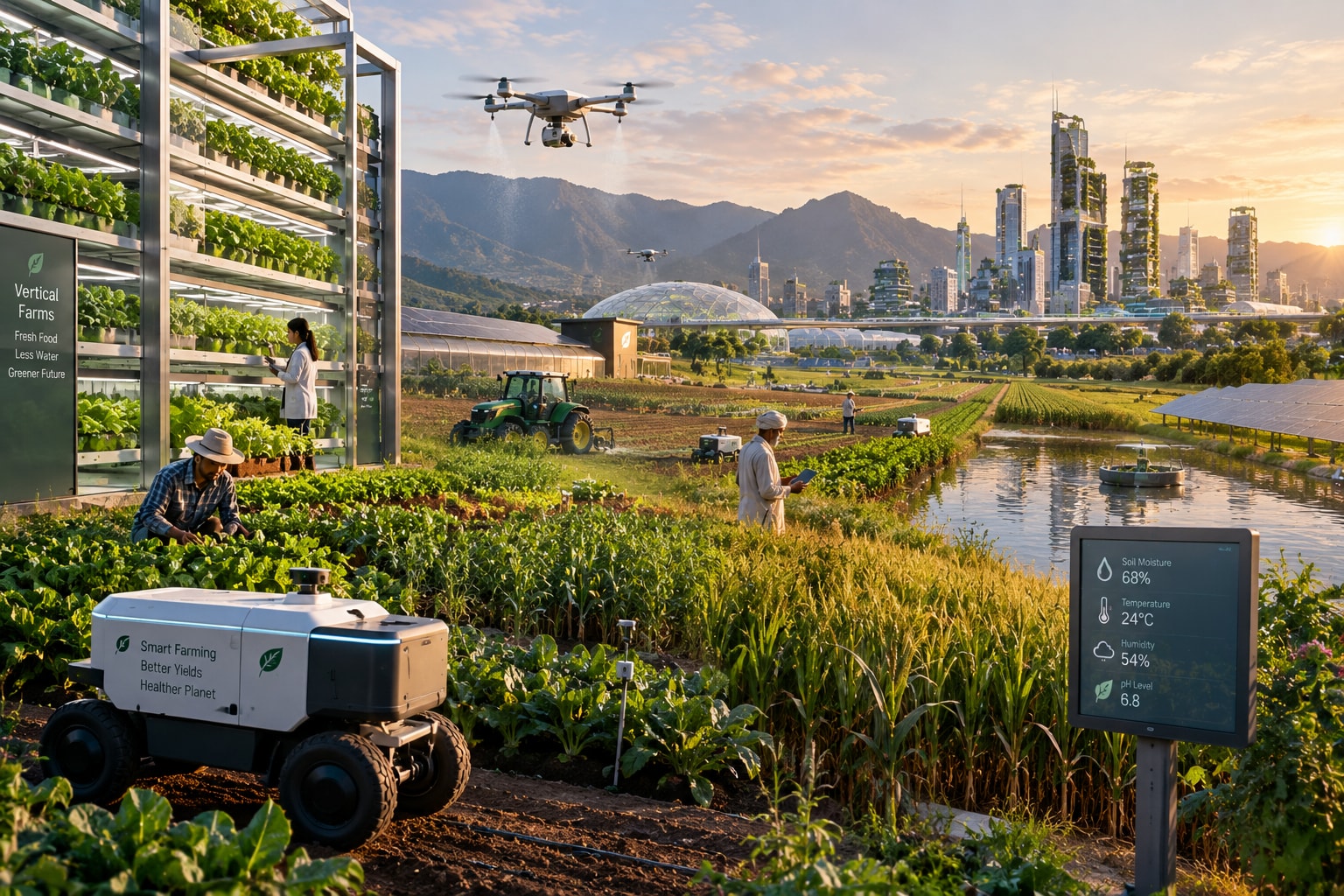
#6: Create a photorealistic agricultural landscape in 2070 featuring vertical farms, automated agricultural machines, solar-powered infrastructure, controlled-environment crops and traditional farmland existing alongside new farming technologies. Show farmers and technology working together.
#7: Show an ordinary residential neighbourhood in 2070 rather than a futuristic downtown. Include family homes, apartment buildings, parks, autonomous electric vehicles, delivery robots, community gardens and people spending time outdoors. Make it feel peaceful, lived-in and believable.
Tips to create realistic-looking AI images of 2070:
- Keep futuristic technology subtle rather than filling every scene with holograms, neon lights and flying vehicles
- Ask for natural human features if people are included, such as realistic skin texture, natural expressions and anatomically correct hands
- Avoid vague words such as “ultra-futuristic” if you want realism; use specific descriptions of what has changed instead
- Generate multiple versions and refine the prompt based on the first result, rather than trying to make the first prompt extremely long
- AI can create distorted or meaningless lettering, so avoid relying on them for readable information. Check AI-generated text, signs and logos carefully
Remember that these are speculative images. Avoid presenting an AI-generated scene as an actual prediction or factual representation of what 2070 will look like.


