E-Paper



Budget 2017: Arun Jaitley announces AIIMS in Jharkhand, Gujarat
Jaitley also announced the government’s target to bring down Infant Mortality Rate per 1,000 live births to 28 by 2019 from the current figure of 39.

 Prefer HTon Google


Finance minister Arun Jaitley announced on Wednesday two new All India Institute of Medical Sciences (AIIMS) were also announced in the states of Jharkhand and Gujarat.
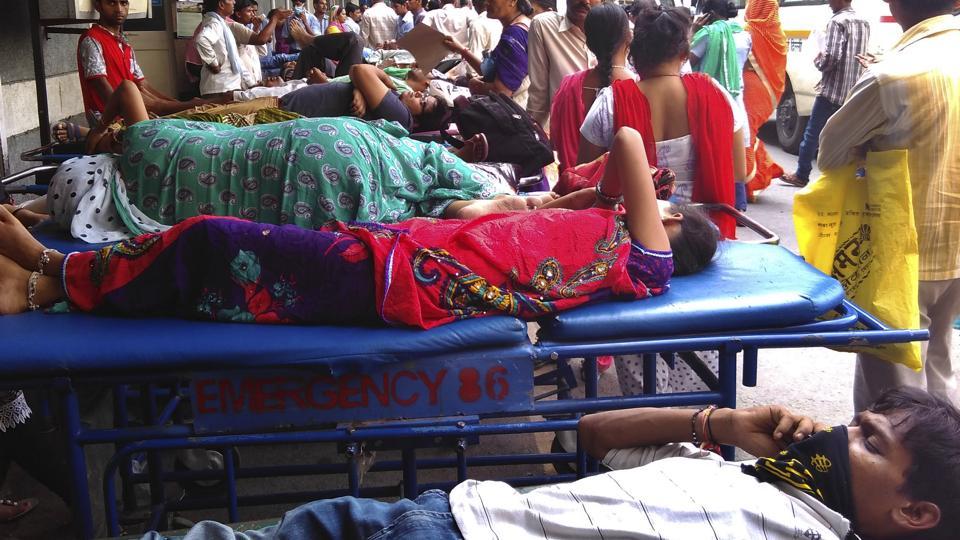
Medical education has found a prominent focus in the budget, with the increase in 5,000 post graduate medical seats per annum. Also, all big district hospitals, municipal corporation hospitals and ESI hospitals have been given powers to introduce super-speciality (DNB) courses.
India’s 1.5 lakh health sub centres will be transformed into health and wellness centres, which are expected to bring quality healthcare at the door step of poor and needy, especially in remote areas.
There is also mention of amending rules in Drugs and Cosmetics Act to ensure better use of generic drugs and new rules for medical device industry to regulate manufacturing, import and sale of medical devices in the country.
Jaitley also announced the government’s target to bring down Infant Mortality Rate per 1,000 live births to 28 by 2019 from the current figure of 39.
Another important health indicator—maternal mortality that is the annual number of female deaths per 100,000 live births will be brought down to 100 by 2020 from the current 167.
The government has drafted elaborate national action plans to eliminate certain diseases and bring down infant and maternal mortality rate in the country, showing its commitment to get as close to meeting Sustainable Development Goals (SDGs) as possible.
There is also an action plan in place to eliminate certain debilitating diseases in the coming year. The aim is to eliminate Tuberculosis (TB) by 2025, leprosy by 2018, measles by 2020, parasitic diseases Kala Azar or black fever and filariasis by 2018.