E-Paper



Bermuda Triangle mystery finally solved? Scientist reveals theory involving magnetic rocks
A scientist suggests that the Bermuda Triangle's mysteries may be linked to its volcanic past and magnetic rock formations.

 Prefer HTon Google


The Bermuda Triangle has long been associated with tales of missing ships, vanished aircraft and unexplained navigational anomalies. Over the years, theories ranging from alien activity to giant underwater whirlpools have attempted to explain the mystery surrounding the infamous stretch of ocean.
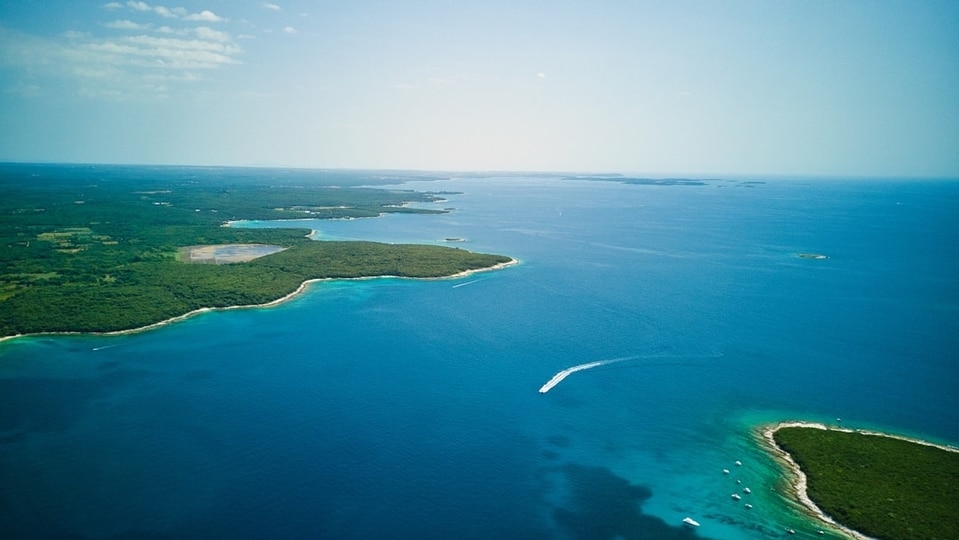
Now, a scientist featured in a recent documentary believes the answer may lie beneath the sea floor itself.
Speaking in the Channel 5 documentary Secrets of the Bermuda Triangle, mineral prospector Nick Hutchings suggested that the region's volcanic past and magnetic rock formations could help explain some of the strange incidents reported there.
Bermuda's volcanic origins
According to Hutchings, Bermuda is the remnant of an ancient underwater volcano that once rose above sea level before gradually eroding away.
“Bermuda's basically a sea mountain, it's an underwater volcano,” he said in the documentary. “Thirty million years ago, it was sticking up above sea level. It has now eroded away and we're left with the top of a volcano.”
The theory centers on rock samples collected from the area that contain magnetite, a naturally occurring mineral known for its powerful magnetic properties.
Also Read: New theory might just have solved mysteries of the Bermuda Triangle
“We have a few core samples, which have magnetite in them. It's the most magnetic naturally occurring material on Earth,” Hutchings explained.
Could magnetic rocks disrupt navigation?
To support his claim, Hutchings demonstrated an experiment using a compass and a magnetite-rich rock. As the compass moved over the sample, the needle reportedly spun and shifted direction, illustrating how strong magnetic materials can influence navigation instruments.
The scientist suggested that such magnetic interference may have posed challenges for sailors travelling through the region, particularly before the advent of modern navigation technology.
“You can just imagine the ancient mariners sailing past Bermuda. It would be very disconcerting,” he said.
Also Read: ‘Super Earth’: NASA discovers giant planet sending mysterious signal 154 light years away
Is the Bermuda Triangle mystery really solved?
The Bermuda Triangle, generally defined as the area between Bermuda, Florida and Puerto Rico, has been linked to numerous disappearances over the years. While many incidents have since been attributed to weather conditions, human error or mechanical failures, the region continues to capture public imagination.
Hutchings' theory offers a geological explanation for some of the unusual reports associated with the area. However, it is not considered a definitive scientific solution to every disappearance linked to the Bermuda Triangle.
Whether magnetic rocks beneath Bermuda are truly responsible remains open to debate, but the theory provides a fresh scientific angle.