
 E-Paper



Britain gives up EU presidency; May meets Merkel
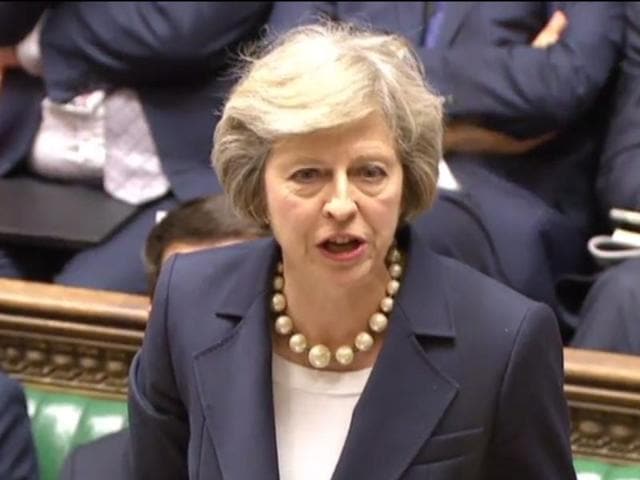
After a confident performance in her first Question Time in the House of Commons, Prime Minister Theresa May has left for Berlin to hold Brexit-related talks with German chancellor Angela Merkel and later with French President Francois Hollande.


After a confident performance in her first Question Time in the House of Commons, Prime Minister Theresa May left for Berlin on Wednesday to hold Brexit-related talks with German chancellor Angela Merkel and later with French President Francois Hollande.
The Prime Minister’s Office announced May had formally informed European Council President Donald Tusk that Britain will not take up the rotating EU presidency as scheduled from the second half of 2017.
A sharply attired May’s performance in the gladiatorial encounter in the House of Commons reminded many of former prime minister Margaret Thatcher, as she took on Labour leader Jeremy Corbyn and joked about the travails within the opposition party.
Britons voted to exit the EU in a referendum held on June 23, triggering a political crisis that cost former prime minister David Cameron his job.
Before the session, a Downing Street spokesperson said the decision not to take up the EU presidency was conveyed during a phone conversation between May and Tusk. May noted that until Britain left the European Union, it remained a full member of the 28-nation bloc.
“In this context, the Prime Minister suggested that the UK should relinquish the rotating presidency of the Council, currently scheduled for the second half of 2017, noting that we would be prioritising the negotiations to leave the European Union,” the spokesperson said.
May explained “we will need to carefully prepare for the negotiations to leave the EU before triggering Article 50” of the Lisbon Treaty, which covers the withdrawal of a state from the bloc. “Donald Tusk reassured the Prime Minister that he will help to make this process happen as smoothly as possible,” the spokesperson added.
May, often called the “British Merkel”, is expected to convey to Merkel in Berlin that Britain needs more time to decide when to trigger Article 50, beginning a two-year process to leave the EU.


