
 E-Paper



Brotherly neighbour and mediator: Pakistan steps up in diplomacy amid Trump's Iran crisis
Pakistan, which has close ties with the US and shares a border and neighbourly relations with Tehran, is appeared to be among the key mediators.

 Prefer HTon Google


A warm relationship with US President Donald Trump and strong ties with Tehran has brought Pakistan to the centre as one of the key mediators for the escalating war between the US, Israel and Iran.
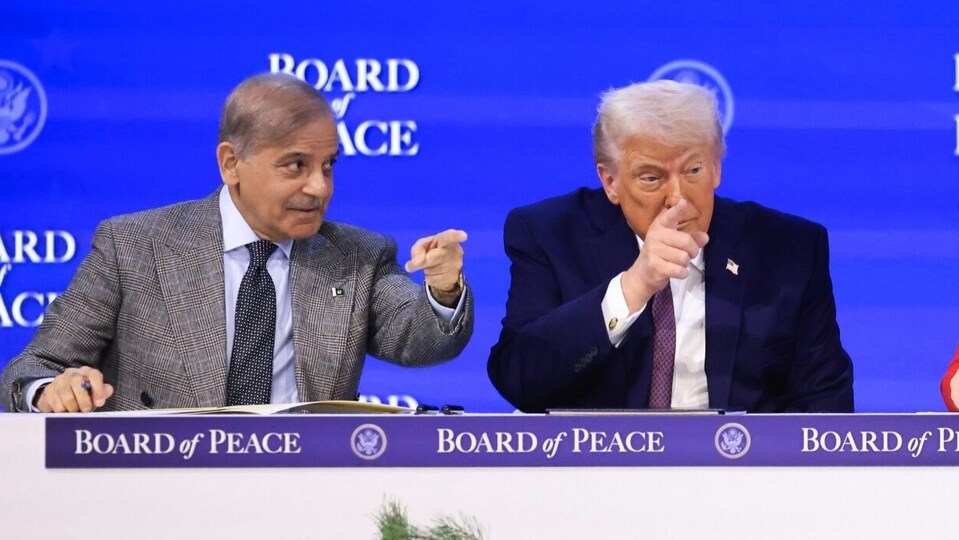
Amid several reports of Pakistan mediating in the conflict, Prime Minister Shehbaz Sharif took to X on Tuesday to confirm Islamabad's offer to the US and Iran.
“Pakistan welcomes and fully supports ongoing efforts to pursue dialogue to end the WAR in Middle East, in the interest of peace and stability in region and beyond. Subject to concurrence by the US and Iran, Pakistan stands ready and honoured to be the host to facilitate meaningful and conclusive talks for a comprehensive settlement of the ongoing conflict,” Sharif wrote on X.
Over the weekend, FT reported that Pakistani army chief Asim Munir spoke with Donald Trump over the conflict in West Asia. Meanwhile, Pakistan Prime Minister Shehbaz Sharif held talks with Iranian President Masoud Pezeshkian.
Citing two officials familiar with the matter, FT further added that Pakistan pitched Islamabad as a possible venue for talks between the Trump administration and Iran. Track latest news on the US Iran war
The sources further stated that the conversation between Sharif and Pezeshkian occurred around the same time as Trump's order to pause strikes on Iranian energy sites for the coming five days.
In his Truth Social post, Trump stated that he held productive talks with Iran over "ending hostilities," after which it was decided that the US will pause its attacks on energy sites for five days, further extending his 48-hour ultimatum to Iran over the Strait of Hormuz.
Iran, on the other hand, has denied holding any form of talks or discussions with the Trump administration, further accusing the US President of "backing down" due to Iranian warnings and of "manipulating the markets."
Trump would later tell reporters that he did not speak to Ayatollah Mojtaba Khamenei, but a "top respected leader" in Iran, which Israel assumed to be parliament speaker Ghalibaf. However, Ghalibaf also took to X to deny these talks and said no effort had been made from the US to negotiate.
However, Iran has stated that it received requests from friendly countries to negotiate with the US and Trump's administration.
How does Pakistan fit into this narrative?
With Iran stating it has received messages from friendly countries to come to the table to talk to the US, Pakistan, which has close ties and shares a border with Tehran, is appeared to be among the key mediators.
Along with Islamabad, Turkey and Egypt are also making mediation efforts, reported NBC News, citing sources familiar with the matter.
Oman and Qatar were the respective mediators between the US and Iran during their talks in Geneva and Muscat.
A diplomat from the Middle East further told NBC that there are "talks about talks" between the Trump administration and Tehran.
When asked about Pakistan's role in the mediation and Islamabad being a potential venue for the talks, the White House did not confirm nor deny, but stated that it will not reveal anything.
“These are sensitive diplomatic discussions and the U.S. will not negotiate through the press,” said press secretary Karoline Leavitt.
“This is a fluid situation, and speculation about meetings should not be deemed as final until they are formally announced by the White House," Leavitt added further.
Also Read | Uncertainty around Pakistan's role in mediating between US and Iran
Adding to Iran's statement on messages from friendly countries, a readout from the Pakistan foreign affairs ministry said that Sharif called for an urgent "de-escalation and return to dialogue and diplomacy amid the dangerous ongoing hostilities in the Gulf region."
Sharif also highlighted the need for all neighbours in the region to pursue dialogue and settle their differences to bring an end to the conflict.
“While sharing with the Iranian President the diplomatic outreach efforts of Pakistan’s leadership, the Prime Minister assured the Iranian leadership that Pakistan would continue to play a constructive role in facilitating peace in the region,” the statement from the ministry read.
"As a neighbouring brotherly country of Iran, the prime minister conveyed Pakistan’s solidarity with the brave Iranian people in the wake of the ongoing hostilities,” the statement added further.
Pakistan stepping up and a Saudi link
If Pakistan's suggestion for talks in Islamabad is taken up, it will only be executed after "blessings" from Saudi Arabia.
Pakistan signed a mutual defense pact with Saudi Arabia in September and in order to get Iran to the table in the Pakistan capital, it would need help from Riyadh.
In a report by Pakistani-daily Dawn, Vali Nasr, a prominent Washington-based scholar, has been cited as saying that any Pakistani diplomatic initiative is unlikely to occur in isolation from Saudi Arabia.
“Pakistan will only step up if it has Saudi backing — and prodding. Riyadh is likely very much in the picture,” he wrote in a post on X, while sharing the article published by the Financial Times on Pakistan's role in the Trump-Iran crisis.
Pakistan's rare position
Pakistan's position with Washington and Tehran puts it in a rare position in today's geopolitical climate. Furthermore, it is to be noted that despite have close ties with the US, Pakistan has not been subject to any Iranian drone or missile fire since February 28.
With this, Pakistan emerges as a neutral mediator, which could convey Iran's interests to the US and vice versa.


