
 E-Paper



Can Nvidia Thrive Without Jensen Huang?
The company’s prospects depends on whether its board is able to avoid a series of common pitfalls.


 Prefer HTon Google


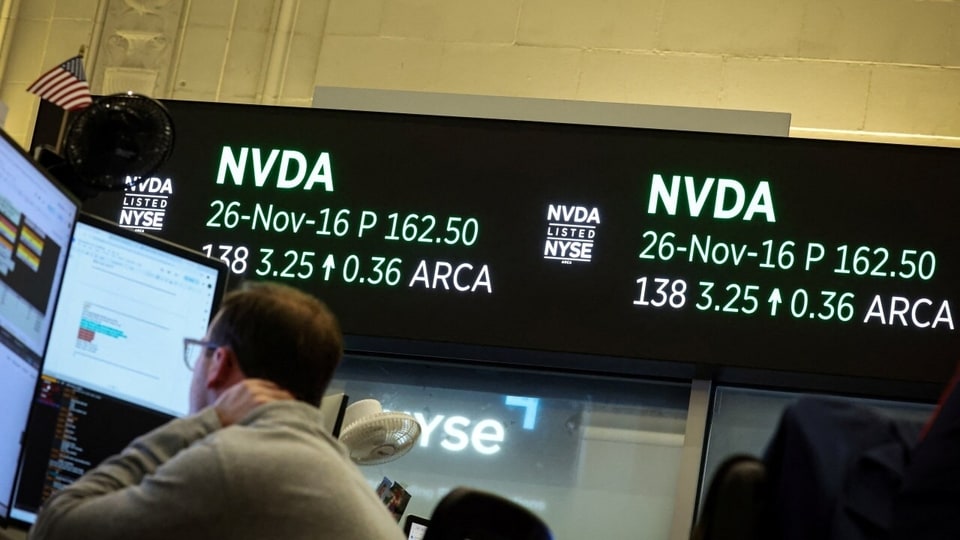
Nvidia shares plunged when Jensen Huang resigned as CEO and board member on Nov. 12, falling as much as 14% before closing down 4.3%. Alongside his departure, the board named CFO Colette Kress interim CEO and Harvey Jones Nvidia’s first-ever board chairman.
Until Mr. Huang’s affair with an alleged Chinese spy came to light, he was the undisputed leader of the global economy’s most influential company. Can Nvidia survive his exit? The answer—and perhaps the future of the American economy—will depend on how the board handles the next few months.
Losing Mr. Huang is a blow for Nvidia. Shares are down more than 30% from their peak in October, before the scandal came to light. Handling his exit poorly would hurt the company even more. Mr. Huang was Nvidia’s only CEO in 33 years and the pioneer who essentially built the foundation for the artificial-intelligence industry in the U.S. He saw Nvidia through both the failure of its first graphics chip in 1995 and a subsequent competitive threat from Intel before taking the company public in 1999. Employees see him as a folk hero. Before his resignation, he had about three dozen direct reports but no No. 2 identified or succession plan named in the regulatory filings.
Deep Dive

We have seen parts of this movie before. In 2023 OpenAI’s board of directors removed CEO Sam Altman, saying he wasn’t consistently candid. When most of the key engineers threatened to walk, the board hastily reversed itself. The lesson isn’t that founders should be immune to dismissal. It’s that unprepared boards can lose control and hurt the company. The risk for Nvidia is that high-level employees will follow Mr. Huang out. Elon Musk says it would be an honor to hire him, and California generally doesn’t enforce noncompete agreements.
Nvidia’s board deserves credit for naming an interim leader on day one and for opening a permanent search for internal and external candidates. Ms. Kress is a highly regarded CFO, but she isn’t a technologist—and she’s doing both jobs. Will the engineers follow her leadership? Perhaps she needs to be paired with a respected technical leader. We also haven’t heard from Mr. Huang himself. A founder’s public backing for the transition is the strongest stabilizer, but so far nothing.
Nvidia’s board hasn’t said whether it will publish what its investigation finds. If it doesn’t, it risks repeating Uber’s mistake. When the ride-share company conducted a 2017 inquiry into workplace sexual-harassment claims under founder Travis Kalanick, the investigating team led by former Attorney General Eric Holder published recommendations but withheld its findings. Employees and investors were unable to judge who was responsible for what or whether the fixes matched the problems. Nvidia’s stakes are even higher: The question is whether national-security secrets were compromised, and customers, regulators and Congress will all want an answer.
Mr. Huang has done a service by leaving the Nvidia board. It’s a clean break that avoids the awkward situation of Mr. Kalanick’s retaining his Uber board seat for more than two years after leaving as CEO.
Founder-led firms often outperform companies run by hired-hand CEOs. It’s no accident that so many top American companies are or until recently have been managed by their founders: Amazon, Berkshire Hathaway, Meta, SpaceX, Tesla. And let’s not forget the importance of the founders to the two AI mega-IPOs that are on the anvil: Dario Amodei’s Anthropic and Mr. Altman’s OpenAI.
The weakness of these companies is that the boards sometimes behave like boards of private or family-run companies. Many of the directors get on the board early in the life of the company. They owe professional debts to the founder, both for the Rolodex the board position gave them and for stock in the company that has multiplied in value.
Formal independence on the board isn’t the same as practical independence. Until last week, Nvidia’s board had no chairman, only a lead director. Creating the role is exactly the right move. But the board gave it to Mr. Jones, a director since 1993. It would be better if the board were independent of the founder’s era, not only the founder.
How might Nvidia recover from losing Mr. Huang? I suggest the board take four steps. First, give the interim leadership technical credibility, possibly by pairing Ms. Kress with a technical leader. Second, prevent the engineers and executives from following Mr. Huang out. Third, publish what the investigation found. Fourth, take time on the choice and find a good permanent leader.
The last thing Nvidia needs is a career CEO who is risk-averse and caters to Wall Street’s short-term pressures at the cost of long-term success. This is crucial because it is close to impossible to sustain manufacturing dominance for long. The company needs to nurture its CUDA software ecosystem, customer relationships and technical edge to keep itself at the forefront of AI. The board must protect Nvidia’s long horizon and publicly recommit to its research and development and to its road map.
Nvidia’s CUDA installed base, the systems advantage and the supply contracts already in place will keep it the leader for two or three years. The risk comes after that. Mr. Huang’s contribution has been to make the next big architectural bet early. A successor will have to make bets like that at a time when its largest customers are building their own chips. It doesn’t help that two Nvidia customers account for 36% of its revenue, according to its annual report.
Xerox once held more than 85% of the copier market. It lost that lead not to a better big machine but to Japanese rivals that sold small, cheap desktop copiers. Nvidia’s risk today looks like Xerox’s in the 1970s: The threat isn’t a better version of its flagship product but cheaper, simpler chips, built by its own customers or by Chinese competitors, for the high-volume work it has treated as secondary.
The company’s leadership will determine the rate at which Nvidia’s comparative advantage erodes, not whether it happens. A cautious Wall Street-pleasing successor is the specific danger the board should guard against. A steward who is a caretaker CEO is even worse. The board’s charge should be to hire for the next bet, not for the stock price.
After the Nvidia debacle, every AI company board has to answer three questions: Who leads on Monday if the CEO is gone? Do the conflict rules apply to the founder? And can this board actually say no to the founder?
Visionaries like Mr. Huang build groundbreaking companies, but it’s up to their boards to make sure they can survive. Nvidia has the chance to prove a tech founder’s company can outlive him.
Mr. Rajgopal is a professor of accounting and auditing at Columbia Business School.


