
 E-Paper



China, Russia disapprove of US' space weapons: ‘Turning it into battlefield’
The US sees China and Russia as potential threats in the space, as reiterated by the US space force while announcing the deployment of its weapons.

 Prefer HTon Google


The United States' admission to deployment of an "on-orbit" weapon in the space drew sharp responses from China and Russia, who were not very welcoming of the move and said that the space should not be turned into a “battlefield”.
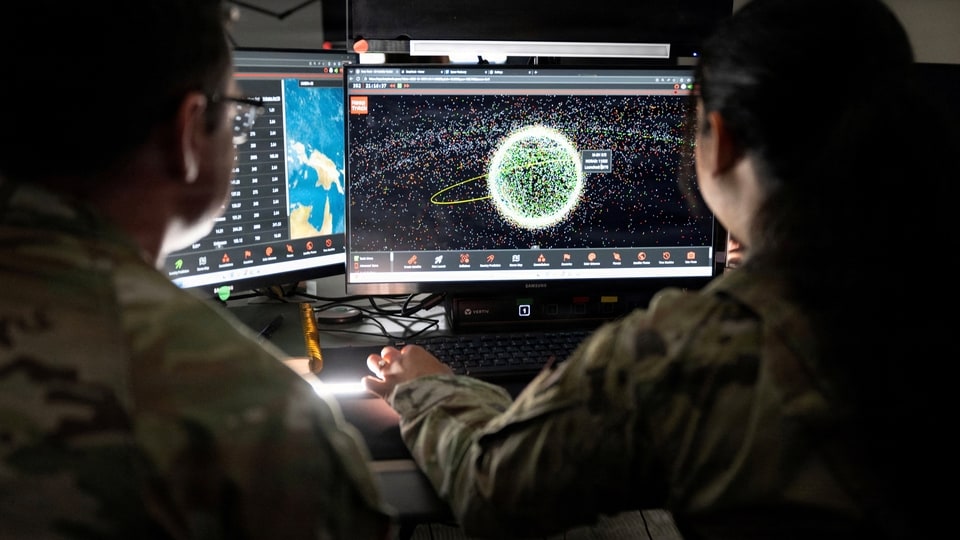
Without providing much details about the weapons, a US Space Force spokesperson said in a statement on Monday that "the US has on-orbit space control weapons capable of defending the Joint Force against hostile adversary action".
Following the announcement, China warned against the "weaponisation of outer space, turning it into a battlefield, as well as an arms race there".
"We urge the US side to stop expanding its military capabilities and preparing for war in outer space," China's foreign ministry spokesman Guo Jiakun said during a news briefing.
Russia also criticised the move and said that the outer space much be kept “free of any weapons” and called for countries worldwide to make sure of that.
"We are counting on broad international consolidation to continue working toward the complete demilitarisation of space," said Kremlin spokesman Dmitry Peskov.
What can the US' 'on-orbit' space-controlled weapon do?
While the US shied away from giving out much details about its weapon in the space and its capabilities, the country's space force did mention that it was capable of defending US forces against "hostile adversary action".
"Space control encapsulates the mission areas required to contest and control the space domain -- employing kinetic and non-kinetic means to affect adversary capabilities," the official statement said.
"These capabilities can be employed for offensive and defensive purposes," it added.
Why did US send weapon in space?
The US sees China and Russia as potential threats in the space, as reiterated by the US space force while announcing the deployment of its weapons.
It said that China “develops and operates space and counterspace capabilities as part of a military modernization strategy”.
It added that Russia “views space as a warfighting domain and believes space supremacy will be a decisive factor in future conflicts”.
The militarisation of space dates back to the very beginning of the space race. Soon after the Soviet Union launched Sputnik, the world’s first artificial satellite, into orbit in 1957, the United States and the USSR began exploring ways to both weaponise space and destroy satellites, reported AFP.
Where India stands in the race?
India established itself as a leading space power in the world after it exhibited its anti-satellite capabilities by destroying a satellite in low-Earth orbit in an anti-satellite missile test under Mission Shakti in March 2019.
India was the fourth nation alongside the United States, Russia and China capable of such a feat.
The mission was conducted by the Defence Research and Development Organisation which developed Ballistic Missile Defence (BMD) Interceptor Missile that successfully engaged an Indian orbiting target satellite in Low Earth Orbit in a ‘Hit to Kill’ mode.
The interceptor missile was a three-stage missile with two solid rocket boosters and all the objectives of the mission were met.
(With inputs from AFP)


