E-Paper



'Don’t forget 1980s failure': Iran warns of naval mines in Persian Gulf if US, Israel attack its coasts, islands
In a strong warning, Iran said any strike on its coastline or islands could trigger the deployment of naval mines across the Persian Gulf.

 Prefer HTon Google


Tensions in West Asia are deepening, with Iran signalling a major escalation if its territory comes under direct attack. In a strong warning on Monday, the country’s Defence Council said any strike on its coastline or islands could trigger the deployment of naval mines across the Persian Gulf, news agency Reuters reported.
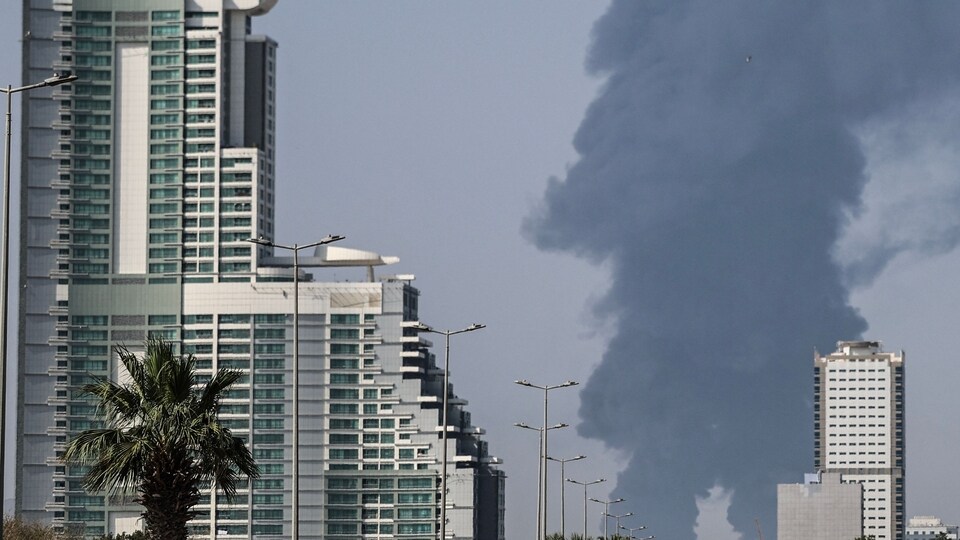
The United States is weighing options to seize or impose a blockade on Iran’s Kharg Island, its key oil export hub as part of efforts to pressure Tehran into reopening the Strait of Hormuz to global shipping, Axios reported.
"Any attempt to attack Iran's coasts or islands will cause all access routes in the Gulf (...) to be mined with various types of sea mines, including floating mines that can be released from the coast," the statement read.
"In this case, the entire Gulf will practically be in a situation similar to the Strait of Hormuz for a long time (...) One should not forget the failure of more than 100 minesweepers in the 1980s in removing a few sea mines."
Also read | Strait of Hormuz closed or open? Iran fires back at Trump after latest nuclear warning
The warning comes at a time when fears are rising in Tehran over a possible expansion of the conflict involving the United States and Israel.
The ongoing war has claimed more than 1,500 lives in Iran and over 1,000 in Lebanon, while 15 people have been killed in Israel and 13 US military personnel have also died. Civilians have not been spared, with casualties reported both on land and at sea. Millions in Iran and Lebanon have been forced to flee their homes.
Donald Trump's 48-hour ultimatum
Tensions over the status of the Strait of Hormuz rose on Sunday after Iran responded to President Donald Trump's 48-hour ultimatum, saying if Tehran did not reopen the strategic waterway, the US will bomb its nuclear power plants.
Gulf air defences intercept missiles and drones, sirens in Bahrain
Kuwait said early Monday that its air defences are intercepting hostile missile and drone attacks, while the UAE said its air defences are dealing with missile and drone strikes coming from Iran.
Iranian missiles, meanwhile, struck two communities in southern Israel late Saturday, leaving buildings shattered and dozens injured in dual attacks not far from Israel’s main nuclear research centre.
Lebanon, too, has seen intensified strikes on its infrastructure. Egypt has strongly criticised Israel’s actions, with its foreign ministry stating, “The deliberate destruction of infrastructure in Lebanon represents a blatant Israeli policy of collective punishment.” The statement pointed to repeated attacks on key structures, including bridges along the Litani River in southern Lebanon.
One such strike on Monday destroyed a bridge in Qaaqaaiyet al-Jisr, cutting off a crucial link between Nabatiyeh and areas further south. Just a day earlier, another bridge near the coastal city of Tyre was hit. Lebanese President Joseph Aoun warned that these attacks could be “a prelude to a ground invasion.”
(With inputs from Reuters)