
 E-Paper



Bilawal Bhutto threatens India: ‘Blood will flow if India stops Indus river water’
In response to the Pahalgam terror attack, India on Thursday suspended the Indus Waters Treaty as part of its five punitive actions against Pakistan.

 Prefer HTon Google


Pahalgam terror attack: Pakistani politician Bilawal Bhutto Zardari has claimed that the Indus belongs Islamabad and will continue to remain so. With the tensions between India and Pakistan constantly rising over the terrorist attack in Jammu and Kashmir's Pahalgan, Zardari warned that if the flow of water is stopped, "Indian blood will flow" instead.
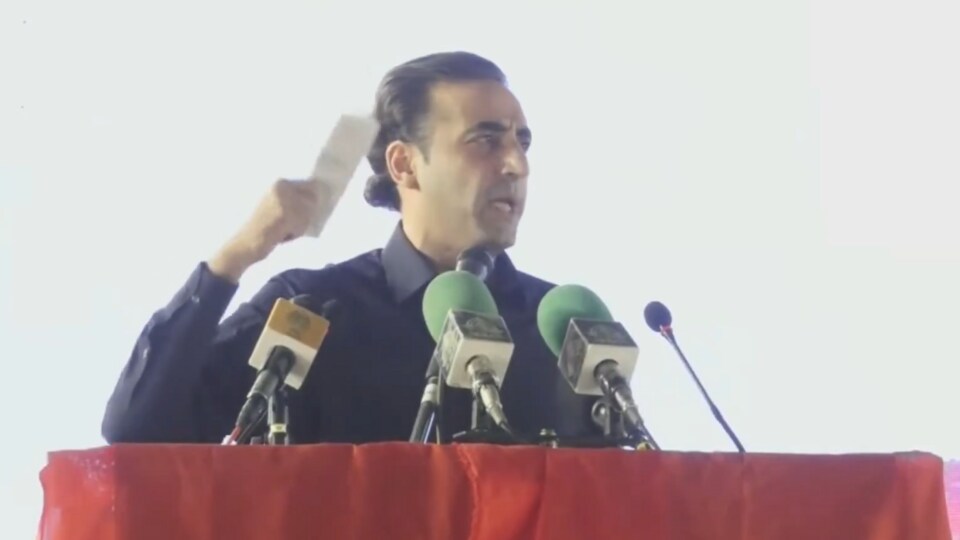
Addressing a gathering of protesters, the Pakistan People's Party chairman said India has blamed Islamabad for the Pahalgam tragedy "to hide its weaknesses and fool its people". He alleged that Prime Minister Narendra Modi "has made false allegations" and took note of the suspension of the Indus Waters Treaty.
Follow Pahalgam attack news live updates
According to Zardari, as per the Indus Waters Treaty, “India has acknowledged that the Indus belongs to Pakistan”.
"I would like to stand here in Sukkur by the Indus and tell India that the Indus is ours and the Indus will remain ours, whether water flows in this Indus or their blood," Zardari stated.
The Indian government didn't immediately respond to Zardari's threat.
India's actions against Pakistan
Bilawal Bhutto Zardari's remarks come just two days after India took five massive punitive actions against Pakistan in response to the terror attack in Pakistan. The decision was announced after PM Modi chaired a meeting of the Cabinet Committee on Security (CCS) in New Delhi.
The CCS said that the Indus Water Treaty of 1960 will be held in abeyance with immediate effect until Pakistan credibly and irrevocably abjures its support for cross-border terrorism.
ALSO READ | Troubled waters: Why the Indus treaty matters
On Thursday, India officially informed Pakistan about the suspension of the treaty, saying that Islamabad has breached the conditions of the agreement.
India's Secretary of Water Resources Debashree Mukherjee detailed the decision in a letter to her Pakistani counterpart Syed Ali Murtaza.
The letter also mentioned that the sustained cross-border terrorism by Pakistan targeting Jammu and Kashmir impedes New Delhi's rights under the Indus Waters Treaty.
Reacting to this decision, a senior Pakistani minister said that the suspension is an act of "water warfare".
"India's reckless suspension of the Indus Waters Treaty is an act of water warfare; a cowardly, illegal move," Pakistan's power minister Awais Lekhari said in a post on X.
Indus Waters Treaty
The Indus Waters Treaty was brokered by the World Bank as a mechanism for water-sharing and information exchange between India and Pakistan, for the use of the Indus River water and its five tributaries Sutlej, Beas, Ravi, Jhelum and Chenab.
The treaty was signed after negotiations that lasted for more than nine years.
In addition to the suspension of the Indus Waters Treaty, India also closed the integrated check post at Attari border and cancelled SAARC Visa Exemption Scheme (SVES) visas issued to Pakistani nationals. New Delhi also reduced the overall strength of the Pakistani high commissions from 55 to 30.


