
 E-Paper



Lunar living: How to make yourself at home on the Moon
Moon is a harsh place for humans. However, this crater-laden, inhospitable land has become the newest front in the power competition between the US & China.

 Prefer HTon Google


How do you build a human base on the Moon? It’s somewhat like building an off-grid town, except you’re building it in one of the most inhospitable environments that humans want to survive in.
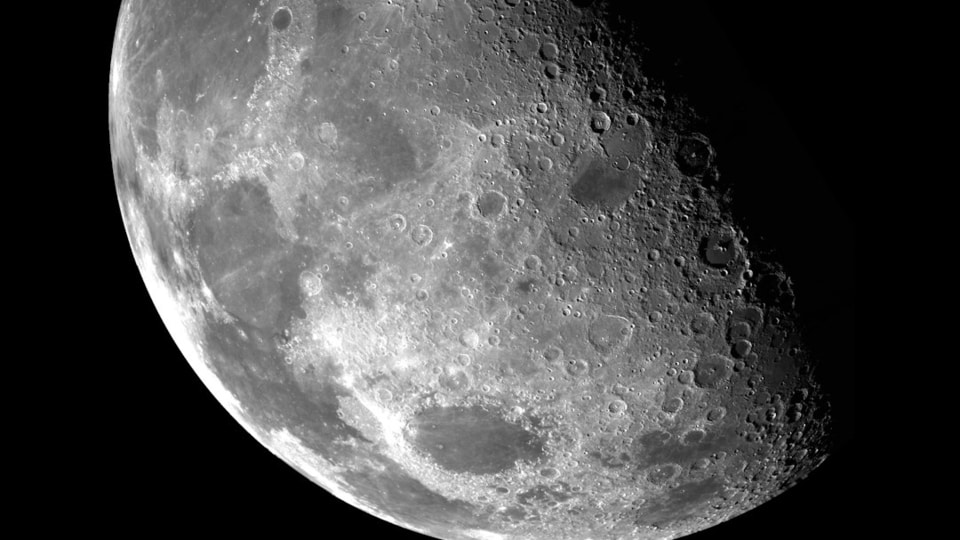
The Moon has no atmosphere, so its surface is near a vacuum. Without this atmosphere, temperatures fluctuate dramatically. They can soar to 120°C during the two-week lunar day and plunge to between -170°C and -240°C during its two weeks of night.
No atmosphere means no protection from cosmic radiation. Add to that, the challenge posed by lunar dust, a toxic powder made of sharp, jagged, glass-like particles that is electrostatically charged and clings to everything.
It damages mechanical seals and in humans, can cause respiratory and eye irritation. Since Moon’s gravity is one-sixth of Earth’s, long-term exposure can also lead to muscle atrophy, bone density loss and impact on cardio and neurological health.
To live on the Moon, you’ll always need a layer between your flesh and the outdoor environment. The walls of any building you make need to be sufficiently thick to block radiation, temperature fluctuations, and lunar dust. If you walk a dog, both of you need to be wearing spacesuits (Herge did get it right).
It doesn’t stop there. Like an off-grid home, a Moon Base requires power, water, waste and sewage management, heating and food options. And breathable air. We’ve not even touched upon computers or internet to do more research, or warehouses to build new spacecraft of the future.
Moon is a harsh, harsh place for humans. However, this crater-laden, inhospitable land has become the newest front in the great power competition between the US and China.
Earlier this year, the National Aeronautics and Space Administration (NASA), the US federal space agency, cancelled its plans to construct and deploy a planned space station in lunar orbit under its Artemis program. Seventy-Eight countries are part of this consortium, including India, which signed on in 2023.
Instead, the consortium decided it wanted to build a base on the Moon near the lunar South Pole and announced a $20 billion roadmap over the next decade to do this. Earlier in November, US President Donald Trump brought out a proclamation titled
‘The American Declaration of Freedom in Space’ which includes, among other things, a claim to all Space, a return to the Moon by 2028, followed by “permanent American lunar presence”, a reference many see as pointing to a moon base.
The space pivot by the US-led consortium was thanks to another set of countries eyeing the moon’s ragged surface for a home. China-led International Lunar Research Station (ILRS) is a collective effort of about 10 countries. including Russia, Venezuela, Pakistan, Egypt and South Africa, wants to build a moon base within the next decade. This too is expected to be near the South Pole.
Boots on the South Pole
The coveted South Pole region on the Moon is vast, covering hundreds of miles. This is thanks to its water-ice reserves, which can be potentially used for producing oxygen and hydrogen rocket fuel.
This new race to the Moon has built a unique industry across the world that is constructing everything that future Moon inhabitants might require.
According to an update in October, NASA is in Phase One, currently getting a robotic rover ready to send to the South Pole area to look for ice and other resources that can be used for building this base. Called the Volatiles Investigating Polar Exploration Rover (VIPER), this rover will land on the Moon next year.
NASA has already given contracts to US-based companies for this exploration phase. Venturi Astrolab and Lunar Outpost, both lunar operations companies, will build lunar terrain vehicles (LTVs) that will be used for transportation of astronauts, supplies and equipment across the Moon. These vehicles can be operated manually or remotely from Earth. Blue Origin, the aerospace company founded by Amazon’s Jeff Bezos, will deliver these vehicles to the South Pole by 2028.
China is also working on sending drones and rovers with sensors to map water ice and dust on the Moon’s surface in the same area. ILRS wants to establish a command centre, basic energy and telecommunication facility on the Moon by 2031.
Thanks to this new space race between these two factions, middle powers such as Japan have refocused their space plans to build supplies for these future colonies on the satellite. Japan's space agency, JAXA, is building a pressurised lunar camper van with Toyota that will allow astronauts to live, work and travel for up to 14 days without wearing spacesuits.
India’s Isro (Indian Space Research Organisation) is building the heavy lander module to deploy JAXA’s drill-equipped rover at the lunar South Pole. Canada is building vehicles to haul heavy infrastructure across the rugged terrain. Then there are private companies developing construction, habitat, resource extraction, robotics and telecom solutions for the Moon.
iSpace, for example, a Japan-based lunar transportation company, is building micro-rovers and commercial landers with specialised extraction tools to collect regolith (loose rock and soil that rests on top of a planet or satellite’s bedrock) as raw building material. Neurospace, a space exploration company in Germany, is building micro-rover platforms designed for last-mile delivery of scientific instruments and sensor arrays across the uneven surface terrain.
Getting building materials into space
One expertise in demand, thanks to the unique requirements of this lunar outpost, is that of space architects. Architectural design of a permanent lunar outpost is dictated by radical environmental constraints. It’s expensive and unrealistic to send materials to build shelters into space from Earth. They have to be 3D-printed.
China aims to send robots to automate brick-making using lunar soil and radiation shielding. European Space Agency is spearheading 3D printing systems to bake raw lunar soil and create bricks.
Orbital Matter in Poland has 3D printers that can operate in a vacuum. iSaisei, a space-tech company in Italy, is building hybrid-inflatable habitat tents designed to absorb space radiation while offering pressure for crew quarters. Nasa’s ICON Space is building Olympus, a robotic 3D printing system to turn raw lunar dust into roads, landing pads and habitat walls to shield against radiation and micrometeorites. Space Biosystems Lab in Greece is building a biological unit that will use micro-algae to recycle carbon dioxide into oxygen and process organic waste inside living habitats. Polimak Space in Luxembourg is building mining and surface civil engineering machinery.
For power, there’s Volta Space Technologies in Canada and Celestia Energy in Czechia, and NEOWATT in the UK, that are building power-beaming infrastructure to transmit electricity directly from lunar orbital satellites to rovers, landers and base assets which are in shadowed regions or going through the 14-day lunar night. Companies are also building lunar satellite constellations to get GPS on the Moon.
If all goes well, humanity is approximately a decade away from an operational, inhabited base on the Moon. Will it become an outpost for humanity to build spacecrafts for space explorations as we’re thinking now or will it become how author Ursula Le Guin imagined it in The Dispossessed; An egalitarian colony, which desires freedom.


