
 E-Paper



New clashes rock Sudan but internet returns after deadly day: Report
Wednesday's killings were condemned by UN rights chief Michelle Bachelet who said "it is utterly shameful that live ammunition was again used yesterday against protesters."


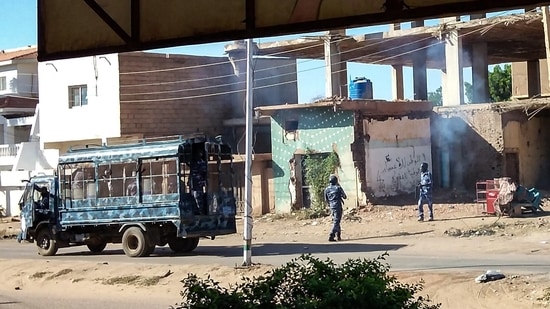
Street clashes again shook Khartoum as internet services returned to Sudan on Thursday, a day after 15 protesters were killed in the bloodiest violence since the country's October 25 coup.
Wednesday's killings were condemned by UN rights chief Michelle Bachelet who said "it is utterly shameful that live ammunition was again used yesterday against protesters."
The demonstrations were organised despite a near-total shutdown of internet services and the disruption of telephone lines amid a crackdown on anti-coup protests that has killed dozens.
The European Union also condemned the crackdown, saying the "perpetrators of these violations will be held accountable" and that the blackout must "not prevent the world from being informed about these human rights violations".
Since Thursday morning, police fired tear gas to disperse dozens of anti-coup protesters who had stayed on the streets of north Khartoum overnight, witnesses said, braving an intensifying crackdown that has drawn international condemnation.
Police tore down makeshift barricades but dozens of protesters returned later to rebuild them and police again fired tear gas to disperse them, witnesses said.
"Protesters responded by hurling stones at the police," one of them said.
Later on Thursday, the official news agency SUNA said "internet services are gradually returning through all telecommunication companies."
AFP journalists were able to access the internet, including social media networks.
'Stop the repression'
On October 25, top general Abdel Fattah al-Burhan -- Sudan's de facto leader since the April 2019 ouster of longtime autocrat Omar al-Bashir -- detained the civilian leadership and declared a state of emergency.
The move upended Sudan's fragile transition to full civilian rule, drawing international condemnation and a flurry of punitive measures and aid cuts.
Burhan insists the military's move "was not a coup" but a step to "rectify the course of the transition" to civilian rule.
Thousands took to the streets on Wednesday in Khartoum and other cities but were met by the deadliest crackdown since the coup.
At least 15 people were killed, most of them in north Khartoum, doctors said, raising the overall toll since the coup to 39 dead.
Police said they had recorded only one death among protesters in north Khartoum. Another 30 had suffered breathing difficulties from tear gas inhalation.
They said they had fired no live rounds and used only "minimum force", even as 89 officers were wounded, some of them critically.
By Thursday morning, phone lines had been restored before internet services returned.
Bridges connecting Khartoum with its neighbouring cities reopened and traffic returned to many of the capital's streets.
UN Special Rapporteur on Freedom of Association Clement Voule said he had "received alarming reports of increased use of lethal force by the military against peaceful protesters".
He called on the international community to "put pressure on Sudan to immediately stop the repression against civilians and respect their rights".
"We condemn violence towards peaceful protesters and call for the respect and protection of human rights in Sudan," the US State Department's Bureau of African Affairs said on Twitter.
Call for 'peaceful protests'
Last week, Burhan formed a new Sovereign Council, the highest transitional authority, with himself as chief and military figures and ex-rebel leaders keeping their posts.
He replaced members from the Forces for Freedom and Change, Sudan's main civilian bloc, with little-known figures.
The FFC is an umbrella alliance that spearheaded the protests which led to the ouster of Bashir in 2019, and its mainstream faction has supported the anti-coup protests of recent weeks.
Sudan's largest political faction, the Umma Party, condemned the use of force by the security forces and called for peaceful protests to continue "until the coup is brought down" and those who have committed crimes against the people have been held accountable.
Since the coup, Burhan has removed clauses referring to the FFC from the 2019 power-sharing deal between the military and the civilians from the bloc.
This week, US Assistant Secretary of State for African Affairs Molly Phee met with the generals and the ousted civilian government in a bid to broker a way out of the crisis.
Phee has called for the reinstatement of ousted Prime Minister Abdalla Hamdok, who is effectively under house arrest.
Burhan has vowed to hold the planned elections in 2023, reiterating to Phee on Tuesday that his actions aimed to "correct the trajectory of the revolution".


