
 E-Paper



Over 25,000 residents evacuated from 3 provinces over wildfire in Canada
Assembly of Manitoba Chiefs Grand Chief Kyra Wilson termed it to be one of the largest evacuations in the province since the 1990s.

 Prefer HTon Google


Active wildfires remained active in parts of Canada and the US on Sunday, and affected air quality, prompting the evacuation of over 25,000 residents in three provinces, Manitoba, Alberta, and Saskatchewan.
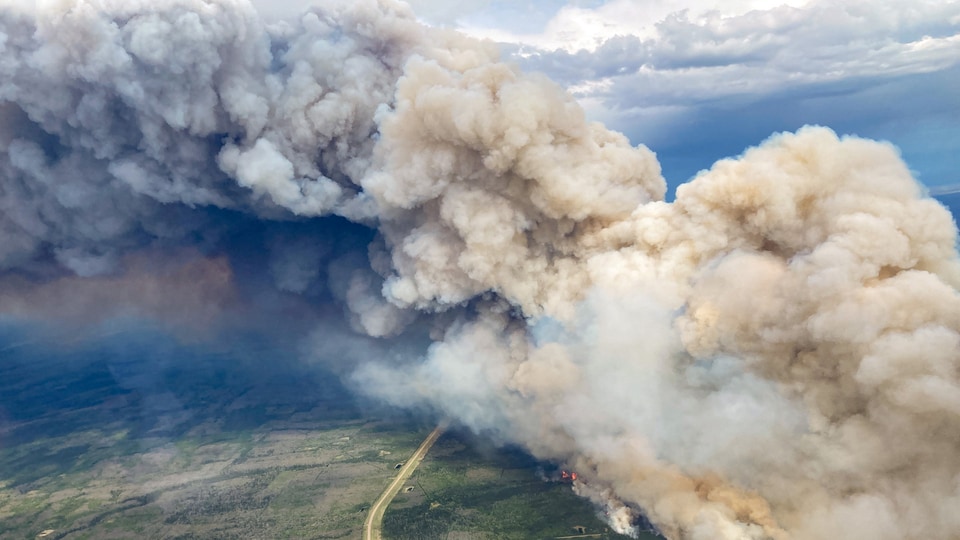
The majority of the evacuations took place in Manitoba, which declared a state of emergency last week. By Saturday, about 17,000 people, along with 1,300 in Alberta, were evacuated.
About 8,000 residents in Saskatchewan were shifted to safer locations, and leaders said more people could be relocated amid the growing wildfire situation.
Air quality also worsened in Canada and some US states along the border, and the wildfire smoke also affected visibility.
ALSO READ | Where are the wildfires in North Carolina? Map, locations, and evacuation updates
Saskatchewan’s Public Safety Agency on Sunday issued a warning and said, "Air quality and visibility due to wildfire smoke can fluctuate over short distances and can vary considerably from hour to hour. As smoke level increases, health risks increase."
Firefighters, emergency crews and air support from other provinces and US states, including Oregon, Alaska, and Arizona, were being sent to fight the blaze, said Saskatchewan Premier Scott Moe.
In a social media post, Moe said, "We are truly grateful, and we stand stronger because of you," he added.
Moe attributed the growing fires to the current hot and dry weather in the region, saying it also increases the threat to communities living there.
“The next four to seven days are absolutely critical until we can find our way to changing weather patterns, and ultimately a soaking rain throughout the north,” he said during a press conference.
Manitoba
Over 5,000 people were evacuated from Manitoba's Flin Flon, situated nearly 645 kilometers (400 miles) northwest of the capital of Winnipeg.
The blaze also knocked out the power supply to the community of Cranberry Portage in northern Manitoba, forcing a mandatory evacuation order on Saturday.
The blaze chaos in Flin Flon started a week ago near Saskatchewan's Creighton region, and quickly crossed the boundary into Manitoba. Firefighting crews have been struggling to contain the fire.
ALSO READ | Northern Manitoba evacuees stream south to escape raging wildfires
Meanwhile, the US Department of Agriculture's Forest Service deployed an air tanker to Alberta and said it would send 150 firefighters and equipment to Canada.
Evacuation centres have also been opened in Manitoba for those seeking shelter and fleeing the fire. Additionally, Winnipeg opened public buildings for evacuees as hotels were already filled with fire refugees, vacationers, business people and convention attendees.
Manitoba's Indigenous leaders on Saturday said that hotel rooms in the cities were full, calling on the government to direct hotel owners to prioritise evacuees.
Assembly of Manitoba Chiefs Grand Chief Kyra Wilson termed it to be one of the largest evacuations in the province since the 1990s.
“It’s really sad to see our children having to sleep on the floor. People are sitting, waiting in hallways, waiting outside, and right now, we just need people to come together. People are tired,” Wilson.
Deteriorating air quality
The US Environmental Protection Agency's AirNow page showed that air quality levels reached the "unhealthy" category on Sunday in some parts of the US, North Dakota, and small swaths in Montana, Minnesota, and South Dakota.
Bryan Jackson, a meteorologist with the National Weather Service, said, "We should expect at least a couple more rounds of Canadian smoke to come through the U.S. over the next week."
A fire in the US border state of Idaho also burned at least 100 acres of land, prompting the closure of roads and evacuations. The Idaho Department of Lands said that at least one structure was burned in the incident, but did not provide any further details.
May to September is wildfire season in Canada, and the worst of it ever was seen in 2023. Much of North America choked on the smoke-infused air.


