
 E-Paper



Indian student at Cambridge solves 2,500-year-old Sanskrit grammatical problem
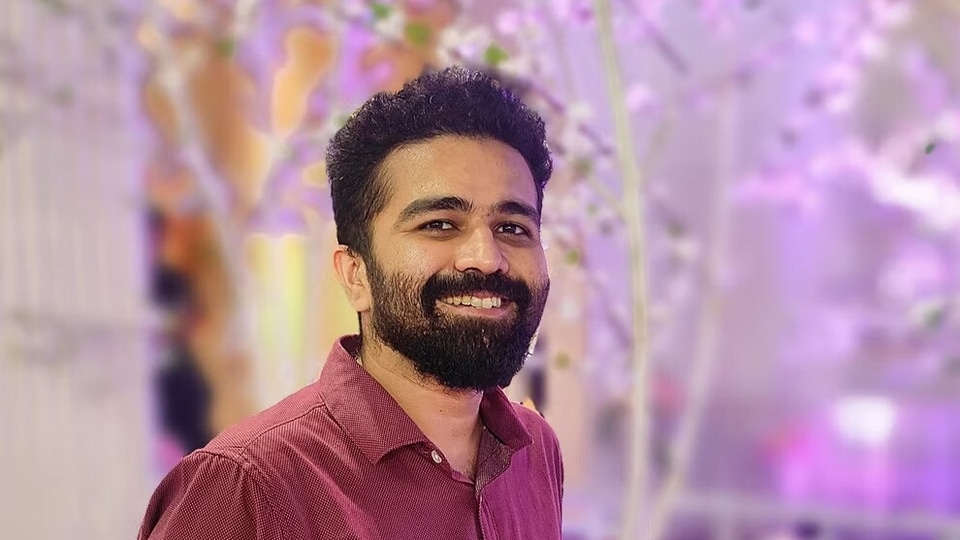
Rishi Rajpopat: Rishi Rajpopat found the Panini’s “language machine” produced grammatically correct words with almost no exceptions.

 Prefer HTon Google


A grammatical problem which perplexed scholars since the 5th century BC has been solved by a Cambridge University student and could “revolutionise the study of Sanskrit”, a professor said, Independent reported.
Read more: World's 10 most groundbreaking conservation efforts. India's 'Namami Gange' is…
Indian PhD student Rishi Rajpopat, 27, decoded a rule taught by Panini, master of the ancient Sanskrit language who lived around two-and-a-half-thousand years ago, the report said, adding that Panini’s grammar, known as the Astadhyayi, relied on a system that functioned like an algorithm to turn the base and suffix of a word into grammatically correct words and sentences.
However, two or more of Panini’s rules often apply simultaneously, resulting in rule conflicts. Panini taught a “metarule”, traditionally interpreted by scholars as meaning “in the event of a conflict between two rules of equal strength, the rule that comes later in the grammar’s serial order wins”.
However, this often led to grammatically incorrect results. Rishi Rajpopat rejected the traditional interpretation of the metarule and argued that Panini meant that between rules applicable to the left and right sides of a word respectively, Panini wanted us to choose the rule applicable to the right side.
Through this, Rishi Rajpopat found the Panini’s “language machine” produced grammatically correct words with almost no exceptions.
Read more: Banned in Russia for 40 years, this book is 2022's bestseller amid Ukraine war
Rishi Rajpopat said he had a “eureka moment” after his supervisor at Cambridge, Professor of Sanskrit Vincenzo Vergiani, advised him, “If the solution is complicated, you are probably wrong.”
“I had a eureka moment in Cambridge. After nine months trying to crack this problem, I was almost ready to quit, I was getting nowhere. So I closed the books for a month and just enjoyed the summer, swimming, cycling, cooking, praying and meditating. Then, begrudgingly I went back to work, and, within minutes, as I turned the pages, these patterns starting emerging, and it all started to make sense," he said.


