
 E-Paper



India says perplexed by UN criticism on Rohingya issue, Gauri Lankesh murder
The UN high commissioner for human rights, Zeid Ra'ad Al Hussein, had deplored steps to deport Rohingya refugees from India and expressed dismay at the rise of intolerance towards minorities.


India on Tuesday said it was “perplexed” by the top UN human rights official’s criticism of New Delhi’s approach to Rohingya refugees and his remarks related to journalist Gauri Lankesh’s murder and the situation in Jammu and Kashmir.
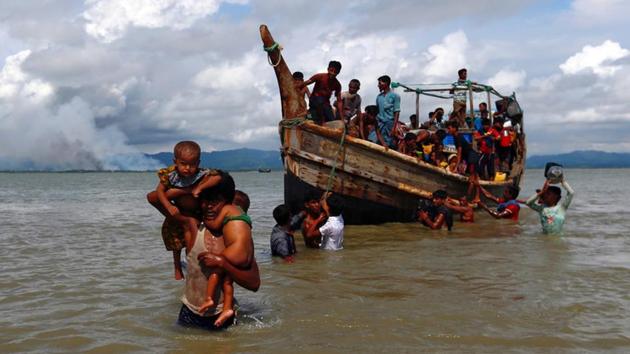
Responding to the criticism by the UN high commissioner for human rights, Zeid Ra'ad Al Hussein, at the opening session of the 36th Human Rights Council in Geneva on Monday, Rajiv K Chander said there was inadequate appreciation of the freedoms and rights guaranteed and practised daily in India.
Al Hussein had deplored steps to deport Rohingya refugees from India, and expressed dismay at what he called the “broader rise of intolerance towards religious and other minorities in India”. He also came down heavily on the Myanmar government for its handling of the Rohingya issue.
Chander, India’s permanent representative to the UN in Geneva, said: “We are perplexed at some of the observations made by the high commissioner in his oral update. There appears to be inadequate appreciation of the freedoms and rights that are guaranteed and practised daily in a vibrant democracy that has been built under challenging conditions.
“Tendentious judgements made on the basis of selective and even inaccurate reports do not further the understanding of human rights in any society. Like many other nations, India is concerned about illegal migrants, in particular, with the possibility that they could pose security challenges. Enforcing the laws should not be mistaken for lack of compassion.”
Chander said it was also surprising that individual incidents were being extrapolated to suggest a broader societal situation, when a more informed view would have noted that Prime Minister Narendra Modi had publicly condemned violence in the name of cow protection.
“India does not condone any actions in violation of law and imputations to the contrary are not justified. We have also noted that the issue of the human rights situation in the Indian state of Jammu and Kashmir has been raised. It is a matter of regret that the central role of terrorism is once again being overlooked. Assessments of human rights should not be a matter of political convenience,” he added.
India, Chander told the council, believed that achieving human rights goals called for objective consideration, balanced judgements and verification of facts.
“Our government’s motto of ‘Sabka Saath, Sabka Vikas’, that is all together and development for all, is a true reflection of our commitment to achieve inclusive development in the spirit of leaving none of our citizens behind,” he said.


