
 E-Paper



South Korea to vote on Tuesday | Key candidates, issues and all you need to know
The snap vote in South Korea comes after Yoon Suk-yeol's brief and failed martial law bid, which led to the former president's impeachment.

 Prefer HTon Google


South Korea is all set to head to the polls on Tuesday to vote for a new president to replace ousted PPP leader Yoon Suk-Yeol. Around 44.4 million people, from the 52 million population, are eligible to vote in the June 3 polls.
The snap presidential elections in South Korea come after Yoon Suk-Yeol's brief and failed martial law bid, which ultimately led to his impeachment from office.
ALSO READ | Martial law, mass protests and Yoon's impeachment | Key moments behind South Korea's snap elections
With tensions with North Korea, Donald Trump's tariffs and the overall state of democracy in focus, here's all you need to know about Tuesday's vote.
South Korea heads to the polls | All you need to know
Key candidates
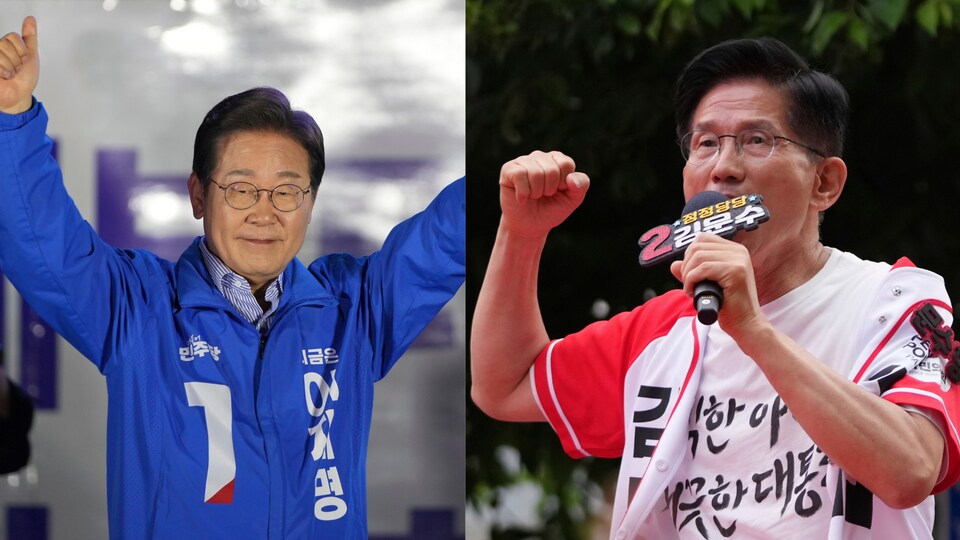
There are a total of five names on the ballot for president. However, the two key contenders for the post have been narrowed down to Lee Jae-Myung from the Democratic Party of Korea and Kim Moon-soo from the People Power Party.
Liberal candidate Lee Jae-myung is reportedly the frontrunner in the presidential elections. The human-rights lawyer, who escaped an assassination attempt last year is leading with 49 percent of voter support, as per a Gallup Korea poll.
Meanwhile, Kim Moon-soo, the candidate from Yoon Suk-Yeol and the current conservative government People Power Party, trails behind at 36 percent.
Along with Kim and Lee, the remaining candidates are -
- Lee Jun-seok from the conservative New Reform party.
- Kwon Young-guk from the Democratic Labor Party
- Song Jin-ho, independent candidate.
Hwang Kyo-ahn, an independent candidate, quit the presidential race on Sunday and has endorsed Kim Moon-soo
Key issues at stake
- Aftermath of martial law: The state of democracy in South Korea tops the list of issues. With Yoon's failed martial law bid still fresh in voters' minds, the next president will be decided based on the steps they will take to reshape presidential powers and the constitution to prevent such an incident from reoccurring.
- North-South ties: Another key issue is the threat from North Korea. With Pyongyang declaring Seoul as its "enemy state", tensions in the Korean peninsula have reached a new breaking point. Despite the truce of the Korean War still in place, ties with North Korea have hit an all new-low. Last year, the two Koreas clashed over trash-filled balloons sent from the north. This step triggered South Korea to resume its loud speaker broadcasts and drop in anti-North Korean fliers across the border. North Korea has also severed communication lines as Kim Jong-un calls for an amendment to the constitution to scrap unification with the south.
- Women's rights: High rate of crimes against women, low political representation, uptick in domestic and sexual assault and a drastic gender pay gap, women's rights continue to be in a dire state in Korean society. Furthermore, the country's plummeting birth rate is also a major issue.
- Ties with US, China: Circling to foreign policy, ties with the United States and China are in focus. With US President Trump back in office, his new tariffs pose a major problem for the South Korean economy. Furthermore, the US has been South Korea's most important security ally since its division in 1953. China, on the other hand, is South Korea's biggest trading partner. However, Trump's tensions with China has expected to carry forward into its ties with South Korea as well.
Polls open at 6 AM
South Koreans will be able to cast their vote on June 3 at 14,295 polling stations. According to a report by Yonhap, 28,590 police officers will be stationed at these polling booths.
Polling booths will open at 6 AM KST (2:30 AM IST) and will close at 8 PM KST (4:30 PM IST). After the polls close, the national election commission will commence the counting of votes to determine the next president.
South Korea has already carried out early voting for overseas citizens. As per NEC, 15.4 million, or 34.74 per cent of the total population overseas, voted during early ballots between 29-30 May.
The South Korean president will be chosen based on popular vote. The first candidate to win the most votes is elected the winner, even if the number of votes fails to cross the 50 percent mark.


