
 E-Paper



Tarique Rahman's return and Bangladesh elections: The 'dark prince' leads BNP revival, likely to be PM
At rallies attended by a sea of people, Tarique Rahman has vowed to restore peace and stability in Bangladesh and to make Dhaka a nation “we all dream of”.

 Prefer HTon Google


After nearly 17 years in a self-imposed exile, Bangladesh Nationalist Party's Tarique Rahman found himself in Dhaka. Welcomed by thousands of people across the country, Rahman's return marked a significant shift in Dhaka's political field.
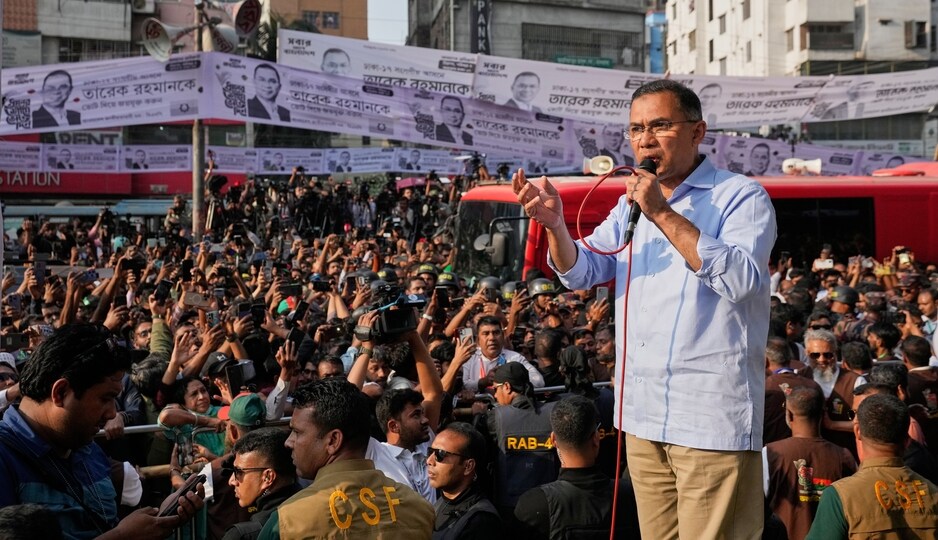
Often known as Bangladesh's “dark prince” for being mostly behind the scenes for his mother Khaleda Zia, Rahman returned when she was on her deathbed. And he now has a role to play as Dhaka hopes to move towards stability after nearly two years of its latest political turmoil. Follow LIVE updates on Bangladesh polls here
The parliamentary elections in Bangladesh concluded earlier on Thursday, and Rahman won two seats he contested: the Dhaka-17 constituency and the Bogura-6. Under Rahman, the BNP also clinched victory and is set to form the next government.
Along with the election, the country also held a national referendum on the 2024 July Charter. The charter was drafted to establish governance, democracy, and social justice through institutional reforms, and to prevent "recurrence of authoritarian and fascist rule".
Hasina was removed from her post following a violent and dramatic student-led movement in Bangladesh. The student movement was initially triggered by protests against the quota for 'war heroes' and their offspring in government jobs.
However, the Awami League government's violent crackdown on the protestors, which also resulted in the deaths of many students and activists, soon turned into a movement which would change the history of the nation.
Since August 2024, Bangladesh has been run by an interim government led by Nobel laureate economist Muhammad Yunus. And, nearly two years later, Dhaka is set to vote for its new government with Tarique Rahman as an obvious frontrunner.
Why Tarique Rahman returned to Bangladesh
Tarique Rahman is the eldest son of former PM Khaleda Zia. During her tenure, Tarique Rahman was referred to as the "dark prince" and "shadow PMO". From 2001 to 2006, it was believed that Rahman was running the show behind the scenes while his mother sat in the prime minister's chair.
From 2006 to 2008, Bangladesh witnessed a violent civil unrest, which also led to the formation of a caretaker government by the military. During this period, Rahman was arrested on charges of money laundering. He was also accused of plotting an assassination attempt on Sheikh Hasina and her aide.
Ultimately, in 2008, Khaleda Zia was defeated, and BNP's ouster from the government was made official with Hasina's victory. Shortly after, Rahman found himself on a plane to London, where he would stay for the next 17 years.
Despite Rahman’s exile, Khaleda Zia remained a prominent figure in Bangladeshi politics. However, the BNP has long accused the Awami League of rigging elections in its favour, hence, it boycotted the 2024 elections, which ended in another “victory” for Hasina.
On December 25, 2025, Tarique Rahman returned to Dhaka, just in time for the national election. Greeted by a sea of people, many of them longtime BNP workers, Rahman vowed to restore peace and stability in Bangladesh and to make Dhaka a nation “we all dream of”.
He sought to strike a conciliatory note on the question of minorities’ rights too, after years of accusations against the BNP and its once-ally Jamaat-e-Islami that they were hostile towards Hindus and other non-Muslims in the Muslim-majority country. Hasina was seen as more secular.
"The time has come for all of us to build the country together. This country belongs to people of the hills and the plains, Muslims, Hindus, Buddhists and Christians. We want to build a safe Bangladesh, where every woman, man, and child can leave home and return safely," the BNP leader said.
Five days after his return, Khaleda Zia passed away due to prolonged illness, elevating Rahman to the position of chairman of the BNP. On January 10, 2026, Rahman was approved by the standing committee of the party. Speaking at a meet-and-greet event, Tarique Rahman stated that there was "no reason" for Dhaka to return to the political state it was in before August 5, 2024, the day of Hasina's ouster.
What is BNP’s plan for the 2026 polls
Rahman's vow to create a Bangladesh "we dream of" is reflected in BNP's poll manifesto as well. In a section called ‘Bangladesh Before All’, the party focuses on a foreign policy based on "equality and self-dignity", adding that Dhaka will not interfere in the matters of other countries and will not stand for any interference at home.
Also Read | BNP's balancing act with India: Want Sheikh Hasina back, but also improved ties
Other key promises made by BNP are to work on political, economic reforms, religious freedoms and national unity. The poll campaign for Rahman's party has emphasised uniting the nation, especially on religious harmony, due to the recent increase in attacks on minorities in the nation.
Reeling from Hasina's long rule, the BNP has also promised a more people-oriented and inclusive government. The party also called for a 10-year limit on the official tenure of the prime minister and a vice-president post.
Will Dhaka see a BNP revival?
As per recent opinion polls, the Bangladesh Nationalist Party is expected to secure a large number of votes and is currently in the lead.
Based on a poll carried out by the International Institute of Law and Diplomacy (IILD) in Dhaka, BNP may secure 44.1 per cent of the vote, while the electoral alliance of 11 political parties led by Bangladesh Jamaat-e-Islami is expected to receive 43.9 per cent. Furthermore, 1.7 per cent of voters supported the Jatiya Party (JaPa), and 6.5 per cent said they had not yet decided whom to vote for.
An earlier survey conducted in January by Innovision Consulting, BNP is projected to secure 52.8 per cent of the vote.
Similarly, the survey by Eminence Associates for Social Development (EASD) has also projected a clear lead for the BNP-led alliance with 208 seats and a vote share of 66.3 per cent.
BNP’s secular turn as Hasina gone
With Rahman back in Dhaka, many experts have stated that BNP is now trying to fill the vacuum left by Awami League and is projecting itself as a secular, centrist party which will bring stability to Bangladesh. BNP's break-up with JMI also reflects this stance, when previously the Islamist party had been a long-time ally of the Bangladesh Nationalist Party.
The 2026 poll is also expected to be more favourable for BNP and Rahman since Hasina's Awami League remains banned from contesting.


