
 E-Paper



Time for ‘actions’, India tells UNSC on Afghanistan
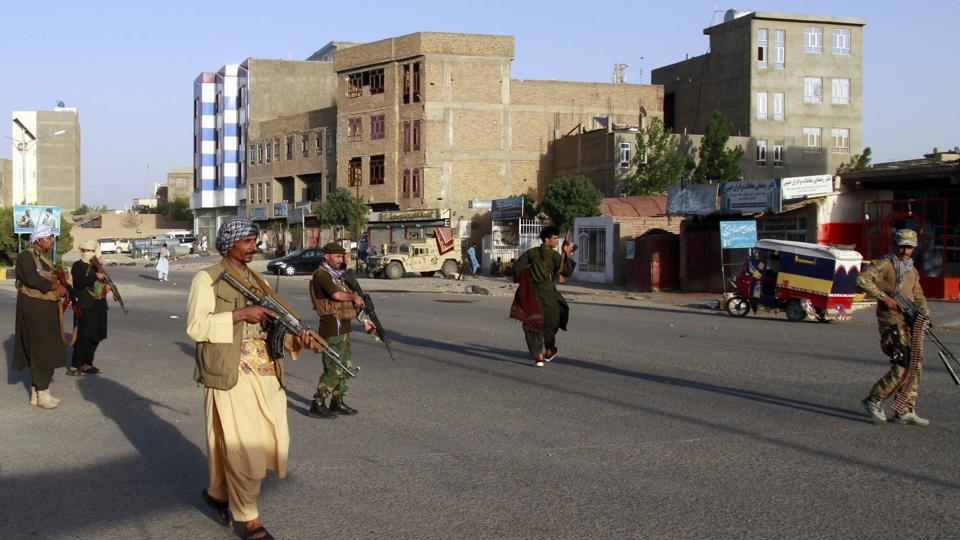
The Taliban have moved swiftly in recent weeks to expand their military influence in Afghanistan as US-led international forces pull out as per a timetable announced by President Joe Biden.

 Prefer HTon Google


India told the UN Security Council (UNSC) on Friday the time has come for it to “decide on actions” to bring a permanent and comprehensive ceasefire and ensure an immediate cessation of violence in Afghanistan, which, it warned, posed a “serious threat” to regional peace and security.
Participating in a UNSC briefing on Afghanistan, India also told the council that for the sake of enduring peace in Afghanistan all “terrorist safe havens and sanctuaries in the region must be dismantled immediately”. This is usually a pointer to Pakistan’s continued support of terrorism and terrorists.
This was the first discussion on Afghanistan on India’s watch as the rotational president of the Security Council for August, and came just a few days after the body strongly condemned escalating violence perpetrated by the resurgent Taliban and reiterated its opposition to restoration of the “Islamic Emirate”, as the 1996-2001 Taliban-ruled country was called.
Deborah Lyons, the special representative of the secretary-general for Afghanistan and head of the UN Assistance Mission in Afghanistan (UNAMA), briefed the members on the security situation in the country, whose new Permanent Representative, Ghulam M Isaczai, also participated in the briefing, which was followed by a closed-door consultation of the body.
Citing recent escalation in violence including an attack on the UN compound in Herat, TS Tirumurti, the Indian permanent representative to the UN, said, “It is, therefore, time for the international community and, in particular, this council to take stock of the situation, and decide on actions that would help bring a permanent and comprehensive ceasefire and ensure an immediate cessation of violence.”
He added: “Anything short of this will constitute a serious threat to regional peace and security.”
The permanent representative reiterated India’s support for negotiations as the only way forward, but for it to be successful, he said, “it is necessary to ensure that the Taliban engage in negotiations in good faith, eschew the path of violence, severe ties with the al-Qaeda and other terrorist organisations, and fully commit itself towards reaching a political solution”.
Talks, meanwhile, have stalled. The Taliban have moved swiftly, instead, in recent weeks to expand their military influence in Afghanistan as US-led international forces pull out of the country according to a timetable announced by President Joe Biden. The Taliban have “captured more territory in the last two months than during any other period since the US invasion in 2001”, the UNSC said in a scene-setter note for the Friday meeting. It added that the Taliban now control more than half of the districts in Afghanistan.
It further noted that the Taliban’s territorial gains have been “accompanied by a dramatic surge in violence and human rights violations”. The total number of civilians killed and injured in Afghanistan between January 1 and June 30 increased by 47%, compared with the first half of 2020, the UN mission on Afghanistan said on July 26.
Tirumurti has also renewed India’s call for tackling terrorism in the region. “For enduring peace in Afghanistan, terrorist safe havens and sanctuaries in the region must be dismantled immediately and terrorist supply chains disrupted. It needs to be ensured that Afghanistan’s neighbours and the region are not threatened by terrorism, separatism and extremism. There needs to be zero tolerance for terrorism in all its manifestations.”


