
 E-Paper



Ukraine is bracing for Russia’s hardest winter blitz yet
It is reinforcing fast, but perhaps not fast enough


 Prefer HTon Google


THE SUN beats down on the utilities repair crew in Bereznyaky, a prefab-concrete suburb on Kyiv’s left bank. Winter-proofing the electricity grid is slow work, digging out hundreds of metres of Soviet-laid cable and replacing it with thicker lines able to withstand an emergency surge. But foreman Roman Kravchenko is cutting no corners; he knows what failure feels like. Last winter, after Russian missiles destroyed the local heating plant, residents switched to electric home heaters that burnt out the network. Hundreds of apartment blocks had no heat or power for weeks. At one point, an angry crowd penned in Mr Kravchenko’s crew. “They said they wouldn’t let us go until there was light,” he recalls.
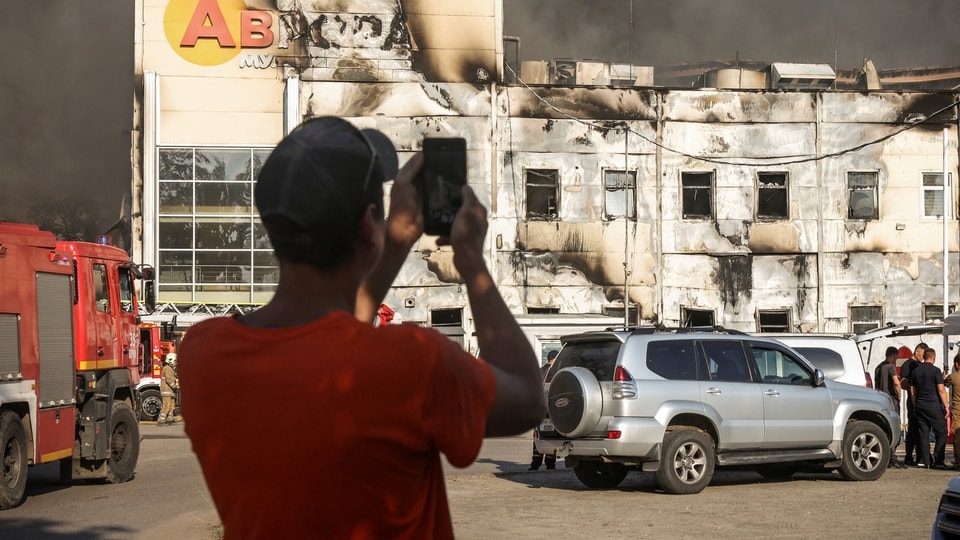
The good news for Mr Kravchenko is that Ukraine has never been better prepared. An unprecedented programme to harden the grid is running ahead of schedule, with half of the works already complete. The country should enter the winter with surplus generation capacity, 14bn cubic metres of gas reserves, better physical protection at key nodes of the grid, and new private air-defence companies to help the country’s beleaguered air forces. The bad news is that the Russian threat has evolved faster. Ukraine’s shortage of interceptors for ballistic missiles is one vulnerability. Another is Russia’s new jet-powered drones, which have terrorised Ukraine over the last week.
Even before the last winter was over, Ukraine’s security council resolved not to let it happen again. From April, the government and energy companies began implementing a resilience plan. It has four priorities: enough local generation capacity to power critical infrastructure inside each major city; physical protection of crucial elements; decentralised heating; and a decentralised supply of electricity. A separate programme covers reserve water supplies. The strategy is producing results, partly because of better management by the new energy minister, Denys Shmyhal, a former prime minister.
“By December we will have done three times more than in any year before,” says Oleksandr Kharchenko, an energy expert. The State Restoration Agency has been particularly nimble. Its work matters most in Kyiv, where city authorities had lagged behind those in other cities, such as Kharkiv. Before this year not one of the capital’s 110-kilovolt transformers, which help step down current from high-tension lines to households, had been protected. Working round the clock, the agency has now shielded two dozen of them with netting and concrete reinforcements, while also fortifying power plants. Serhiy Sukhomlyn, its director, says the new defences should withstand anything short of a direct missile hit.
The picture in the air is much darker. Russia has stepped up its production of ballistic missiles—now roughly 100 a month—just as supplies of interceptors have tumbled. Ukraine is trying to get an additional 300 Patriot missiles from partners this winter, but there is no guarantee. Projects to build homemade ballistic interceptors are unlikely to deliver for years. Ukraine hopes to blunt the threat by hitting launchers and production facilities inside Russia, and has had some success. Yet Russia’s campaign this year will almost certainly be more destructive than last. “Strikes have set monthly records for the last four months,” says Maxim Timchenko, CEO of DTEK, the company that runs Kyiv’s grid. The capital’s massive thermal power stations are too large to protect fully. “A concentrated ballistic strike can destroy any one of our power plants.”
Then there are the jet-powered drones, launched by the hundreds in recent attacks. Ukraine had largely neutralised propeller-driven Shahed-type kamikaze drones, shooting down more than nine of every incoming ten. The new pilot-guided jet models fly much quicker, at up to 600km/h rather than 200km/h. The shift was long expected, but Ukraine has not yet deployed a cost-effective countermeasure. It is testing several new interceptors; most resemble miniature missiles. For now, the only effective defence comes from expensive fighter jets, shoulder-mounted air-defence missiles or automated anti-aircraft guns at key targets. A source in Ukraine’s air defence command says that in recent attacks that combination shot down only 30% of the jet-powered drones. More troubling, the drones were able to hit high-value assets that ballistic missiles had missed for four years.
The problem is likely to get worse. Defying Western forecasts, Russia appears to have found a way to produce the jet engines at scale. The air-defence source says the Kremlin has managed to circumvent sanctions to obtain 3D-printing machinery for turbines, comparable to the kind in Western Rolls-Royce factories. The unit cost for these drones has fallen by half or more to around $50,000-70,000, and will decrease further. “Ukraine failed to properly prepare for the threat,” the source says, “but the failure is on our partners too.”
For now, Russia’s main focus is probably on 140 or so substations run by Ukrenergo, the state electricity company, which convert high-voltage electricity to lower voltages for use on local networks. Ukraine may have more power than it needs through the winter, if only because of depressed industrial demand. The bigger problem will be getting power to vulnerable cities such as Kyiv, Odessa and Kryvyi Rih, if Russia destroys their local generating capacity. The capital is particularly exposed. Some substations around Kyiv lack backups. So do the city’s connections to nuclear plants, which provide most of its electricity. Power for the water system is vulnerable, too. Without it, sewage and central heating services will fail. Fully 2,500 of the capital’s 15,000 buildings have no back-up heat source.
One senior government official sees no reason why this winter would be better than the last; the capital will be “tormented” once the frosts arrive. Mr Timchenko is more measured, but concedes that no one can guarantee that last year’s problems will not be repeated. His repair crew in Bereznyaky, filling in their trench, has reached much the same conclusion. “We’ll have done our work, that’s all we can do,” says Mr Kravchenko. “Now it’s down to the guys in air defence.”


