E-Paper


In 1928, California garbage collector Art Beal began a hillside shack; over 50 years, discarded cans, car parts, and shells became Nitt Witt Ridge
Garbage collector Art Beal spent 50 years turning shells, scrap metal, and discards into Nitt Witt Ridge, a California folk art landmark in Cambria.

 Prefer HTon Google


Most people see the city dump as the place where broken things go to die. Art Beal saw a source of building materials. In 1928, he bought two and a half acres of pine-covered hillside in Cambria Pines, California, and began building a home from salvaged objects. According to the SPACES Archives profile of the site, the project continued for more than 50 years and eventually spread across a 250-foot-high ridge. The result, Nitt Witt Ridge, became one of California’s unusual examples of folk art architecture.

Beal operated under a simple rule: pay for cement and salvage the rest. He gathered shells from the sea, wood from the hillsides, discarded household items, and other materials from the dump. As Cambria’s garbage collector, he had regular access to objects that others threw away. Local accounts suggest that his interest in salvaging materials eventually became so consuming that it affected his work at the city dump.
A man-made hillside
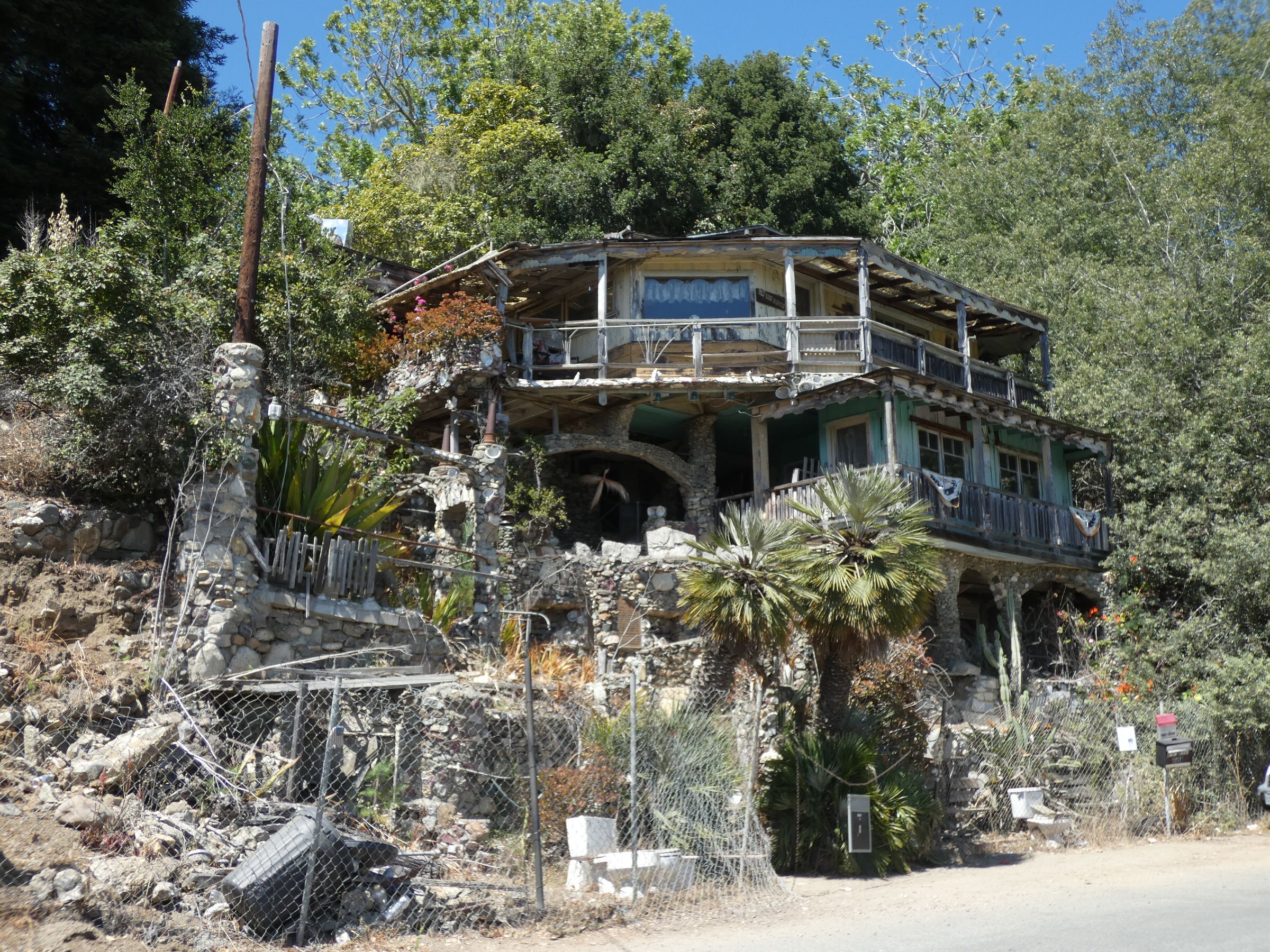
Building on the steep terrain required years of physical labor. Beal shaped terraces with hand tools, using a pick and shovel, and constructed rock-and-mortar retaining walls to support the hillside. He laid stone and concrete foundations beneath the wooden structures, then decorated the buildings with abalone shells, scrap metal, salvaged glass, and other discarded materials. Some railings served as irrigation pipes and sprinklers. Over time, the property developed into nine levels connected by walkways.
Beal also worked hauling materials to William Randolph Hearst’s estate at Hearst Castle in San Simeon, north of Cambria. Local accounts recorded by SPACES Archives suggest that discarded materials from the estate found their way into his hillside structures. The work gave Beal access to a variety of building supplies and decorative objects, which he incorporated into a home shaped by the terrain and the materials he could obtain.
A 1988 report in the Los Angeles Times described walls incorporating everyday objects such as pots, pans, car bumpers, television sets, hubcaps, and engine parts. These items accumulated over decades as Beal continued to add whatever caught his eye. By the 1970s, the property was increasingly being recognized as folk art rather than simply an eccentric structure.
From hillside project to landmark
Beal was also known as Dr. Tinkerpaw and Captain Nittwitt. As he grew older, maintaining the property became more difficult. In 1975, volunteers established the nonprofit Art Beal Foundation to help him remain on the land for as long as he wished and seek public funding to protect the site from destruction or development, according to SPACES Archives.
California subsequently recognized the property as a historic landmark. The state’s historic landmark records list Nitt Witt Ridge as California Historical Landmark No. 939, recognizing it as a twentieth-century folk art environment. Its construction reflects Beal’s self-taught building methods, use of hand tools, and reliance on salvaged and locally available materials. The arrangement of its many components across the steep hillside also sets it apart from conventional residential architecture.
Beal lived at Nitt Witt Ridge until 1989, when he moved to a nursing home. He died in 1992. A young couple bought the property in 1999 and began restoring it, repairing staircases, walls, and sections of the foundation while clearing overgrown vegetation.
Ownership changed again in 2022, and the property is listed as permanently closed to visitors. An August 2024 update to the SPACES Archives listing reported that the structure remained intact, although its future was uncertain. That update provides a documented snapshot of its condition at the time, rather than confirmation of its present state.
Nitt Witt Ridge remains a record of Beal’s decades-long effort to turn discarded materials into a home. Its terraces, irregular walls, and winding pathways reflect the way he adapted construction to the hillside and built with whatever he could salvage.