
 E-Paper


Shirin Gupta is a content producer with the Hindustan Times. She covers everything between politics, entertainment and sports at the US desk. Shirin got interested in political journalism during her time as a web editor at her college newspaper NCC News in Syracuse when she first started seeing the effects of national politics in life of her fellow colleagues. Shirin has worked on a wide range of fast-moving and developing stories locally when she was at NCC editing accessible reports for the audience. Her current role requires her to track real-time updates, verify information and present balanced coverage across diverse beats. Covering US politics from an international newsroom perspective has further deepened her understanding of how domestic decisions can have far-reaching global consequences. With a keen interest in international affairs, Shirin continues to build her expertise in geopolitics, policy shifts, and cross-border developments. She aims to learn and evolve her reporting in matters of geopolitics and international issues. Outside the newsroom Shirin writes about books and music for her personal blog. She is an avid consumer of pop culture and reveres literature.
 Trending News
Iowa lead azide detonation: Health officials issue urgent safety advisory ahead of Army’s planned blast
The Illinois Department of Public Health urged residents near the Iowa Army Ammunition Plant to stay indoors as the US Army prepares to detonate lead azide.


Health officials have issued an urgent public safety advisory ahead of the US Army’s planned controlled detonation of nearly 68 barrels (five tonnes) of degraded lead azide at the Iowa Army Ammunition Plant on Wednesday. The operation had sparked an outpouring of public concerns about health and environmental impacts.
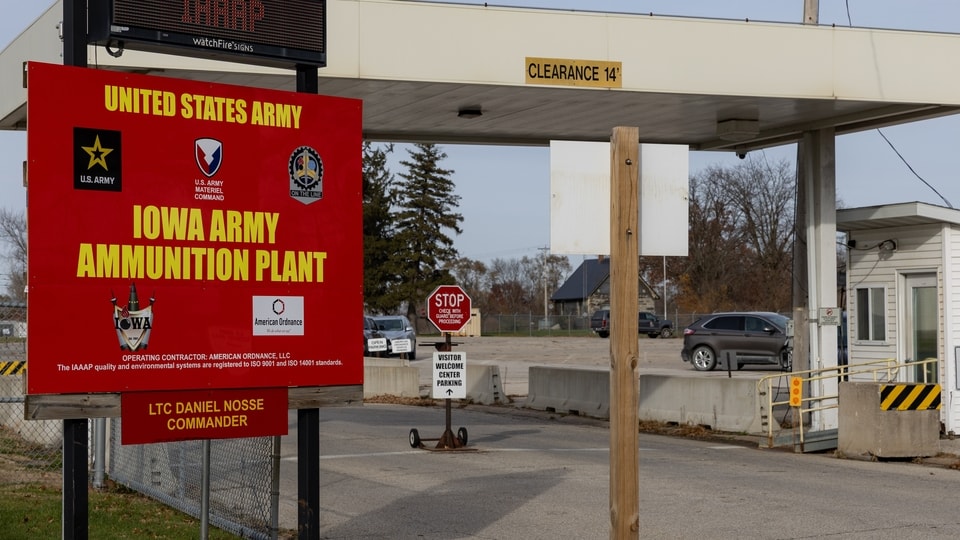
The health advisory was issued through Illinois Department of Public Health (IDPH), which warned that there is “no known safe level of lead exposure.”
Army Maj Gen Eric Shirley, the commander of the operation, said at a press conference in Middletown, Iowa, “Inaction is no longer an option. It would be irresponsible for us to not take the determined, consensus-based course of action moving forward."
Deep Dive

The controlled blast is scheduled for 9am CST on Wednesday.
Also read: Trump to award Presidential Medal of Freedom to former NYC Mayor Rudy Giuliani
What precautions should be taken?
In a series of posts on X, the IDPH urged residents in parts of Des Moines, Henderson, Hancock and McDonough counties to shelter indoors until authorities announce the all-clear.
“Residents within a 20-mile radius of the detonation site are advised to stay indoors with windows and doors closed to reduce exposure to airborne lead dust, noise, and vibration,” the department said.
The department stressed that “there is no known safe level of lead exposure”, noting that lead can be toxic if inhaled or swallowed. Young children and pregnant people face the greatest health risks. Officials advised anyone concerned about exposure to speak with a healthcare provider about blood lead testing.
According to the department, Heating and cooling systems should be switched to recirculate indoor air to reduce the entry of outside particles. Outdoor activities should be avoided while the dust plume remains in the area.
It is also advised to was your hands with soap and water before residents eat or drink anything.
People with pets or livestock are encouraged to relocate animals away from the potential exposure area if possible. If relocation is not feasible, animals should be sheltered inside enclosed barns or sheds. Feed and water should be moved indoors or covered. The Department suggested discarding exposed feed and drain and refill water tanks after the detonation.
After the explosion, officials recommended wet-cleaning patios, outdoor furniture and other dusty surfaces using soap and water. The department also asked to not sweep or use leaf blowers as it could spread the contaminated dust.
Pet owners are also advised to wash exposed animals and monitor them for unusual symptoms.
Also read: US issues fresh security alert for Americans across Middle East over Iran, Houthi attack threat
NASA, FEMA and EPA join federal response
NASA announced it has deployed multiple research aircraft, including a P-3 Orion, a Gulfstream III and a contracted Beechcraft B200, to collect atmospheric and environmental data before, during and after the blast. They said that they will also use observations from its space-based TEMPO pollution-monitoring instrument.
Meanwhile, the EPA has positioned air-monitoring teams across the region to measure lead particles before and after the detonation, according to the US Army. Officials said sampling results will be made available to the public once testing is complete.
The US Army in a press statement confirmed that FEMA has also begun relocating residents from a recommended five-mile southwest evacuation zone. They are offering hotel accommodation through at least Friday, along with transportation, food and emergency assistance for those who choose to leave.
Officials stressed that the relocation remains voluntary but strongly recommended for those living in the projected plume path. Residents outside the relocation zone but within the broader advisory area have been told to shelter indoors instead.
The Army said updated plume maps will be released beginning six hours before the detonation and updated hourly until the explosion. A final map showing the estimated area affected by airborne particles will be published after the operation concludes.


