
 E-Paper


NASA running out of time to bring Sunita Williams back as new SpaceX mission date set: Deadline for mid August
Boeing's Starliner, SpaceX's Falcon 9 are entangled in a race against time, with the former having a narrow window to safely return Williams-Butchmore to Earth.


It has been two months since Boeing's Starliner launched Sunita Williams and Butch Wilmore into space. After repeated delays in safely returning the Crew Flight Test astronauts, NASA has seemingly neared its deadline in a race against time. Despite constant, ostensible reminders, the astronauts have not been stranded in space since Starliner CS-100 docked at the International Space Station (ISS) on June 6. With technical issues and unexpected problems hindering the path of their Earth return, NASA is left with a narrow window to make it happen as another mission is ready to take flight.
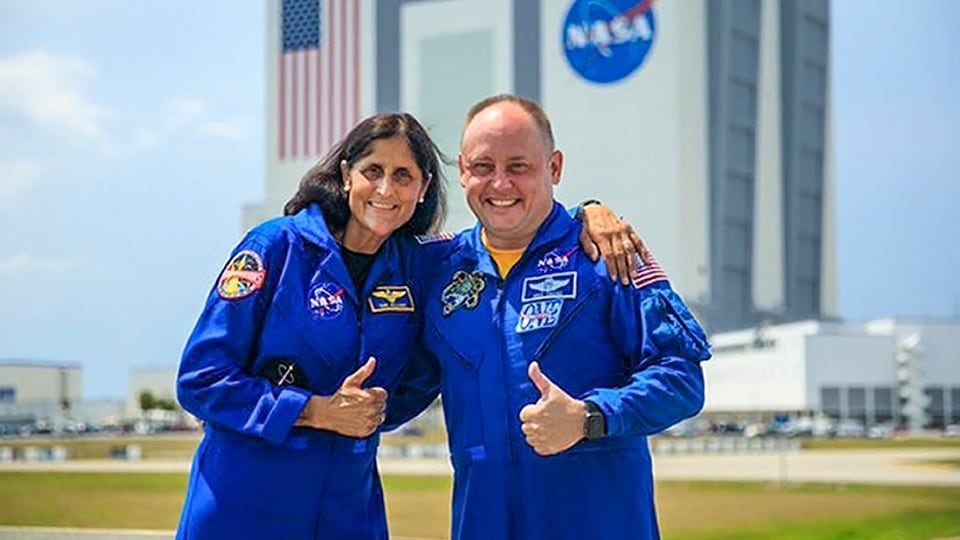
After being launched into space from Cape Canaveral Space Force Station in Florida in the first week of June, the first manned flight for Boeing's commercial crew program faced numerous setbacks, including malfunctions related to thrusters and helium leaks. Over the past weeks, astronauts have been conducting further tests to resolve these issues in space, something that is impossible to do on Earth.
Both these system malfunctions have critically pushed back spacecraft's re-entry into Earth's atmosphere indefinitely. However, recent complications hit an all-time high when NASA and SpaceX announced that its four-person Crew-9 mission to the ISS will take flight “no earlier than August 18.”
Also read | Hurricane Debby 10-point update: Florida braces for life-threatening storm surge
Boeing Starliner vs SpaceX Falcon 9: Only one can stay on ISS
The forthcoming schedule will see commander Zena Cardman, pilot Nick Hague, mission specialist Stephanie Wilson and mission specialist Alexsandr Gorbunov on board SpaceX's next astronaut launch for NASA. Although the rocket has been cleared for flight, NASA has been following up on safety checks to ensure the crew's security. While there's still time before the spacecraft takes off, the Starliner's presence at the ISS stands in the way.
The ISS has six docking ports, only two of which are on the US side, and both of them are occupied – first by SpaceX's Crew Dragon and the other by the Boeing Starliner. This inevitably indicates that the Starliner must complete its mission in space and return to Earth within the limited timeframe at its disposal to avoid any schedule clashes with Crew-9's launch. ISS program manager Dana Weigel also emphasised that only one can stay on board. Therefore, the Starliner must undock to make room for the Crew-9 mission.
This SpaceX and NASA collaboration marks the former's ninth astronaut rotation to the ISS under the latter's Commercial Crew Program. It will also be the tenth crewed flight of the Dragon spacecraft since the two-astronaut Demo-2 test flight happened in May 2020.
Akin to the Starliner, the SpaceX Falcon 9 rocket faced its own share of challenges after the July 11 launch mishap reported a liquid oxygen leak, tracing its source to a crack in a sense line for a pressure sensor.
Stich revealed that SpaceX has already switched that sensor hardware as the investigation related to security issues continues ahead of the Crew-9 mission. “We've been following along all the way through the investigation,” said NASA's Commercial Crew Program manager in a media briefing on July 26.
“We followed that testing, and we'll follow the same testing on our stage, so we'll get a check of that sensor in the second stage test,” he added. “We'll work through all the data, work through all the analysis and certification, and then we'll be ready to go fly.”


