
 E-Paper


Follow the latest breaking news, major developments and agenda-setting stories from India and around the world with the newsdesk at Hindustan Times. Operating round the clock, the desk brings together experienced editors, reporters and correspondents to deliver fast, accurate and contextual reporting across subjects that influence public policy, governance, business, society and international affairs. The HT News Desk covers politics, elections, government policies, the economy, business and markets, science and technology, the environment, law and order, infrastructure, education, climate issues and geopolitics, while closely tracking developments across states, institutions and global capitals. The team also leads coverage of major breaking news events, policy announcements, court proceedings, natural disasters, public emergencies and significant international developments. Reports published by the newsdesk are based on information gathered from reporters on the ground, official statements, government agencies, court records, regulatory filings, recognised institutions and other authoritative sources. Stories undergo editorial scrutiny and verification processes to ensure accuracy, fairness and relevance, and are updated as events evolve and additional information becomes available. Whether covering a key political decision in New Delhi, an economic policy shift affecting millions, a landmark court ruling or a major global event, the HT News Desk aims to provide readers with reliable, fact-based journalism that delivers not only the latest developments but also the context and analysis needed to understand their wider implications.
 Trending News
US to release JFK files today: What could they reveal?
Just weeks before Lee Harvey Oswald shot President John F Kennedy in November 1963, he visited the Soviet and Cuban missions in Mexico City. The American spy agency,


Just weeks before Lee Harvey Oswald shot President John F Kennedy in November 1963, he visited the Soviet and Cuban missions in Mexico City. The American spy agency, CIA, knew about it, and many experts and historians believe it could have prevented the assassination. What exactly did they know?
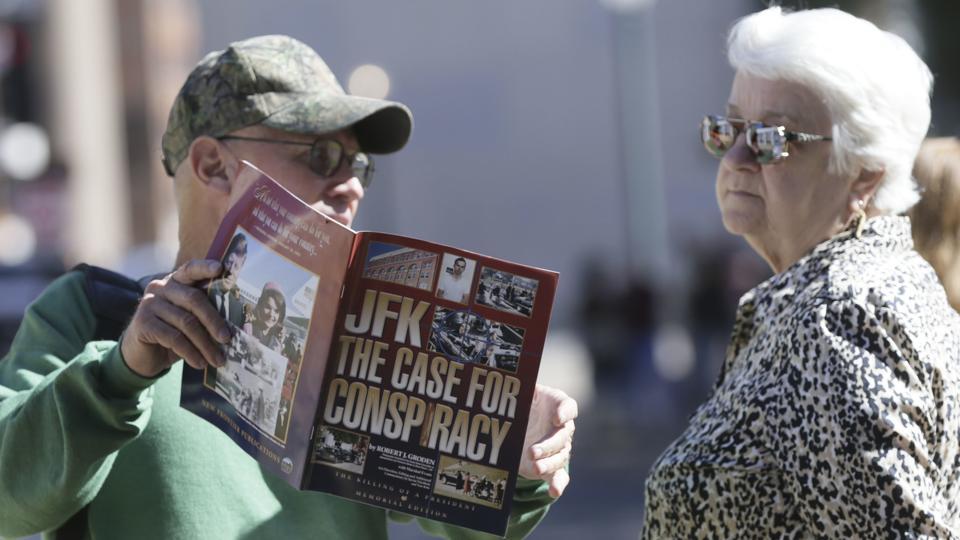
President Donald Trump, a purveyor of conspiracy theories, is eagerly awaiting the release on Thursday of a bunch of previously unseen documents — called the “JFK Files” — that are expected to shed light on a slice of American history that is mired in theories, stories and, in large measure, just pure fiction.
“The long anticipated release of the #JFKFiles will take place tomorrow,” the president tweeted Wednesday. “So interesting!” Presumably, therefore, he is not changing his mind and will allow the documents be released, overruling the CIA and FBI that fought against it to protect sources and procedures.
The documents, said to be about 3,100, were collated by National Archives under Congress by a 1992 law — JFK Assassination Records Collection Act — that came a year after the release of Oliver Stone movie “JFK”. The film gave new life to conspiracy theories and renewed calls for full transparency.
The release is unlikely to settle for all times to come the mother of all conspiracy theories — that Oswald did not act alone and was part of a deeper conspiracy — but academics, students of history and chroniclers of spy agencies hope to find useful information on Oswald’s six-day stay in Mexico City.
“I’ve always considered the Mexico City trip the hidden chapter of the assassination. A lot of histories gloss right past this period,” Philip Shenon, a former New York Times reporter who has written a book on Warren Commission, which investigated the assassination and whose findings remain the official position of the US government, told the Washington Post.
“Oswald was meeting with Soviet spies and Cuban spies, and the CIA and FBI had him under aggressive surveillance. Didn’t the FBI and CIA have plenty of evidence that he was a threat before the assassination?”
He went on to suggest that they could have prevented the killing “if they had acted on that evidence” and that “These agencies could be afraid that if the documents all get released, their incompetence and bungling could be exposed. They knew about the danger of Oswald, but didn’t alert Washington”.


