E-Paper



Communist party chief Khadga Prasad Oli elected Nepal’s new PM
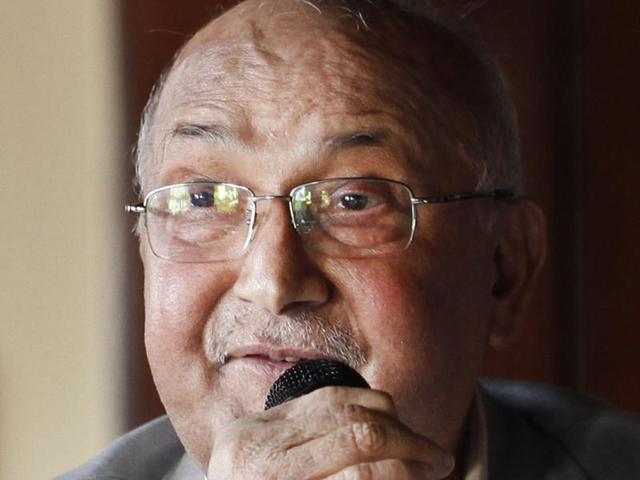
Chairman of Communist Party of Nepal (Unified Marxist Leninist) Khadga Prasad Oli was elected Nepal’s 38th Prime Minister on Sunday.


Chairman of Communist Party of Nepal (Unified Marxist Leninist) Khadga Prasad Oli was elected Nepal’s 38th Prime Minister on Sunday -- three weeks after the country adopted a new constitution.
The election is significant as Nepal reels under a crisis because of ongoing protests, in the southern plains bordering India, by Madhesis opposed to the demarcation of federal states in the new statute.
Oli secured 338 votes, from the 587 members who took part in the election, to defeat outgoing prime minister and chief of Nepali Congress Sushil Koirala by a margin of 89 votes.
Nepali Congress, the largest party in Parliament, and CPN (UML), the second largest, were part of the ruling coalition that was instrumental in promulgating the Constitution last month.
Oli becomes the 7th head of government in the Himalayan nation since the first constituent assembly polls in 2008 after the civil war. He is the third prime minister from his party in six years after Madhav Kumar Nepal and Jhala Nath Khanal.
A hardliner who isn’t seen as sympathetic towards the demands of protesting Madhesi parties, Oli was also opposed to amendments to the statute to resolve the issue -- a move that soured relations between NC and CPN (UML).
“I take this responsibility as an honour, opportunity and challenge and will do my best to implement the constitution and rehabilitate those affected by the earthquake,” he said after his victory.
Oli’s candidature was supported by more than a dozen parties, including Unified Communist Party of Nepal (Maoist) and the right-wing Rashtriya Prajatantra Party (Nepal).
His priority would be to end the crisis in Madhes by amending the Constitution and address problems faced in rehabilitation of those affected by the devastating earthquake of April this year.
The protests in Madhes, which have affected supply of goods, especially petroleum products from India, created an acute shortage in Nepal ahead of Dashain, the country’s biggest festival.
Despite repeated denials by New Delhi about imposing a blockade to support the Madhesis, many in Kathmandu, including Oli, have blamed India for the present situation.
He has also been critical of India’s stance that the Constitution should be broad-based and should accommodate aspirations of Madhesis.
Sunday’s election saw two different Madhesi factions that had quit the constitution-drafting process in the final stages, opting to cast their votes for rival candidates.
While Madhesi Peoples’ Rights Forum (Democratic) sided with Oli, the United Democratic Madhesi Forum, a conglomeration of four parties, decided to support Koirala.