E-Paper



Trucks enter Nepal through Birganj for first time in 5 months
Five trucks with goods from India entered Nepal through the Birganj border point on Friday morning, the first such shipment since Madhesi protesters blocked the key trade route in September to protest against the new constitution.


Five trucks with goods from India entered Nepal through the Birganj border point on Friday morning, the first such shipment since Madhesi protesters blocked the key trade route in September to protest against the new constitution.
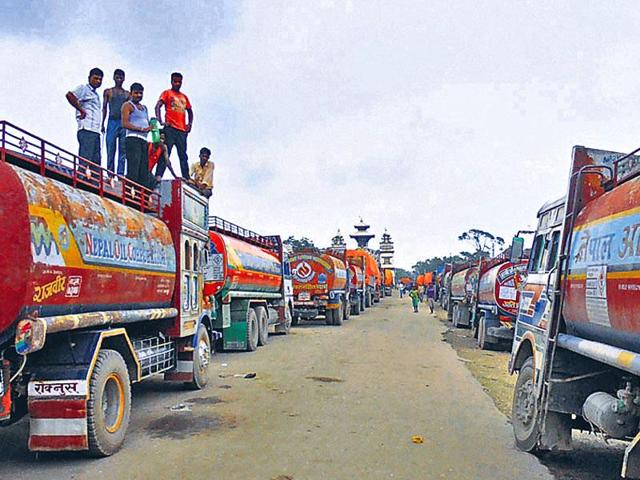
The trucks carrying machinery crossed Miteri Bridge, on which cadres of the United Democratic Madhesi Front have set up temporary tents and bamboo barricades, between 8 and 9 am, when few protesters were present.
Four empty trucks and two jeeps, stranded in Nepal since the blockade began, crossed over to India.
“The vehicles entered early morning when the number of protesters on the bridge was very less. But movement of vehicles stopped again after more protesters arrived,” Keshavraj Ghimire, chief district officer of Parsa, told Hindustan Times.
Hundreds of trucks with goods are stranded on the highway across the border, waiting for the blockade to end so that they can enter Nepal.
Nearly 70% of trade between India and Nepal takes place through Birganj, and the blockade of the border point resulted in a severe shortage of essential goods and petroleum products.
Though goods were traded through other border points, which were unaffected by the blockade, it wasn’t enough to cater to Nepal’s demands.
The number of protesters at the Birganj border, which has been closed since September 23, has dwindled in the past few weeks due to the cold weather and differences within the UDMF on how to continue the movement to push for changes in the constitution.
Since Saturday, when Nepal passed an amendment to the constitution to address some of the UDMF’s demands, goods have been ferried across Miteri Bridge at night using horse-drawn carts.
The UDMF has been protesting against the constitution since August, seeking a package deal for their 11 demands, including fresh demarcation of federal states and proportional representation of Madhesis in all state bodies.
Madhesi parties have rejected the amendments, which seek to increase the number of parliament seats in the Terai region and give more representation to marginalised groups, saying their main demand for demarcation remains unaddressed.
Though the four parties in the UDMF have agreed to continue their protest, there are differences on whether the blockade at the border should be lifted.
Despite India’s repeated denials, Nepal has accused New Delhi of imposing an unofficial blockade to support the Madhesis, who reside in the plains bordering India and share cultural and family ties across the border.
This week, Prime Minister KP Sharma Oli told a group of journalists he wouldn’t go ahead with a planned visit to India till the blockade is lifted.