E-Paper



$1 microscope, cheap disease screening: Meet India’s ‘genius grant’ winner
Indian-American biologist Manu Prakash has won the prestigious MacArthur ‘genius grant’ fellowship for 2016 for his low-cost inventions, including a foldable microscope built for less than $1, that have transformed scientific research in some of the world’s poorest regions.

 Prefer HTon Google


Indian-American biologist Manu Prakash has won the prestigious MacArthur ‘genius grant’ fellowship for 2016 for his low-cost inventions, including a foldable microscope built for less than $1, that have transformed scientific research in some of the world’s poorest regions.
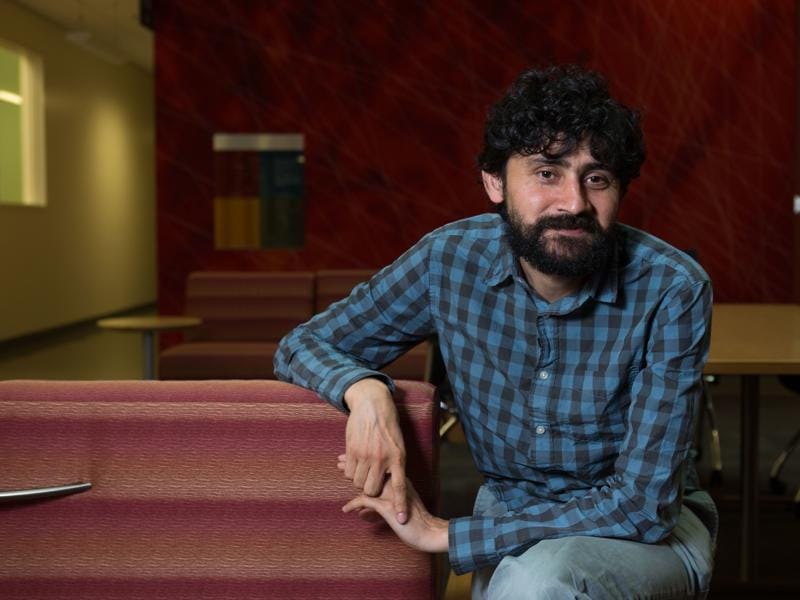
Prakash, a graduate from IIT-Kanpur, is an assistant professor of bioengineering at Stanford University in the United States and was among the 12 people who won $625,000 award this year.
“I am incredibly honoured and it’s quite a humbling moment. When I first got the call; I almost did not believe it,” he told Hindustan Times over email.
Prakash, who studied computer science at IIT before finishing his masters and PhD in applied physics from the Massachusetts Institute of Technology, first shot to fame when he built a paper microscope – foldscope -- that folded like origami with glass beads as lenses embedded in.
“I think like a biologist but solve problems like an engineer. Fundamentally, I like solving problems,” he told LA Times in an interview.
Read: Two IIT alumni among winners of prestigious MacArthur ‘genius grant’
Prakash says the microscope – part of an array of ultra low-cost scientific instruments -- has been distributed to 135 countries, where thousands of people have used them to explore diseases, map biodiversity and promote practical education in rural area.
“My work is driven by pure curiosity; and while I delve in my own scientific inquiries - I also try to build and design tools that are affordable for people around the world to engage and experience the joy of science first hand,“ he told HT.
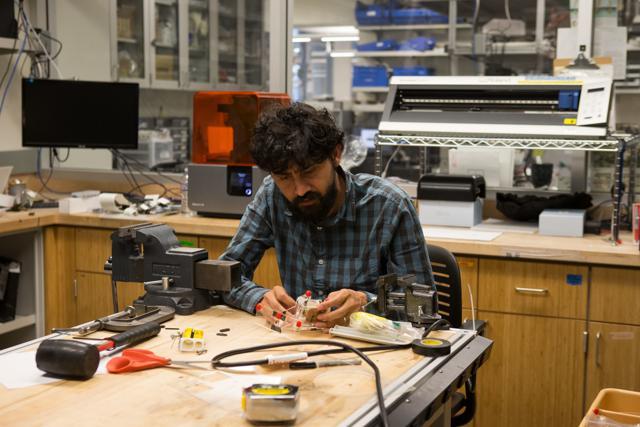
Among the projects Prakash is working on right now includes a low-cost chip that can collect thousands of saliva droplets from mosquito bites to be screened for pathogens.
The invention would enable rapid and low-cost collection of surveillance data that can prove critical to staving off the kind of mosquito-borne disease outbreak that India is currently reeling under. The country has seen thousands of cases of dengue and chikungunya over the past two months with scores of deaths. “I am filled with excitements for the things to come and new explorations,” he told HT.
Prakash said his interest in “frugal science” came from his childhood, when he grew up in a resource-poor region and was often forced to scrounge to sustain his scientific interests.
In the years that followed, he constantly improvised on existing materials, including building a “water computer” – a system where water droplets trapped in a magnetic field could be manipulated to behave like one of the building blocks of the modern computer.
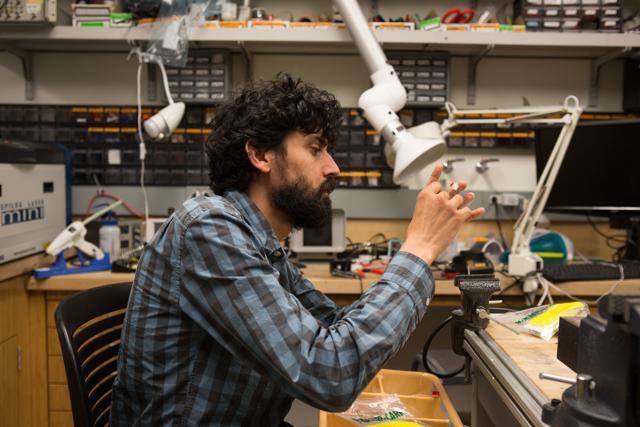
The MacArthur fellowships are awarded to people with exceptional creativity and the grant money is disbursed over five years to provide recipients with the flexibility to pursue goals without tight deadlines.
This year’s grants also included another Indian, New York University professor Subhash Khot, a theoretical computer scientist at New York University who is pushing the frontiers of computer design. Khot graduated from IIT-Bombay in 1999.
“As computers come to drive ever more aspects of our lives, greater understanding of the limitations of computing is increasingly important. Khot’s continued ingenuity and tenacity will drive this important and fruitful area of research for many years to come,” said the MacArthur fellowship citation.

Prakash told the Stanford University website that he almost didn’t pick up the phone when the MacArthur Foundation called because he was tending to his 4-month-old twins. He also declined a phone interview request from HT for the same reason.
“His many lines of research are driven by curiosity about the diversity of life forms and how they work, empathy for problems in resource-poor settings, and a deep interest in democratizing the experience and joy of science globally,” said the MacArthur fellowship citation.