E-Paper



No succour for ailing cows in Bhopal, shelter home project non-starter
The condition of stray cows in Bhopal remains pathetic, despite the rhetoric on cow protection getting louder in recent months.


The condition of stray cows in Bhopal remains pathetic, despite the rhetoric on cow protection getting louder in recent months.
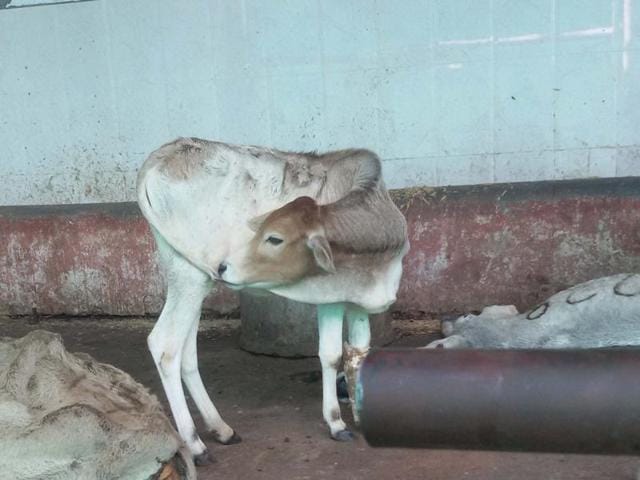
While the Bhopal Municipal Corporation’s proposed project to construct a 2,000-capacity shelter for cows and other animals is yet to take off, the state government-run veterinary shelter cum treatment facility, Aasra, can accommodate only 30 cows.
The situation is particularly worrying as thousands of stray cows roam on city roads, posing a threat to the safety of motorists. Sometimes, these bovines too get injured in the accidents.
Aasra, which is located at the Jail Road, receives one to two injured or sick cows daily.
When HT visited the Aasra treatment facility, the cows were locked inside a shed, with a notice on the board saying that if some injured stray animal escaped or died, the authorities were not responsible.
Assistant director animal husbandry and veterinary doctor Mukesh Sharma said the government had plans to increase the capacity for housing stray sick and injured animals as the existing shed was proving to be insufficient.
“Sometimes we have to pack more cows than these sheds can accommodate,” he said.
Authorities have also failed to check the use of polythene – a major killer of cows – in the city. Wherever one goes in Bhopal, one can see cows rummaging through the garbage in municipal containers, struggling to take leftovers out of the polythene bags.
“Doctors cannot diagnose easily whether the poor animal is in pain due to some other disease or due to polythene. And it becomes difficult to decide whether to operate upon it or not,” said Dr Sharma.
For the last three years, the BMC has been talking of setting up an animal shelter-cum-care centre at Bhanpur with a capacity of 2000 stray animals, but the project is yet to materialise.
BMC public relations officer PS Shukla said, “The final go-ahead for the project is awaited as there was some issue with the selection of the site at Bhanpur.”
Director animal husbandry Dr RK Rokde said that in the urban areas, the issue of stray animals had to be primarily dealt with by the municipal body.
“If municipal body cannot set up a shelter house for stray animals for some reason, we are ready to provide them infrastructure in the shape of some rooms or sheds in the premises of our animal husbandry hospital in Bhopal, but they have to run it,” he said.
However, Veterinary Council of India president Dr Umesh Chandra Sharma had a different take on the issue. “Kanji houses are not a solution. The BMC should register all those households that keep cows. When stray cows increase in some area, officials can check such households and accordingly take a decision.”