E-Paper



Poisonous weed, polythene ‘kill’ cows in Madhya Pradesh sanctuary
In the sanctuary in the state’s Agar-Malwa district, which has about 4,200 cows, 52 deaths have been reported since December 1.

 Prefer HTon Google


The country’s first cow sanctuary set up by the Madhya Pradesh government has reported cow deaths due to reasons, including lantana weed poisoning, polythene ingestion, and pneumonia.
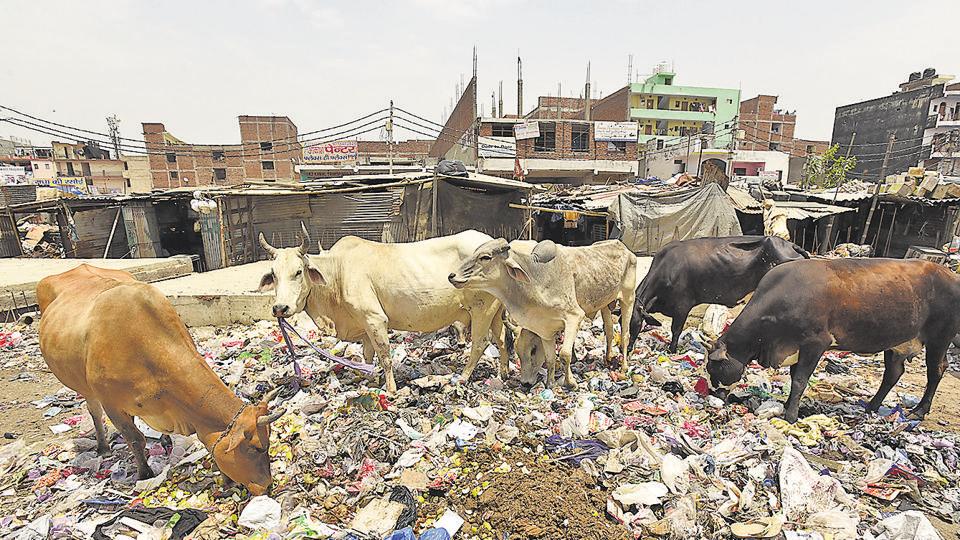
In a sanctuary, cows are free to move around and graze whereas in a shelter they are kept in an enclosure and fed.
In the sanctuary in the state’s Agar-Malwa district, which has about 4,200 cows, 52 deaths have been reported since December 1.The district administration called a team of veterinary experts from Ujjain to get the matter investigated.
“The vets have taken samples of viscera and blood from the carcasses for detailed analysis into the causes. The samples have been sent to veterinary institutes in Bhopal and Ujjain. In the post-mortem of five cows, veterinary doctors found they had died due to reasons, including eating of polythene and lantana weed poisoning,” district collector Ajay Gupta told HT.
Experts say the lantana camara weed is toxic and causes hepatotoxicity, leading to bovine death. To avoid them, the state forest department and the Indian Grassland and Fodder Research Institute, Jhansi, will help the state government grow different kinds of grasses over 200 hectares in the sanctuary.
The immediate worry for the district administration is that the poisonous weed grows abundantly in the area. “We have decided to remove the toxic weed by excavating the soil with the use of JCB machines. This weed grows here and it is a challenge to stop cows from eating it,” said the district collector.
He said that the deaths of 52 cows in a month was abnormal and all precautions were being taken. “If cows are dying, we have to look into the factors that caused the mortality so that if there is anything major factor that can be prevented, we can check that,” he said.
MP has the highest cattle population in the country, with over 1.96 crore cows, as per the latest livestock survey. The sanctuary, called Kamdhenu Gau Abhyaranya and spread over 472 acres, was inaugurated in September, nine years after CM Shivraj Singh Chouhan’s announcement of setting it up.