Sign in

To spot a snake in Madhya Pradesh, click the mouse

A first of its kind database that maps habitats, distribution, status and rarity of reptiles and amphibians found in Madhya Pradesh has been complied by a Ujjain-based snake rescue and rehabilitation society.

Updated on: Dec 8, 2014, 21:02:19 IST
Hindustan Times | By , Bhopal
Share
Share via
  • facebook
  • twitter
  • linkedin
  • whatsapp
Copy link
  • copy link

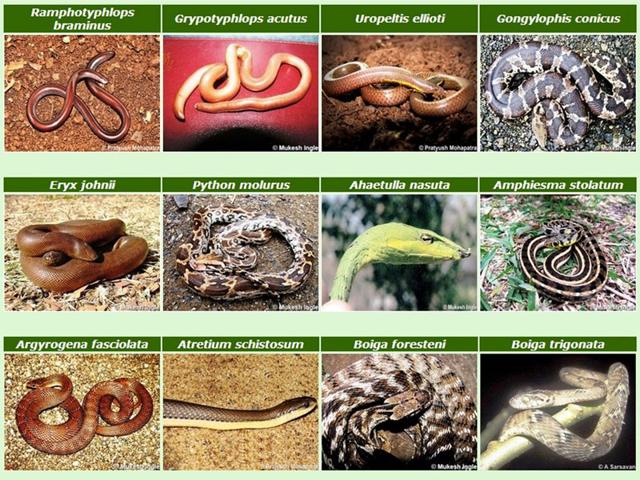
A first of its kind database that maps habitats, distribution, status and rarity of reptiles and amphibians found in Madhya Pradesh has been complied by a Ujjain-based snake rescue and rehabilitation society.

A-screenshot-of-the-web-database-that-maps-habitats-distribution-status-and-rarity-of-reptiles-and-amphibians-found-in-Madhya-Pradesh

The web-based project complied by Snake Research Organisation (SRO) and uploaded on the official website of Madhya Pradesh State Biodiversity Board (MPSBB), has an unique interactive map, which on a click of a mouse highlights districts in green where a particular reptile or amphibian is found in the state.

The graphic compilation with rare photographs was sponsored by MPSBB.

Created by Mukesh Ingle, the founder of SRO, the database shows details like distribution, dietary habits, status, and whether the species is threatened or not and so on.

The reference list details 36 species of snakes, 23 species of lizards, 11 species of turtles, a species of each of crocodile and Ghariyal found in the state.

Ingle, who has studied reptiles and amphibian species in Madhya Pradesh for two decades, is also credited of reported the presence of five new frog species, four snake species and three lizard species, which had not been spotted in the state earlier.

"After we conducted our survey... we recorded 79 species of reptiles and 19 species of amphibians. Among reptiles, we recorded 39 species of snakes, 27 species of lizards, 11 species of turtles and tortoises and one species each of Crocodile and Gharial,” Ingle told HT.

“Based on the broader study...we thought it would be good if we can create a web database of reptiles of the state, which would be of great help to the people in the state, wildlife lovers and environmentalists."

Ingle said the database would also aid experts in conservation efforts and also to initiate conservation awareness among fringe village areas.

"Reptiles of MP have never been surveyed extensively and systematically. Our projects are filling this gap here."
  • Neeraj Santoshi
    ABOUT THE AUTHOR
    Neeraj Santoshi

    Neeraj Santoshi is the Chief of Bureau for Hindustan Times in Uttarakhand, where he leads the state reporting team while covering government, politics, environment, wildlife, Uttarakhand High Court, and issues shaping the Himalayan region. With more than two decades in journalism across conflict zones, he has covered politically sensitive regions and environmentally fragile landscapes, and focused on stories that combine public interest with in-depth storytelling. An alumnus of Pune University with a Master’s in Communication Studies, he has reported extensively from Jammu & Kashmir (2003-2010), Madhya Pradesh (2010 to 2018 ) and Uttarakhand (Since 2018), covering subjects ranging from insurgency, elections and governance to wildlife conservation, mining, climate change, agriculture, human rights and social justice. He has covered politics and legislative assemblies of both Jammu & Kashmir and Madhya Pradesh over more than a decade. Before taking over as Chief of Bureau in Uttarakhand, he served as Special Correspondent with Hindustan Times in Madhya Pradesh and earlier reported for both Hindustan Times and The Indian Express in Jammu & Kashmir, where he covered state politics, environment and insurgency-related developments. Over the years, his stories have focused on environmental degradation, wildlife, illegal mining, governance and the changing social fabric of Himalayan states and Central India. He is particularly interested in long-form explanatory journalism, and stories that explore the intersection of ecology, conservation, governance and society. Outside the newsroom, Neeraj enjoys reading widely on neuroscience, consciousness studies, Artificial Intelligence and quantum physics, with a special interest in Kashmiri Tantric Shaivist traditions. He is also passionate about wildlife, mountaineering and the Himalayas, interests that continue to inform his reporting and deepen his understanding of the region he covers.Read More