
 E-Paper



Bihar Assembly Election 2020: All you need to know about Pipra constituency
Bharatiya Janata Party’s Shyambabu Prasad Yadav won in the 2015 elections with 65,552 votes. JD(U) candidate Krishna Chandra was the runner up with 61,622 votes.


Pipra assembly constituency, part of Purvi Champaran Lok Sabha constituency, will go to vote in the second phase of Bihar’s three-phased assembly election. The first phase of election was held on October 28 and the last phase is scheduled for November 7. Results will be announced on November 10.
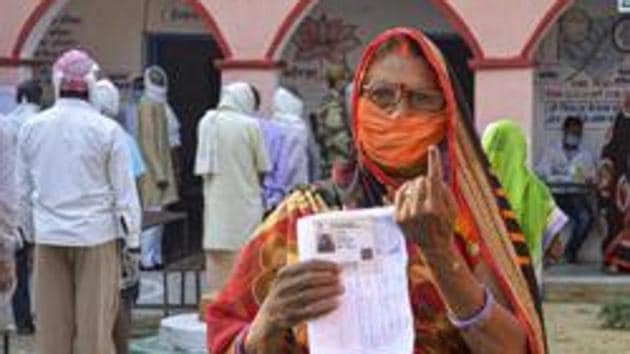
The total number of voters in the constituency stands at 336,007. As many as 178,466 are male voters, 157,530 are female voters and 11 are third gender voters. In 2015, there were 298,856 registered voters out of which 159,438 were male and 139,307 were female. Voter turnout in the previous election was 57.70%. In the first phase of this year’s election, for which 71 assembly constituencies went to vote, the voter turnout was 53.54%.
Click here for full coverage of Bihar Assembly Election 2020
Bharatiya Janata Party’s Shyambabu Prasad Yadav won in the 2015 elections with 65,552 votes. JD(U) candidate Krishna Chandra was the runner up with 61,622 votes.
votes. CPI candidate Raj Mangal Prasad stood third in the contest securing 8,366 votes. BJP bagged 38% of the votes and the JD(U) received 35.72 % while the CPI got 4.85 % of the votes.
Pipra was among the 53 seats won by the BJP that year.
In 2010, JD(U) candidate Awdesh Prasad Kushwaha defeated RJD candidate Subodh Yadavi by 11,887 votes.
Also Read: Follow Covid-19 guidelines and participate in festival of democracy, PM Modi urges Bihar voters
These elections are the first major elections being held in the country after the outbreak of the coronavirus pandemic in March. The Election Commission of India has issued guidelines for a safe conduct of the elections. A maximum of 1,000 voters will be allowed to vote from a polling booth and postal ballot facility will be provided for those aged above 80, or those afflicted with the coronavirus.
Electronic voting machines will be sanitised, polling personnel will have to wear masks and other protective gear and thermal scanner, hand sanitiser, soap and water will have to be made available by authorities, the ECI has said.


