
 E-Paper



A visit to Maastricht’s cathedral of books
Even non-readers will pause at the threshold of Boekhandel Dominicanen, a church-turned-bookstore in the Dutch city

 Prefer HTon Google


A university city on the southern tip of the Netherlands, Maastricht is spread out over both sides of the Meuse River. Located about 215 km south of Amsterdam, this baroque beauty is known for its medieval-era architecture, cobbled streets, elegant squares, and vibrant cultural scene. It has the easy charm of a border town that has long blended Dutch, French, and Belgian influences, and every December, the city’s Vrijthof Square becomes the heart of Magisch Maastricht (Magical Maastricht), a month-long celebration of lights, music, and markets.
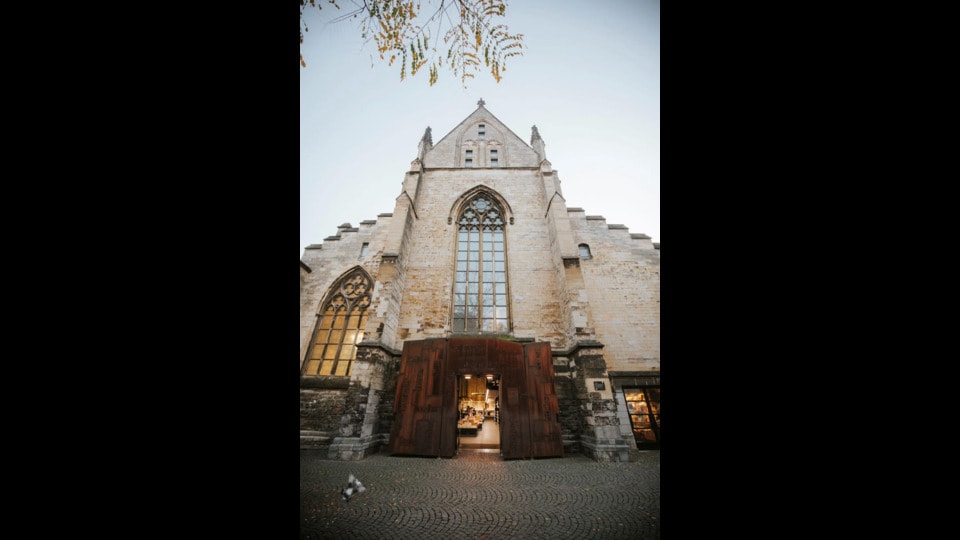
But nothing is more magical than Maastricht’s best-kept secret located in the midst of the old town: a doorway that most visitors typically mistake for a church. And technically, it was one: a 13th-century Gothic Dominican monastery once filled with monks, musicians, and scholars. Today, sunlight still pours through its soaring clerestory windows, but instead of prayer chants, you will hear soft conversations and the quiet rustle of turning pages.
Welcome to Boekhandel Dominicanen, voted the Most Beautiful Bookstore in the World for 2025. It is perhaps the closest thing literature has to a cathedral.
The store was created from a merger between the town’s Bergman’s bookshop, the Academische Boekhandel, and the Dutch Selexyz bookshop chain. The project posed a challenge to architects Evelyn Merkx and Patrice Girod from Amsterdam-based studio Merkx+Girod: how could they honour centuries-old architecture while creating enough room for a modern retail experience?
The church floor offered only about 750 m² of usable space, far short of what the new bookstore needed. The architects offered a bold solution: a monumental, walk-in bookshelf constructed in sleek black steel, rising three levels high and wrapping around the church’s original stone columns. Built by Keijsers Interior Projects, the structure doesn’t just hold books; it acts as a viewing platform, guiding visitors up through the nave and offering unusual perspectives of ribbed vaults and medieval frescoes usually reserved for scaffolding and restoration crews.
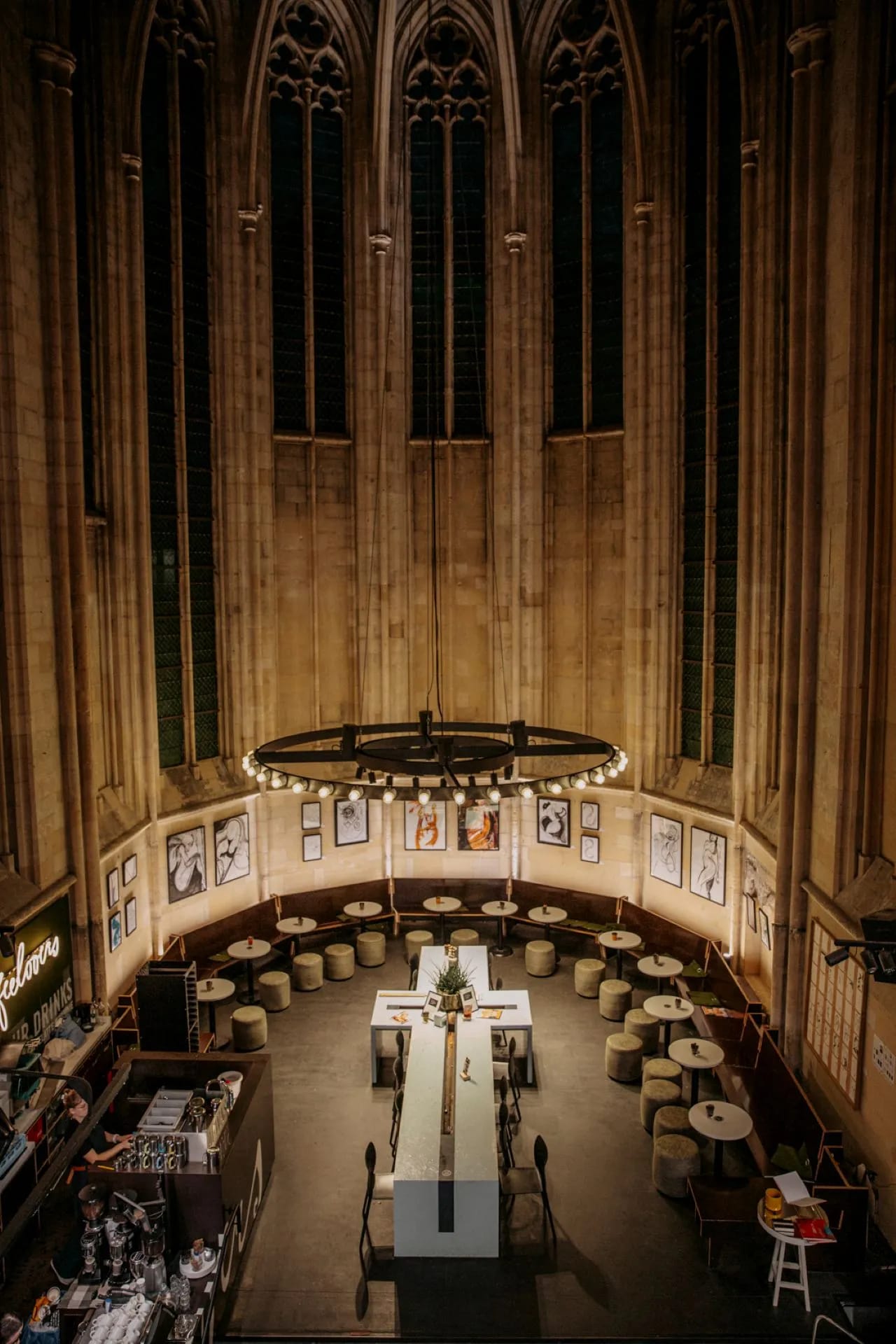
In contrast, the opposite aisle remains largely open, with low tables running parallel to the central nave like minimalist pews guiding visitors toward an imagined altar. Lighting plays its own role: a contemporary chandelier hangs above a crucifix-shaped table in the café, where armchairs curve gently with the outline of the apse. The result? A dramatic dialogue between weight and lightness, stone and steel, silence and movement. The design, awarded the Lensvelt de Architect prize in 2007, has become part of the bookstore’s identity, drawing nearly 700,000 visitors each year.
A global recognition of beauty
Boekhandel Dominicanen’s new award is a milestone in its journey. In May, the 1000 Libraries Awards shortlisted 19 beautiful bookshops around the globe, selected using metrics like online reviews, architectural innovation, and community engagement. From May 15 to July 15, voting opened worldwide. The competition was intense: 200,000 votes poured in from book lovers, architects, cultural travellers, and bibliophiles determined to defend their favourite literary spaces. When the tally closed, Boekhandel Dominicanen, part ancient monastery, part contemporary cultural landmark, was the unmistakable winner.
“These bookshops aren’t just businesses,” the jury wrote. “They are proof of the enduring power of independent bookselling in a digital age.” Some won hearts through modern design; others through their intimacy or community spirit. But Maastricht’s cathedral of books offered something else: a sense of awe.
A living cultural space
In the side aisle of the nave, beyond shelves of fiction and travel writing, a café wreathed in the faint aroma of roasting beans buzzes with the low hum of conversation. It seems to be an apt meeting place for literature and daily life.
A server wiping down tables smiled when asked what it’s like to work in such a place. “Most cafés have background noise,” she said. “Here, the background is wonder. People walk in and go quiet; not because they’re told to, but because the building seems to ask for it.”
Cultural events are part of the rhythm of the space. Readings, live performances, author talks, and concerts routinely enliven the aisles. A jazz trio sets up where monks once studied scripture. Poets read where the choir stood.
For such a dramatic setting, the selection of books is refreshingly broad and practical. There are Dutch and English titles, shelves devoted to children’s literature, contemporary fiction, poetry, and philosophy. And then there are books on art history, cookery, scientific texts, and travel.
There’s also a surprise: the music department.
Follow the steel staircase upward, or take the elevator, and the atmosphere subtly shifts. The upper floor offers one of the most spectacular interior views of the bookstore: the full sweep of vaulted ceilings, frescoes glowing softly under filtered light, and the organised geometry of shelves stretching across the nave.
But here, the theme is sound. This level houses an extensive collection of classical music, pop, and jazz, along with CDs and a strong vinyl section.
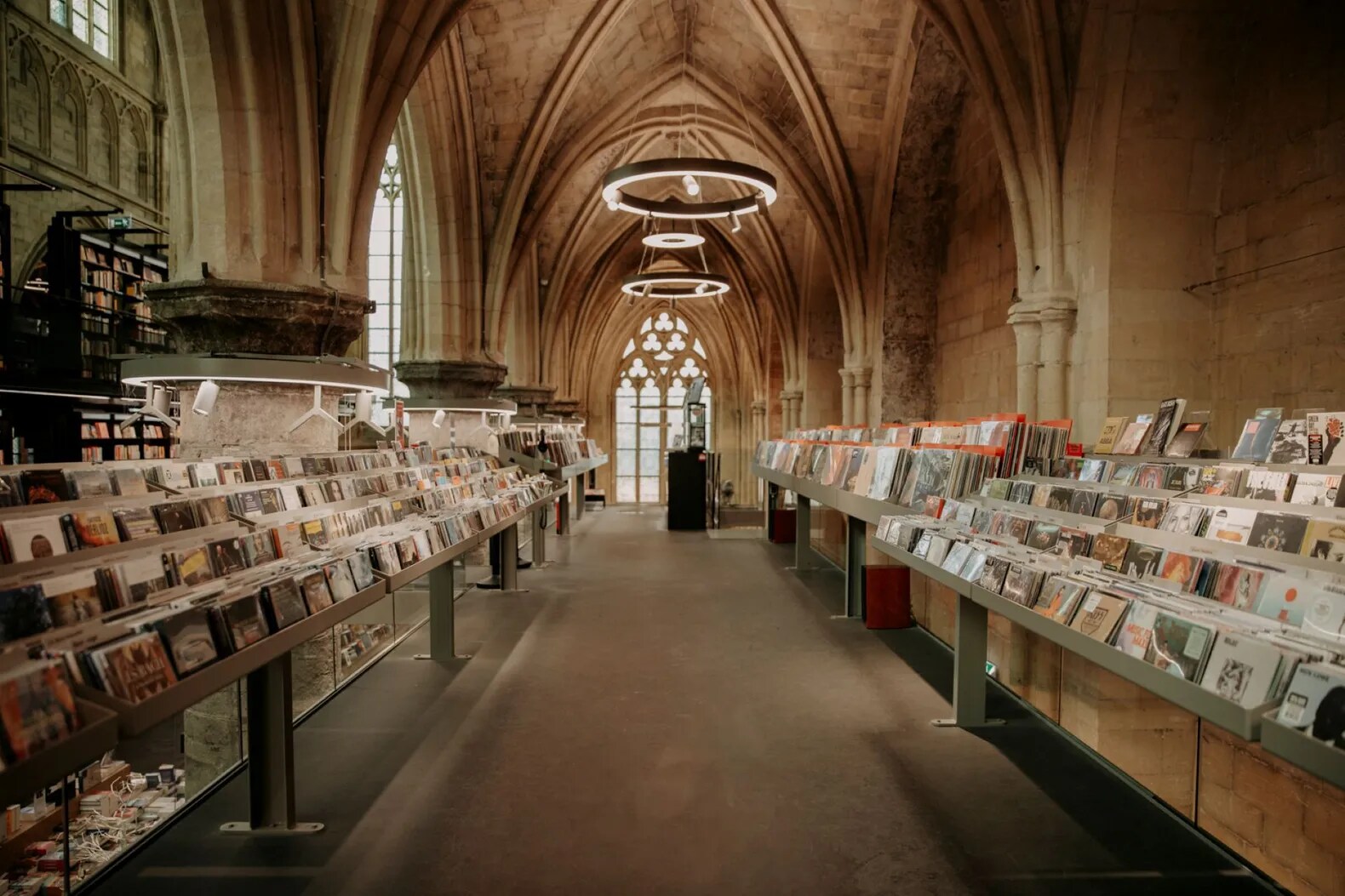
A local woman browsing the jazz aisle paused to talk. She visits every few months. “Some bookshops are for buying,” she said. “This one is for lingering. Every time I come back, I stay for a while. And I go back with a book, a record, and a sense of peace,” Jada Mathias says.
Much more in Maastricht
Boekhandel Dominicanen is located in Maastricht’s historic centre, within easy walking distance of Vrijthof Square, which is bordered by centuries-old churches and cafés where locals sit outdoors in every season. In winter, the square hosts a Christmas market complete with carousel lights and mulled wine; in warmer months, music spills from terraces late into the evening.
Walk the medieval city walls and pass through Helpoort, the Netherlands’ oldest surviving town gate. Cross the Meuse River via the Sint Servaasbrug, a stone bridge with views straight out of a painting. The Bonnefanten Museum blends medieval works with contemporary exhibitions — another reminder that the old and new are in conversation, not competition. Don’t go back without sampling Limburgse vlaai, the region’s signature pie, often filled with cherries or creamy rice pudding.
Why it matters
Once upon a time, only a select few had access to printed books. The shelves at Boekhandel Dominicanen now house thousands of works that were printed in a matter of seconds and distributed all over the world thanks to the laborious hand labour of the Dominican friars who lived here.
The contrast is striking yet significant. “Instead of seeing history and modernity as antagonistic forces, Boekhandel Dominicanen demonstrates how they can coexist and even strengthen one another,” says Hendrik Visser, an assistant at the store.
At a time when e-books and online shopping are the norm, Boekhandel Dominicanen serves as a reminder that reading is an experience rather than just a transaction. A bookstore like this doesn’t just survive the digital age. It thrives because of it, offering what screens simply can’t: presence, texture, reverence, community, and wonder.


