
 E-Paper



Book to Screen: Verity
There is unease, desire and manufactured tension in the Micheal Showalter adaptation of Colleen Hoover’s bestseller

 Prefer HTon Google


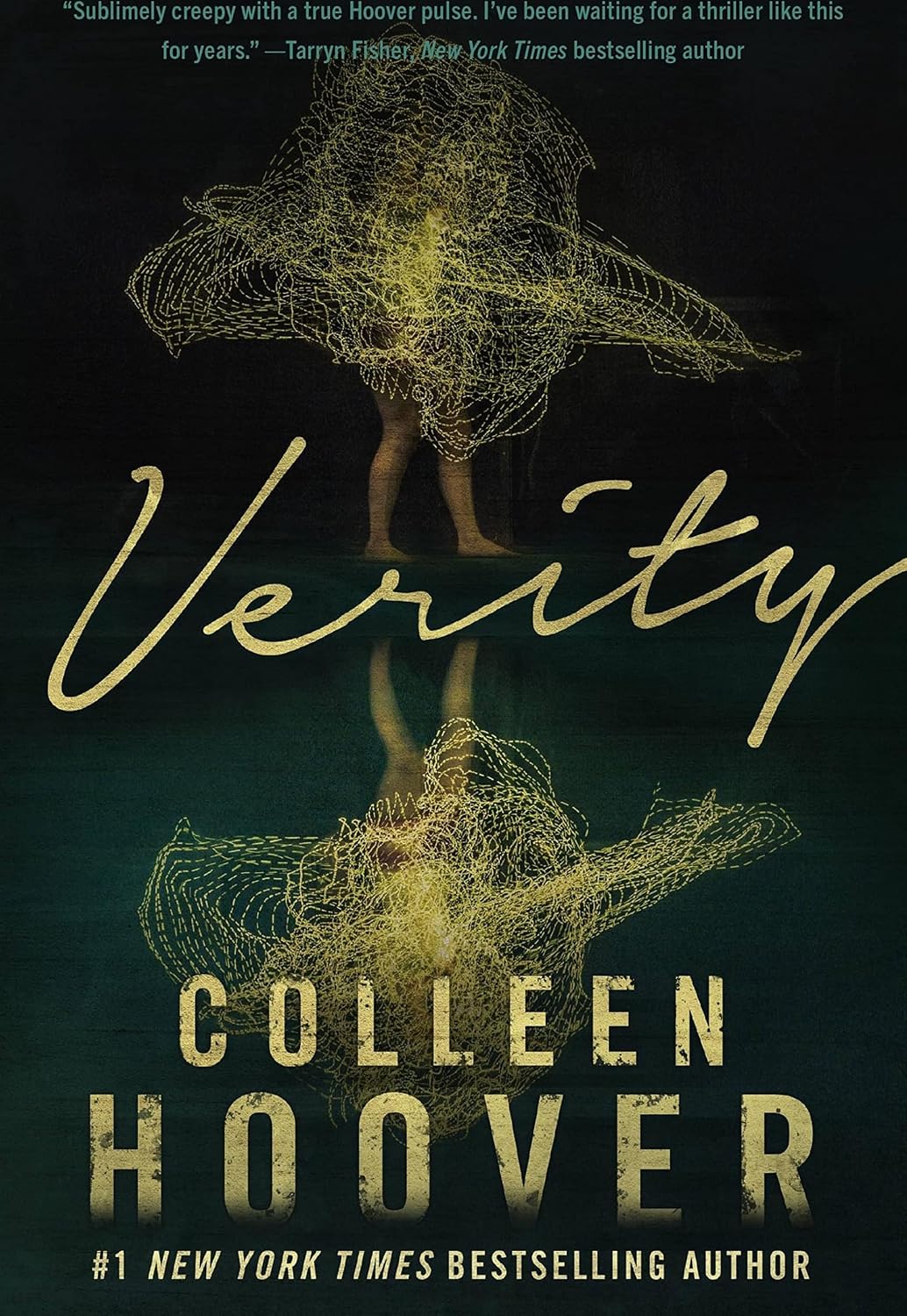
Verity — both the film and the book — have shades of the Indrani Mukerjea case. The very idea of a sociopathic, Machiavellian mother killing her own child elicits deep disgust. For Indians, this is possibly heightened given that, in this country, Maa is an emotion in herself. But readers of Colleen Hoover have probably learnt to cope. Now, director Michael Showalter has adapted Hoover’s bestselling romance thriller into a 117-minute-long film with a weak second act and a third act so fast-paced that the film’s major reveals barely sink in.
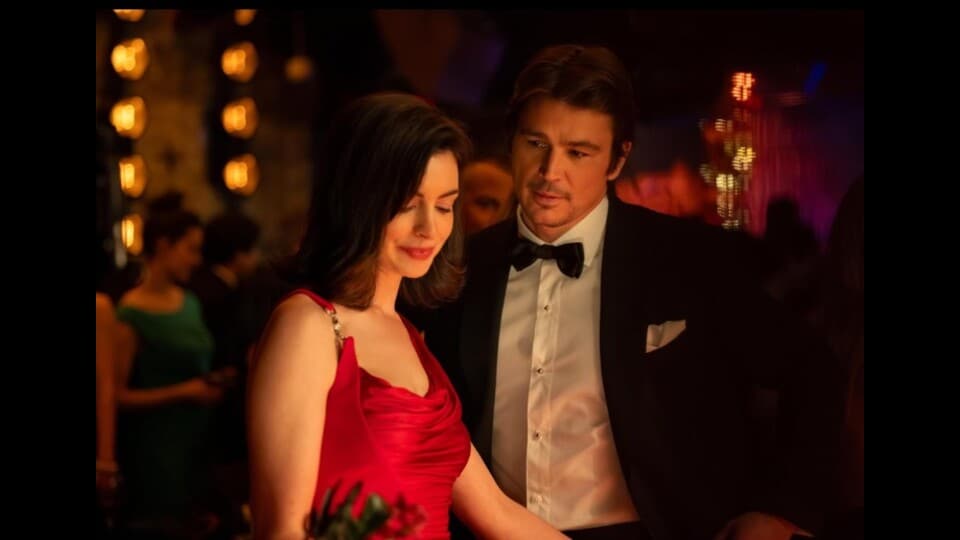
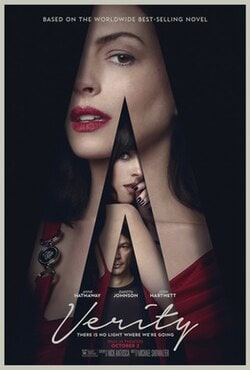
He makes some frustrating omissions that not only flatten the many nuances of the novel but also significantly dilute the weight of its darker themes. The lore behind the titular character Verity begins with her rejection of motherhood. She selfishly craves all of Jeremy’s affection for herself, breeding a resentment towards the children she believes have come between them. In one of the book’s most disturbing passages, Verity attempts to terminate her pregnancy with a wire coat hanger, claiming that the attempt injured one of the twins and left her with a facial scar. The film removes this sequence entirely.
The omission has larger ramifications than simply excising a disturbing detail. It makes the film’s ending — built around the question of whether the manuscript or the letter represents the truth — less reliant on the physical evidence surrounding Verity’s past. More significantly, however, it strips away one of the few passages that allows us to understand the psychological torment of a woman who never wanted children but convinced herself that having them was necessary to secure her husband’s love and approval. Without it, Verity’s resentment towards her children feels more like a plot device than the product of a deeply conflicted maternal psyche.
Whatever little the viewer feels for Verity — from her mental health struggles, her fractured relationship with motherhood to the central ache that lies in her heart — is thanks to an emotionally stirring performance by Anne Hathaway, who seems on a dream run this year with The Odyssey, The End of Oak Street, Mother Mary and The Devil Wears Prada 2. She channels the guilt that festers beneath Verity’s carefully constructed exterior rather well, even if it isn’t nearly enough to make up for the film’s failure to fully explore the character’s psychological depths.
Also, full marks to Showalter for rooting Verity’s popularity and public persona in popular culture. We see her appear on the Call Her Daddy podcast and Hot Ones and the film’s opening shot has her being interviewed by Gayle King.
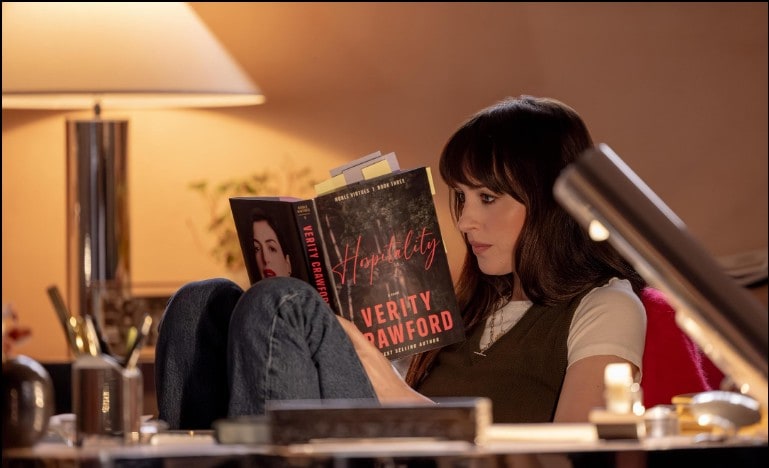
Still, what left this critic pleasantly on the fence was the removal of Lowen’s sleepwalking. In Hoover’s book, it adds an atmospheric unease to the mansion, but Showalter replaces it with dream sequences that make Lowen’s perceptions increasingly unreliable. In one such fever dream, Lowen and Verity kiss, with sapphic desire folded into the surreal imagery. This is a meaningful departure from the source material because it gives the film a way to externalise the strange fascination between the two women, suggesting that Lowen’s obsession may contain elements of identification and desire. It doesn’t feel like queerbaiting for its own sake; instead, it complicates a relationship otherwise defined by jealousy and envy. At one point, Lowen tells Verity she can take away “her career, her house and her husband”. Perhaps she wants to become Verity so badly because, somewhere beneath the hostility, she also desires her.
The most damaging omission, however, is Chastin, Harper’s twin sister, whose death from a peanut allergy forms the psychological spine of Verity’s fixation on Harper. Verity convinces herself that Harper was responsible and interprets her muted grief as evidence of guilt. The film removes Chastin altogether, flattening Verity’s hatred into something far more generic. How much richer it could have been had the film even hinted at Harper being autistic: her unconventional response to grief could then be understood as neurodivergence rather than guilt, making Verity’s suspicion all the more disturbing.
Without Chastin, the film also loses the specificity of Verity’s hatred. The novel gives her a warped but comprehensible reason for targeting Harper; the film instead turns her into a more generic child-hating monster. By removing the twin, it loses the tragic interplay of grief, projection and ableist misinterpretation that makes Verity’s fixation so unsettling.
What’s also interesting is the removal of the peanut allergy subplot. Verity resents Harper partly because if she doesn’t forcefully assign responsibility to her, that would mean Chastin died for no reason. But if Harper caused it, even accidentally or deliberately, Verity has someone to blame. In the book, Harper becomes the perfect vessel for that grief and rage. This also explains why Verity tipped the canoe but made sure Crew survived which, in the film, is portrayed as a result of Crew’s swimming skills. None of these nuances make it to this 117-minute-long film.
And this is where the argument that an adaptation should be judged only for what it does, rather than what it leaves out, falls short: Showalter spends much of that runtime stretching tension through slow, dramatically inert sequences, time that could have been used to deepen precisely these character dynamics. The film also squeezes in a significant amount of information and number of reveals in the final 10 minutes, which overwhelms the viewer and gives them little time to sit with the emotional impact of these scenes. Even the supposedly open ending feels oddly lopsided: the film gives us little reason to seriously doubt Verity’s account, while the “antagonistic journaling” explanation, which could have been a clever literary device, feels tacked on rather than meaningfully woven into the film’s larger ambiguity.
There are some tonal shifts which, this critic isn’t entirely sure work in the film’s favour. Hoover’s novel operates as a mystery-thriller with crime at its centre while the film is more of a psychological melodrama — which has fondly been called ‘campy’ and ‘pulpy’ — with thriller trappings. It largely abandons the investigative engine. The viewer isn’t really bothered about whether Verity is actually disabled. There is unease, desire and manufactured tension but little mystery to solve.
Like a poorly planned murder, Verity, the film, is undone by the evidence it leaves behind. It may just be the weakest adaptation of the year, but the greater crime is that the film doesn’t even work on its own terms. Strip away Hoover’s novel and what remains is a thriller that struggles to justify its own existence.
Deepansh Duggal writes on art and culture. Twitter: @Deepansh75.


