
 E-Paper



Lockdown Diaries: Of death and dolphins by Angshu Dasgupta
The lockdown has divided this nation into those who have an income in spite of it, and those who don’t


I can barely believe that it was only a month ago when the bottles of sanitiser arrived at my workplace — made of plastic, with squeeze-tops that dispensed puddles of aquamarine liquid into the cups of our palms. They were placed on countertops near the entrance, in the pantry, in washrooms. Soon, there was a notice on the front door that forbade anybody who had been on an international flight from entering the premises. Then, the office shut down.
I have been home since the middle of March. Working from home isn’t hard. In fact, I rather prefer it. It is a little tiresome to conduct a discussion about the abstruse relationships between software components without the aid of a whiteboard, but this is a minor inconvenience. I have more time to work on the novel I’m writing, now that I don’t have to commute.
No one I know has the virus, but I quickly succumb to the contagion of fear. I stay indoors, and when I do venture out, I don’t touch anything or anybody. When the shopkeeper’s fingers brush against mine as he hands me my change, I hold my hand away from my body until I am able to wash it with Dettol soap. The lockdown is announced on Tuesday, and I am relieved. Thousands are dead in Italy and in Spain. As I write this, in India, there are a few hundred infections; 10 people have died. It seems prudent to take preventive measures before things get out of hand. Minutes after the announcement, a friend sends me a text message that says, very simply, that the lockdown was going to kill more people than the virus. I mute this friend for a week. I don’t want to give in to the urge to criticise the government. This is not the time, and it wouldn’t serve any purpose.
I settle into a comfortable routine. I write for two hours in the morning. Then, I go down to the shops that are still operational, to buy bread, eggs, milk, and whatever else I can find. I have breakfast and I change into work clothes before connecting to my workplace. An auto-rickshaw drives by every few hours, with an announcement — “Stay in your homes, and do not venture out for any reason.” Sometimes, the announcement is in a man’s voice, and at other times, a woman’s. A white police car is stationed across the street, near the entrance of a shuttered Chinese restaurant. A boy washes the car, while two policemen watch. I recognise the boy — he’s apprenticed to the parking attendant who works our street. He asks one of the policemen for something - money, I think, but I can’t hear from my sixth-floor balcony. The policemen laugh.
Newspapers aren’t being delivered anymore, so I reactivate my Facebook account. I don’t post anything or comment on other people’s posts; I am a lurker. I lazily scroll through the feed — there are reports of police misconduct, and some of these are so extraordinary that I feel compelled to fact-check. Invariably, depressingly, the reports ring true.

It is only on Friday that I begin to grow uncomfortable. There’s a news report about a young family walking from Delhi to Aligarh. The two men have children perched on their shoulders; one of the women has a large bundle on her head. The family seems determined to make it home — “No one will help us in the city,” they say. The mask fails to hide the reporter’s distress. The video is two minutes long, but I am unable to watch all of it in one go. When I get to the end, I discover that the infant in the video is only 10 months old.
The weekend brings more stories, more reports. The man who died 80 kilometres from his village after walking more than a hundred kilometres; the 600 people discovered inside five container trucks intercepted in Maharashtra; the returning migrants sprayed with disinfectant in Uttar Pradesh. Late on Saturday, I watch a broadcast in which a sea of humanity swarms around a handful of bright-green buses at Anand Vihar in Delhi. I remember another newscast, in which our Home Minister, then merely a party chief, addressed a gathering as large as the one at the bus terminal. In his address, he likened migrants to termites who ate away at the superstructure of our great nation.
The lockdown has clearly divided this nation in two — those who have an income in spite of it, and those who don’t. There are multitudes who simply don’t have homes in which they can afford to remain, now that they have no income. In the wake of the crisis, state governments, private organisations, and ordinary citizens have begun to come together to support the imperiled. While this is heartening, it cannot scale, and it does nothing to alleviate the uncertainty that looms over a majority of our population. It is tempting to ascribe the state of affairs to a lack of education, to corruption, or to the interlocking systems of inequality that are peculiar to our society. To do so, however, would be to deny my own complicity in the perpetration of the systemic inequity that has brought about this calamity.
The COVID-19 pandemic has changed everything. The sky is a brilliant blue; the stray dogs of our neighbourhood have gone hungry for days now, their spirited barks faded to mere whimpers; our bellicose leaders no longer rail at infiltrators and terrorists; the valiant women of Shaheen Bagh have finally gone home; dolphins play off the coast of Mumbai and in the canals of Venice. When the world awakes from this medically-induced coma, it may be some time before it is business as usual.
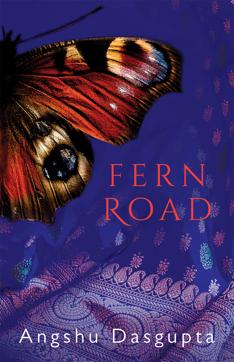
Fern Road is Angshu Dasgupta’s debut novel. He lives in Kolkata with his spouse and two daughters. He is a computer programmer.


