
 E-Paper



Navtej Sarna: “There is always a certain bias in the telling of history”
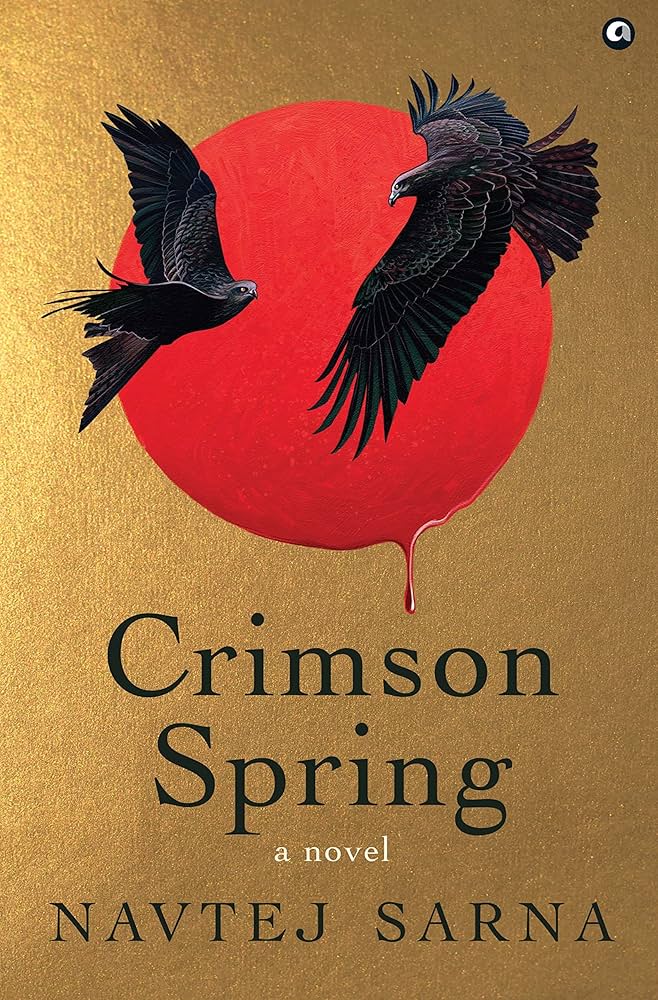
The author of ‘Crimson Spring’ on the many things that were happening around the time of the Jallianwala Bagh massacre, on ensuring that his book wasn’t unidimensional, and why Britain needs to rethink its colonial past

 Prefer HTon Google


In the author’s note to Crimson Spring, you mention that you have always aspired to write on the Ghadar movement and the Jallianwala Bagh massacre. How did the book take shape?
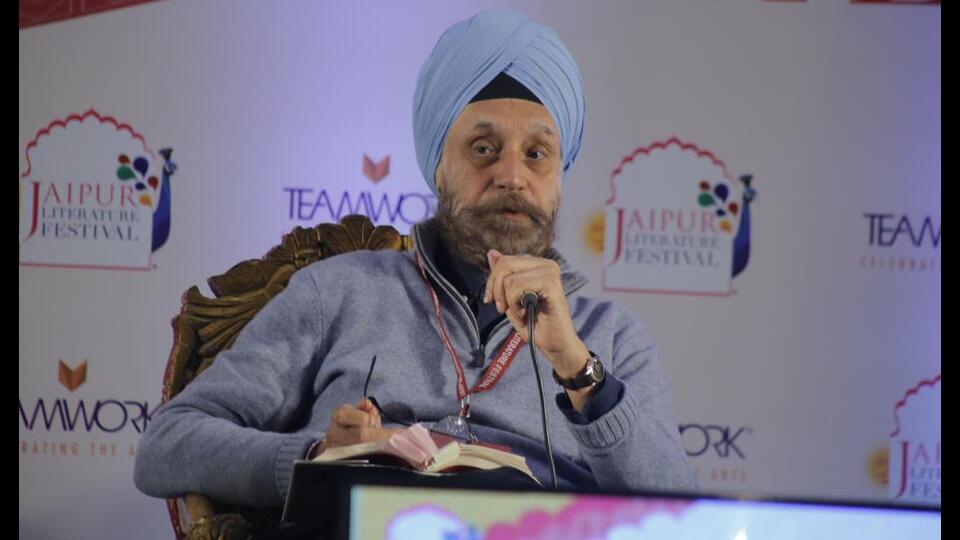
I did want to write on a number of things. Of course, Jallianwala Bagh was one such thing. But when I started reading about Jallianwala Bagh and the time of that event, I found that there were a lot of other things happening then. Some of those things I wanted to investigate a little more deeply, like the Sikh soldiers, who went to the First World War, the Ghadar movement, and how it all fitted into the freedom movement. I then decided that a novel would be the correct vehicle for this.
Your prologue makes an interesting comparison between facts and history.
Yes, the point is that there are certain facts, which are objective; but how we tell our history… it depends. It gets biased. So, the same facts can be transformed into different narratives, or some facts can be submerged; others can be played up, depending upon your point of view. That’s what I meant; there is always a certain bias in the telling of history. The same facts can be told differently from different points of view.
You mentioned that you referred to a plethora of sources, including letters and Udham Singh’s trial transcript. Was there any particular letter or a part of the transcript that struck you?
Well, the transcript as a whole. Particularly the last parts of the transcript which talks about what he said in court, and what he said after the death sentence was announced. I think all that is very dramatic and it brings out the true spirit of Udham Singh.
The character of Hugh J Porter you say is inspired by the then chief secretary of Punjab, JP Thompson, but you also ascribe a level of awareness, when it comes to colonial excess, to your character, which was missing from his real-life counterpart. Why is that?
I didn’t want it to be a unidimensional book in the sense that all Indians were good and all Britishers were bad. I wanted to bring in the human element that there must have been people, not necessarily the chief secretary – he’s just a symbol – that there could be a civil servant who is conflicted, who’s not completely convinced that what he’s doing is right. So, I gave him that dimension of doing his duty, but still having a certain amount of doubt.
Were there any personal accounts of the incident that you heard from family members?
None of my family members were present at that time. So, I can’t claim that; but certainly yes, we have heard a lot about the times from our parents and our parents’ parents, of the aftermath of the Jallianwala Bagh movement, the Gurudwara reform movement, and the Singh Sabha movement. A lot of that went into the book.
Review: Crimson Spring by Navtej Sarna
Was it also a means of archiving oral narratives, which fall neither within the bracket of fiction nor of history?
Yes, that’s absolutely right. I wanted to capture a lot of the stories, a lot of the references which have never appeared in our history books. This is a way of passing it on to the next generation.
How has your career as a diplomat informed your writing, particularly when it comes to historical fiction?
Fortunately, I’m retired, so I don’t have a diplomatic career. But even when I did, I tried to keep the two apart. But yes, being a diplomat gave me a lot of opportunities to visit places, to see places, to absorb other cultures. I don’t think at any stage, either my work as a writer or work as a diplomat suffered on account of the other. In fact, they both helped each other.
The geography in your book is of an undivided Punjab, of the five rivers. What was the process of reconstructing that fictionally?
I just took it as if the Partition hadn’t taken place. And which is true, because in 1919, and there abouts, there was no Partition. So, I could easily go back to the gazetteers of that time; I could easily go and see the railway routes of that time; I could see the maps of that time. And I treated it as if there was no Partition. That way, it became easier.
Britain is now undergoing much chaos politically and economically. Do you think it is now time for them to bring out this narrative of colonial history, which they have not yet recognized?
Well, I wish they would. Because this is a good time to rethink the past and to come face to face with it and acknowledge it. Nobody’s asking anybody to rearrange the past because that is not possible. But a certain amount of acceptance, a certain amount of giving voice to the colonised or to the former colonies will go a long way.
What are you working on next and any other particular genre that you would want to experiment with?
I don’t know. I will continue with fiction, but in what form I don’t know.
Simar Bhasin is an independent journalist.


