
 E-Paper



Review: The Seekers by Gautamiputra Kamble
Translated by Sirus J Libeiro, the stories in this collection examine dichotomies and strike a fine balance between the said and unsaid

 Prefer HTon Google


Originally published in Marathi as Parivrajak in 2004, The Seekers, a collection of five short stories by Gautamiputra Kamble and translated by Sirius J Libeiro, questions social traditions. These stories are about searching — for words, people, histories, knowledge and freedom.
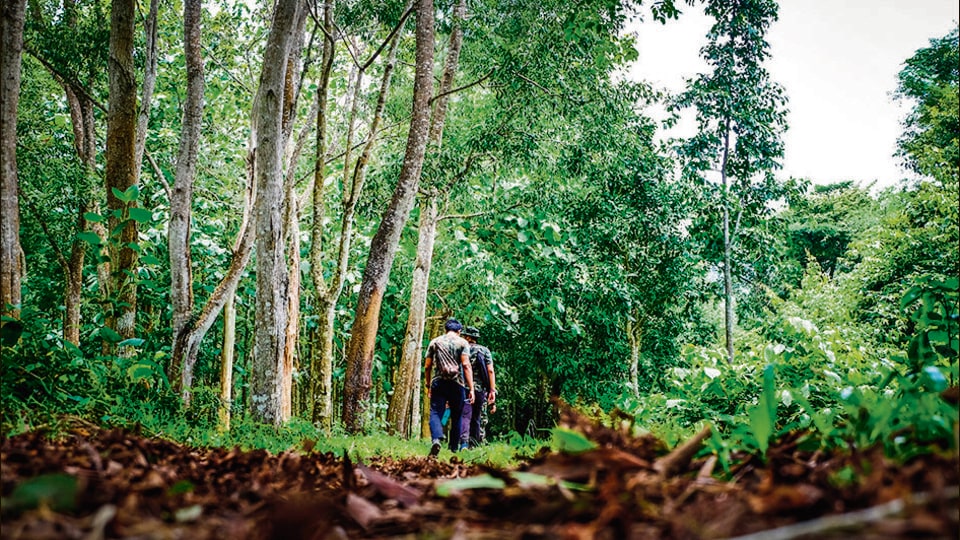
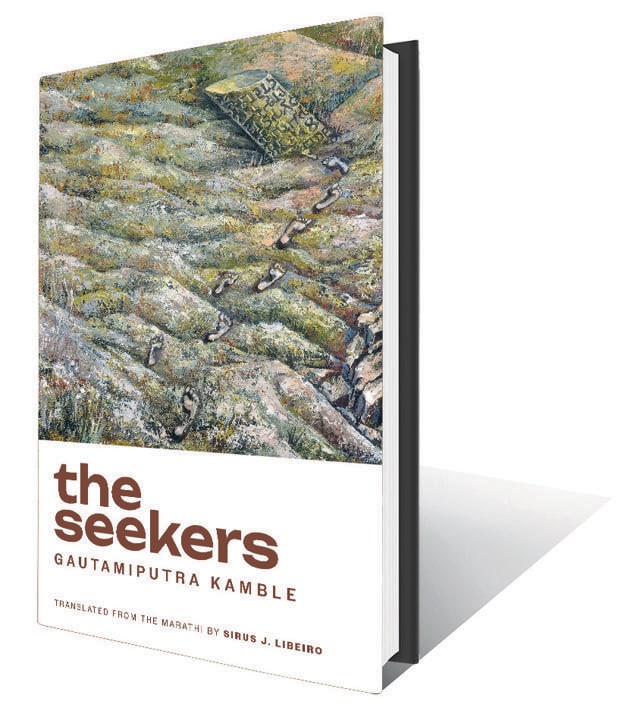
The Story of a Story, which begins the book, has the narrator going in search of characters whose stories he can write with words that have never been used. In Parivrajak, the titular story, Anisha is in search of “a two-legged person” when she comes across Naiser, who is in search of a living rock. In Shilpasan, two friends look for a statue in the middle of a desert while in Tales of Viroopnagar, multiple stories convey the characters’ unexplained desire to leave the lush green of home for the desert. The concluding story, The Search for the Sixth Sense features a young man, Nikay, on an obsessive quest for those who have experiences beyond the five senses.
In his note, Libeiro alludes to what’s lost in translation: “The book’s experiment is not intended to present an alternative to the way Judeo-Christian philosophy shapes everyday vocabulary — and by extension, the world for its speakers. The newness — or the strangeness — experienced by an Anglophone reader will be qualitatively different from that felt by a Marathi reader.” Still, the translation succeeds in keeping one curious about the prospective scenarios in these tales. Each begins with a curious incident, leads to an interesting premise between its primary characters, and ends with more food for thought, sometimes more questions, than answers. The prose flows rhythmically and a fine balance is maintained between the said and the unsaid.
So, in The Story of a Story, the narrator, who has written impressive opening lines, tries to find characters worthy of those words. But once he does find them, he cannot bring them to talk. Their silence becomes the biggest hurdle to his storytelling and raises the question: can we tell the stories of people who don’t want their experiences to be known? Is there more to their lives beyond rumours? When does a story begin and when does it end? Are there truly words that have never been used before?
Parivrajak, which has two strangers deciding to walk down the same path in search of their respective destinations, showcases acts of faith and the defeat of fears based on superstition. It also portrays Naiser’s faith in humanity and Anisha’s conviction that the world is filled with four-legged humans. There is also a focus on society’s perceptions of a man and a woman who are seen together. When asked about their relationship, Naiser responds, “For there to be an established relationship between two people, it has to be consensually agreed upon. And there is no such relationship between us yet. None that I can tell you about, anyway.” This is carried forward in Shilpasan when two friends share the rumours associated with the statue of a man and a woman in the desert. All these works of short speculative fiction showcase Kamble’s myth-making skills and the dexterity with which he avoids the introduction of supernatural elements. Throughout, what seems like a fantasy can also be interpreted as a metaphor. So, a character who has turned to stone directs the reader to consider experiences of apathy, suicidal thoughts, and depression.
The Search of Sixth Sense explores the student-teacher relationship, one where the latter is offended on being questioned. Here, the author suggests that while many have a deep knowledge of art forms and are great teachers who go on to lead institutions, they might not necessarily have the wisdom to accept that they do not know everything. A meditation on the futility of existential questions, the characters in the piece go back to using their skills to make a living.
All these stories, especially Tales of Viroopnagar, which includes many Jataka stories with themes of freedom, silence, haunted spaces, and thirst for the unknown, view deserts and rivers as sublime spaces. While some question social and religious hierarchies, others question power, including that wielded by community and religious heads.

The Phule-Ambedkarite author’s work, which recalls the magical tales of childhood with their kings, mysterious women, and forests, have elements of Buddhism. Taken together, they impart a complex wisdom inviting readers to exist in plurality and become comfortable with the unknown. They also attempt to draw a line between pursuits that have destinations in the realm of the living and those that are existential.
The translator might ponder about the inevitable loss in translation from the original Marathi but the reader of English undoubtedly still gains a great deal from these works that examine the dichotomy of words and silences, the living and the lifeless, the master and the student, social and religious hierarchy and humanity, fear and courage, the desert and the oasis, and ultimately, in knowledge and wisdom.
Akankshya Abismruta is an independent writer.


