
 E-Paper



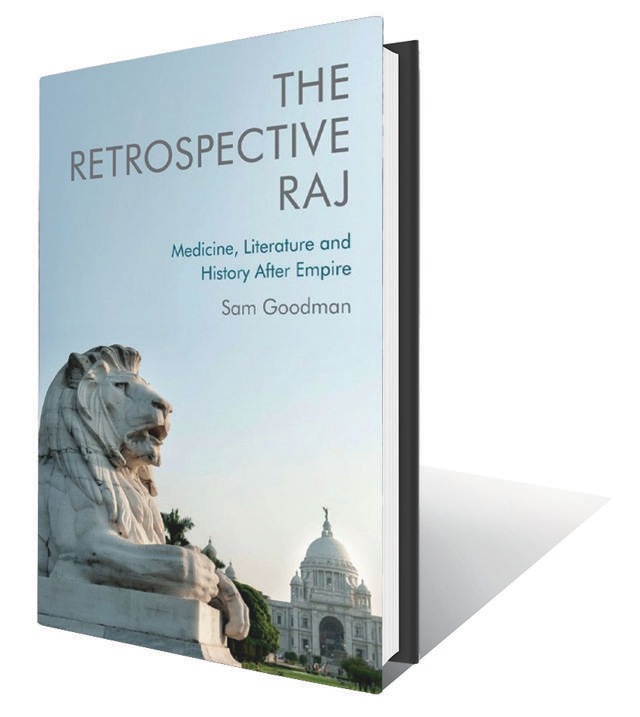
Review: The Retrospective Raj: Medicine, Literature and History After Empire by Sam Goodman
On the use of medicine as a defining trope by novelists like JG Farrell, Ruth Prawer Jhabvala and Salman Rushdie to explore the complex relationship between Britain, India and Empire

 Prefer HTon Google


When Lady Canning, wife of the Viceroy Lord Canning (1812-1862), stopped in the Terai for a day to paint the landscape, she contracted a fever from which she died. By the time the British had to leave India, against a backdrop of political turbulence leading finally to the Partition, one might assume that they left in horror and disgust. The Retrospective Raj: Medicine, Literature and History After Empire by Sam Goodman provides a detailed analysis of the use of medicine as a recurrent and defining trope of post-imperial fiction published between 1950 and 1990 at a time when the influence and prestige of the British Empire was declining.
Goodman, Associate Professor in English and Communication at Bournemouth University, UK, shows how a range of contemporary novelists including JG Farrell, Paul Scott, John Masters, Ruth Prawer Jhabvala and Salman Rushdie identified and used medicine as a discursive paradigm through which to engage critically with the history, authority and legacy of the British Empire within their writing. In so doing, he draws on a range of literary and archival sources, and explores the complex relationship between Britain, India and Empire through a medical lens, while bringing together “the concerns of literary study and medical history under an interdisciplinary and original methodological framework”. The 20th century literary revival of Empire rekindled a heady sense of nostalgia that not only thrived on happy memories but sickness as well.
The Victorians believed that hot weather drains a man’s strength. The Brits – both in Africa and India – found out that hot countries are home to all manner of diseases that affect both people and their livestock. Indeed, many British officials died more because of the tropical diseases than in war, insurrection and revolutionary terrorism. If Africa had the worst of them – malaria, yellow fever, rare but deadly viruses such as Ebola, and a host of energy-sapping parasites – India too had its fair share. In the fiction of Farrell, Scott, Masters, Jhabvala and Rushdie, for instance, one can find how health and medicine were defining preoccupations of Anglo-Indian society. Sickness being a major concern (“in memoirs, journals, travelogues and diaries, with numerous medical texts, pamphlets and guides available on how either to avoid sickness or remedy it”) in British India, it dominated the discourse. Exploring such sources, EM Collingham argued that “the experience of India was intensely physical, marked by the centrality but also the transience of the body, with ill health and death central to Anglo-Indian life”. Farrell, for instance, employed archival material near verbatim in his work, while composing key subplots and dialogue directly from his source material.
Goodman believes the loss of the Empire continues to cast a long shadow over Britain. Salman Rushdie termed the phenomenon of the steady accumulation of films, novels, television series and other media of the 1970s and ’80s that obsessed over a picture of colonial India with all its apparent pomp and regalia as the “Raj Revival”, even though “the threat to health presented by India became a further aspect of the ‘burden’ of Empire”. The quotidian experience of encountering diseases and illnesses in British India reveals a hidden history beneath the dominant one.
Illness pervades both the writer and his or her craft. “The illness of the hero,” Arthur W Frank writes in The Wounded Storyteller (1995), “who is both an individual and a representative of his epoch, is analogous to the sickness of the state”. While Farrell’s characters encounter a range of ailments throughout the narrative, including scurvy, malnutrition, delirium tremens, erysipelas, dysentery and nervous exhaustion – Goodman lists them – his concerted engagement with illness and medicine is enacted through a focus on cholera. Scott suffered from persistent stomach complaints and bouts of amoebic dysentery during his time in India and recurrently for years afterwards. Small wonder that his characters in The Raj Quartet – the Smalley, Layton and Manners families alongside others – suffer from the persistent discomforts of heat, dicky bowels and recurrent fever through to the more serious circumstances of Merrick’s amputated arm and ensuing disability, Meg Reid’s cancer, Barbie Batchelor’s pneumonia, Tony Bishop’s jaundice and the various physical or psychological conditions, deaths or other maladies. Not long after the publication of Staying On in March of 1977 that earned him the Booker Prize, Scott was diagnosed with cirrhosis of the liver and colon cancer. Jhabvala contracted jaundice whilst writing Heat and Dust in the early 1970s – the first endemic disease she experienced during her 25 years in India – but one severe enough to prompt her to leave the country.
A medical reading into Colonel Dyer’s decision to fire on unarmed protesters at Amritsar in 1919 was due to “chronic amoebic infection”, we learn in reference to Aadam Aziz (in Rushdie’s Midnight’s Children), a doctor and the father of Amina Sinai, who narrowly survives death in the Amritsar Massacre of 1919. That Dyer’s death was caused from arterial sclerosis, a condition that shares some symptoms with amoebiasis such as impact on decision-making does not, however, help to mollify the collective wound.
What lesson did the Raj learn from its abrasive encounter with India? Though rapid changes in medical technology during the post-war period, the mass production and widespread availability of penicillin and other antibiotics and the advent of the National Health Service in 1948 arrested mortality rates from disease to some extent, Goodman cares to note the role of a community of South Asian medical practitioners within the UK before Indian independence who made that possible. Julian Simpson argues that the role was so critical that the NHS should be acknowledged as “a typically post-colonial institution; run by white people and dependent on labour from parts of the world that Britain had colonised”, with over 3,000 doctors from India or Pakistan working within the NHS in 1965 and nearly 10,000 by the end of the 1970s.

Kipling in his short story At the End of the Passage (1891) describes the effects of loneliness, isolation and too much alcohol on the psychological health of British residents, alongside the more common corporeal threats posed by heat apoplexy and cholera. For a moment, one might think of Meghan O’Rourke’s The Invisible Kingdom, a stark memoir of illness, in which she recounts a shadowy world, where those who are condemned to suffer from chronic illnesses are dismissed by doctors and alienated from their lives. O’Rourke’s foray into the limitations of modern Western medicine makes one see how the apparent inability of Western medical practitioners to deal promptly or appropriately with cholera, malaria, plague and influenza, or with more intimate diseases such as syphilis, encouraged recourse to Ayurvedic, Unani and homoeopathic remedies. No less significant, from the practitioner’s viewpoint, was the apparently discriminatory attitude of the colonial medical establishment. Exclusion of the subaltern voices from the unidirectional process of the malariological breakthrough effected by Ronald Ross – subject of The Calcutta Chromosome by Amitav Ghosh that undercuts Ross’s claim as the sole discoverer of the malaria parasite (for which he got the 1902 Nobel Prize for medicine), sadly finds no mention in Goodman.
Goodman resents the British cultural obsession with Empire, evident from the novels of the Raj Revival explored in this book. The scholarly book encompasses many issues, pecking here, expanding there, the rambling nature of which frustrates sometimes, but is often illuminating and hilarious. Medicine’s role as a “tool of empire” is probably the most familiar theme in the historiography of colonial medicine to date as is the vulnerability of Europeans in the tropics, but Goodman gives it a literary spin and documents how India threatened the European constitution.
Prasenjit Chowdhury is an independent writer. He lives in Kolkata.


