E-Paper



Travel: Of lamas and luscious landscapes…a trip to Tibet

 Prefer HTon Google


There exist stringent rules to restrict tourism in Tibet, but going there is worth all the paperwork in the world
Most tourists to China make a beeline for the Forbidden City in Beijing. But there’s another part of the country that has largely been forbidden to foreign travellers till a few decades ago – Tibet, the Roof of the World.
This region with jaw-droppingly beautiful mountains and lakes and hill-top monasteries had been on my bucket list ever since I travelled to Ladakh some years ago, and in July I found myself in Tibet along with seven other Indian journalists.
Oxygen for the soul
Tourism in Tibet, a region with deep spiritual connections with India, remains highly restricted for foreigners, who have to book tours in groups and obtain a permit from the Tibet Tourism Bureau (TTB) only after acquiring a Chinese visa. Without this permit, foreigners won’t even be able to board a flight to the area also known as Xizang Autonomous Region.
As we drove from Lhasa airport to our hotel on an overcast afternoon, our guides handed out miniature bottles of a drink called Rhodiola Rosea, a mix of rhodiola sacra, Chinese wolfberry, taurine and other ingredients they said would help us cope with possible hypoxia or lack of adequate oxygen.
As with Ladakh, travel in Tibet, with an average altitude of 4,000 metres or more, is not for the faint-hearted. Lack of adequate acclimatisation, including plenty of rest on the first day, can have serious consequences as some of our group were to find out.
High-altitude sickness, a powerful mix of nausea, vomiting and splitting headaches that can linger for hours or even days, is one of the worst conditions that can afflict travellers in regions such as Tibet. Our tour bus was equipped with an oxygen tank, the hotel in Lhasa had a 24-hour ‘oxygen lounge’ with an oxygen level and barometric pressure ratio 50 per cent higher than outside, and every hotel room had small cans of oxygen to help alleviate the symptoms.
Palace of the monks
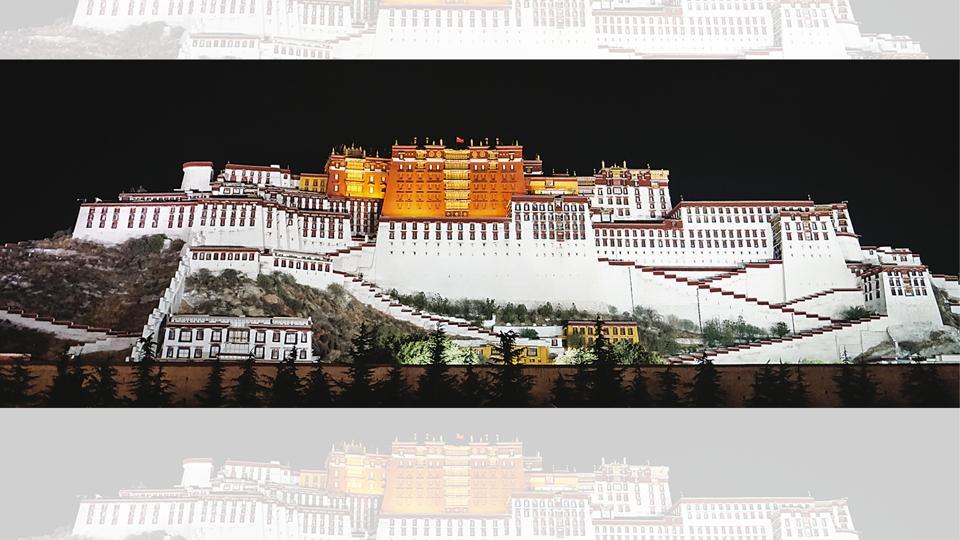
Feeling a little restless on our first night in Lhasa, I decided to go for a walk at about 10pm, when the temperature outside was about 11˚C. The friendly hotel manager told me it was safe to walk to the Potala Palace, the winter home of the Dalai Lamas till 1959, about 25 minutes away.
By this time, only a handful of bars, restaurants and roadside food kiosks were open and the well-lit streets were largely deserted. The large buildings along both sides of the road obscured the palace from view, but as I finally walked into a huge square, there it stood – a magnificent red and white structure sprawling over a craggy hill, beautifully lit up under a dark sky.
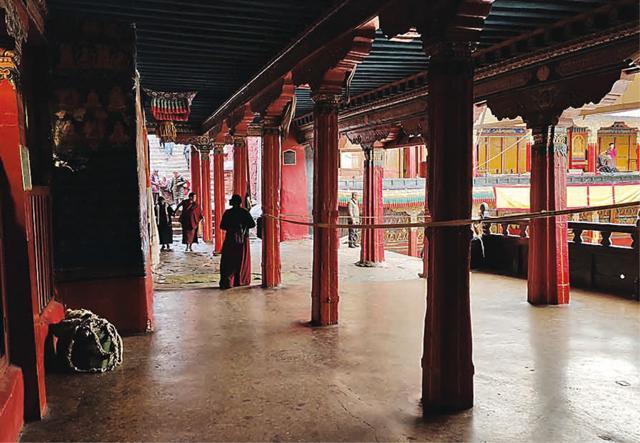
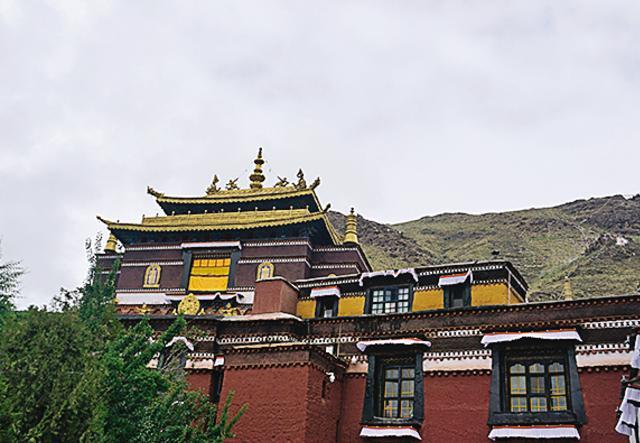
We would return as a group to the Potala Palace the next morning, whose red section was used for religious ceremonies and contains the burial stupas of past Dalai Lamas, while the white section was used for political meetings. As we wandered through the maze-like corridors and wooden staircases leading to prayer halls and burial stupas, it was common to see Tibetans, young and old, stopping to pray before the images of the Buddha and past Dalai Lamas, stuffing currency notes into collection boxes and making offerings of butter, whose aroma hung cloyingly throughout the structure.
Unfortunately, photography is strictly prohibited within the palace, part of Unesco’s guidelines for protecting the world heritage site by ensuring that the numerous visitors do not linger more than an hour inside.
Later, at a central hall of Tashi Lhunpo Monastery, many people, including our group, stopped to make a wish by writing it on a slip of paper and stuffing it into a box.
Namaste India!
Our travels also took us to the historic and well-preserved Pala Manor in Gyantse county of Shigatse prefecture, about 260km from Lhasa, once home to an aristocratic family that reportedly had more than 100 serfs or forced labourers, and now turned into a museum by Chinese authorities. It was here in a dimly-lit room that I found the first evidence of the current Dalai Lama – two black and white photographs showing him in the company of Indians in the 1950s. Elsewhere in public spaces, everything about him has been scrubbed away as if he didn’t even exist.
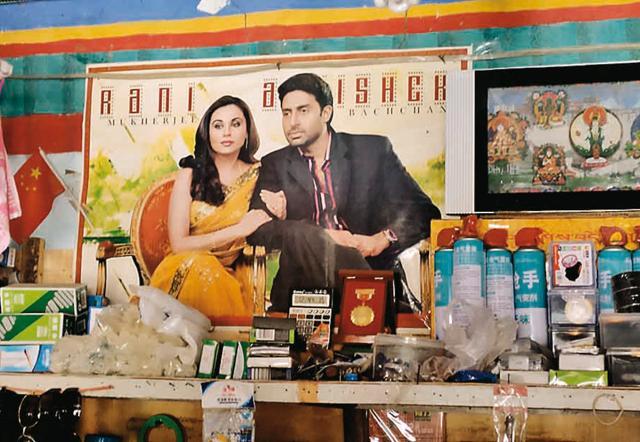
Stepping into a shop near the manor to buy snacks, I spotted the curious sight of images of Chairman Mao Tse-Tung and several lamas next to a large poster of Rani Mukherjee and Abhishek Bachchan. The poster reminded me of India’s old connection to the region – till 1954, when India and China signed the Panchsheel Agreement, the Indian Army had a battalion at Yatung with a detachment in Gyantse.
At a village in Nyemo county, some 140km from Lhasa, there are more signs of the pervasive influence of India’s soft power. While touring the quaintly-named Granny Barley Wine Distillery, we were welcomed with Tibetan folk songs sung by a group of women. Once they were done, they said it was our turn to perform. Unfortunately, no one in our group could carry a tune. Who should come to our rescue but our Tibetan guide, who belted out a Bollywood song, mispronounced words and all!
Wherefore art thou, biryani?
The local cuisine, however, was exceedingly bland and the Chinese dishes we sampled were a poor variant of their counterparts in mainland China. For the first time in my two decades of travelling abroad, I began hankering for Indian food. Thanks to our Chinese guides, I got just that at the presciently named Third Eye Restaurant in Shigatse city. Most of our group skipped the yak biryani for a simple vegetarian thali whipped up by a Nepalese chef.
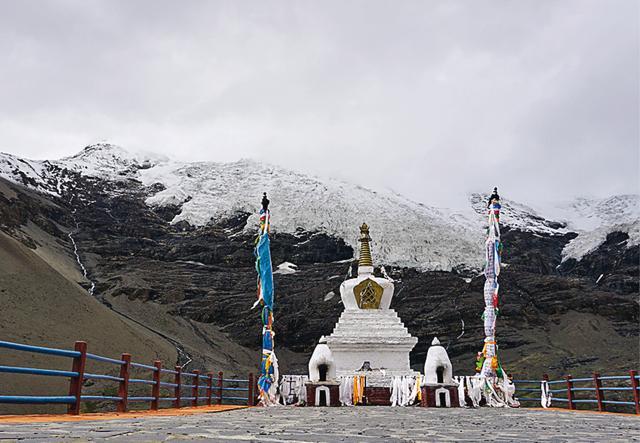
A day after that splendid meal, we made our way back from Shigatse to Lhasa on one of the numerous highways that now criss-cross Tibet, stopping on the banks of the Yamdrok Yumtso, one of the largest freshwater sacred lakes in the region. Taking in the breathtaking view of the expansive lake merging into mountains in the distance, I realised it was unlikely I would return to Tibet any time soon, but the memories of this trip would be indelibly burnt into my memory.
Rezaul H Laskar heads the foreign affairs desk at Hindustan Times. He was in Tibet on the invitation of the Chinese Government.
Follow @Rezhasan on Twitter
From HT Brunch, October 13, 2019
Follow @HTBrunch on Twitter
Connect with us on facebook.com/hindustantimesbrunch