
 E-Paper



S&P 500 at record high: Is it safe to buy? What Warren Buffett and history say
S&P 500 hits a record high, but Warren Buffett's advice and history suggest investors may not need to fear buying stocks near market peaks.

 Prefer HTon Google


The S&P 500 is at a record high, but that does not mean investors should stop buying stocks. The index gained 13% in 2026 and could post its fourth straight year of gains of more than 10%. It hit a record 7,758 on August 7. This has left investors with an important question: Is it still safe to buy stocks when the market is already at a record high?
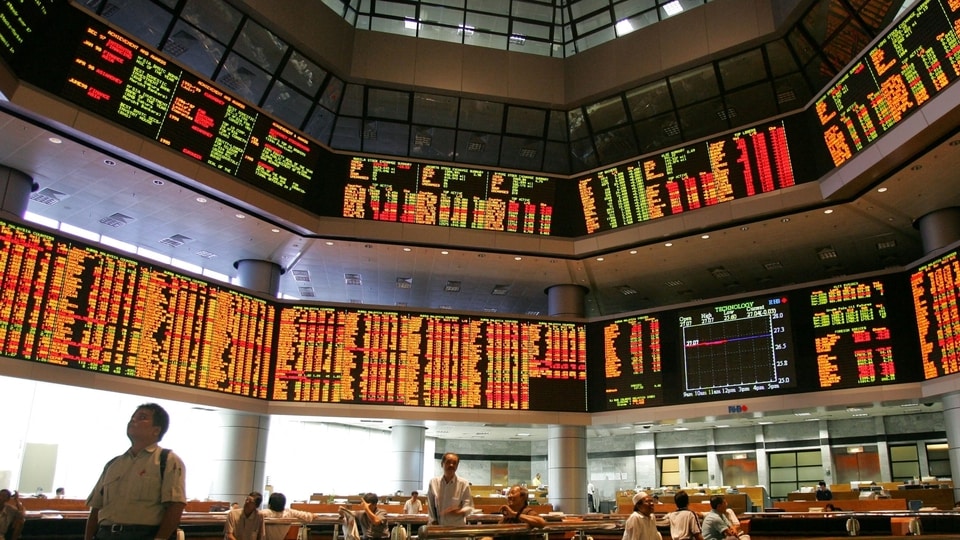
The recent stock market rally has been helped by strong company earnings. Big investments in artificial intelligence (AI) have also helped companies in the S&P 500 increase their profits, according to The Motley Fool. Wall Street expects company earnings to stay strong in the coming quarters. FactSet Research expects S&P 500 earnings to grow by about 22% a year through 2027.
What Warren Buffett says about buying stocks
Warren Buffett's investment approach suggests that a record-high market should not be the main reason to avoid stocks. The legendary investor has continued putting money to work for Berkshire Hathaway even when the broader market was trading near record levels.
Buffett's main focus is not whether the overall market is at a high. Instead, he looks at whether an individual business can grow its earnings over many years and whether its stock is available at a reasonable price.
Buffett explained this idea in his 1996 letter to Berkshire Hathaway shareholders. He said investors should look to buy a part of an easy-to-understand business at a "rational price" when its earnings are likely to be much higher five, 10 and 20 years later.
The important word in Buffett's approach is valuation. In simple terms, investors should ask whether a stock is cheap or expensive compared with the company's expected future earnings growth. The same idea can also be applied to the S&P 500. Instead of asking only whether the index is at a record high, investors should look at how much they are paying for the earnings they expect from its companies.
Is the S&P 500 expensive right now?
The S&P 500 is trading at about 28 times earnings. That is higher than its five-year average of about 24 times earnings, according to the information cited by The Motley Fool. That means the market is not exactly cheap. Investors are currently paying a higher price for S&P 500 earnings than they have on average over the past five years.
But the higher valuation comes as analysts expect strong earnings growth. FactSet Research expects S&P 500 earnings to increase 22% annually through 2027. That expected earnings growth changes the picture. While a price-to-earnings ratio of 28 may look expensive compared with the five-year average, strong future earnings could help justify today's valuation, according to The Motley Fool.
Also read: S&P 500 to 8,000? Why JPMorgan is betting on earnings despite high valuations
History gives investors another reason not to panic
Many investors feel nervous about buying stocks after the market reaches a record high. The thinking is simple: If stocks are already at the top, there may be less room for them to rise. But history does not support the idea that every record high is followed by a major fall.
In fact, investors who bought at record highs have often seen strong returns afterward. Data from J.P. Morgan covering 1988 through 2024 shows that the S&P 500 performed well after reaching new highs. The average one-year return after buying at a new high was 13%. That compares with an average 12% return when investors bought the S&P 500 on any random day, according to J.P. Morgan.
The difference becomes larger over longer periods. The S&P 500 produced an average cumulative return of 29% over two years after purchases made at new highs, compared with 25% after purchases made on any random day, according to J.P. Morgan.
Over three years, the average return after a record high was 46%. The comparable return after buying on any random day was 40%, according to The Motley Fool. The S&P 500 delivered an average cumulative return of 81% after purchases made at new highs, compared with 75% after purchases made on any random day.
But there are still risks
History does not guarantee that the S&P 500 will rise after its latest record. Past performance cannot predict what the market will do next. Interest rates are one risk investors need to watch. Potential rate hikes in the months ahead could put pressure on stocks, according to The Motley Fool.
The 2026 midterm elections are another possible source of market uncertainty. Changes in political expectations can affect investor confidence and stock prices. Corporate earnings are another major risk. The market is already expecting strong earnings growth from S&P 500 companies, which means disappointing results could hurt stocks.
If companies fail to meet Wall Street's high earnings expectations, investors could quickly change their views. That could lead to a sharp fall in stock prices as markets adjust to lower growth expectations. So, is it safe to buy the S&P 500 at a record high? The answer is not simply yes or no. The record level itself is not a strong reason to stay away.
Buffett's approach suggests investors should focus on value and long-term earnings growth instead of trying to predict the market's next top. If the price is reasonable compared with expected future earnings, a high market level alone should not stop a long-term investor.
The bigger concern today is valuation and expectations. With the S&P 500 at about 28 times earnings versus a five-year average of 24 times, investors are paying a premium, even though earnings are expected to grow strongly.
For investors with a long-term horizon, the lesson is not to wait endlessly for the perfect market dip. Instead, the focus should be on buying quality businesses or broad index funds at valuations that make sense and staying invested for the long term.
The S&P 500 may fall even after reaching a record high. But the data shows that a new high by itself has historically not been a reliable signal that investors should sell or stop investing. The key question for investors now is whether earnings can keep up with the market's high expectations. If corporate profits continue to grow strongly, today's high valuation could become easier to justify. If earnings disappoint, the market could face a sharper correction.


