
 E-Paper



Volkswagen Fights Chinese Competition—and Its Own Board—in Battle to Survive
CEO Oliver Blume’s plan to make company smaller and less German has sparked union and political outcry. “Detroit-ization’” is a new buzzword.


 Prefer HTon Google


When Volkswagen Chief Executive Oliver Blume took a cost-cutting plan to his board this summer that envisioned a doubling of job losses to 100,000, he was fully aware it would be rejected.
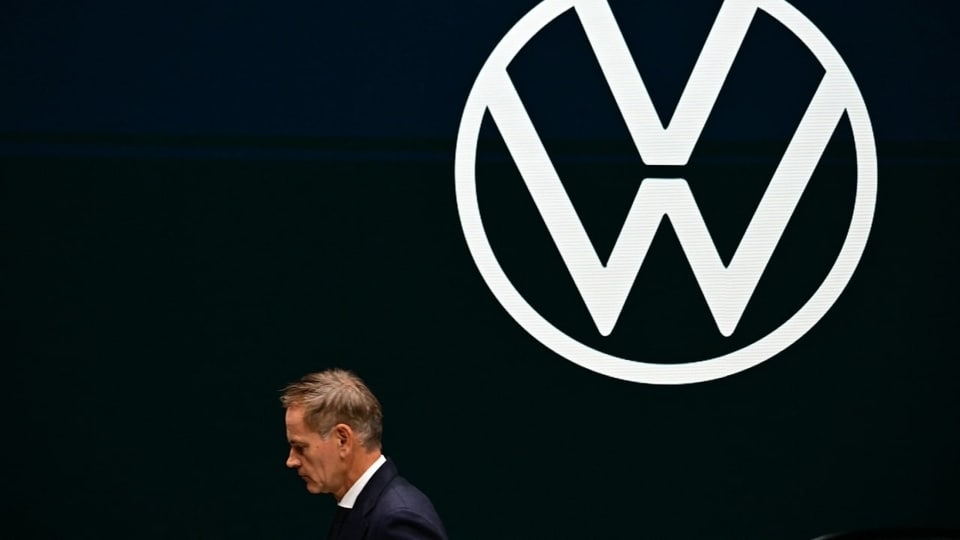
Such is the predicament of running Germany’s premier industrial company, where half the supervisory-board directors are worker representatives and swing votes are held by the local government.
Now Blume is considering an audacious workaround, according to people familiar with his plans. If the board factions can’t come to an agreement at a meeting set to take place on Friday, he could go hostile—bypassing the board like an activist investor or corporate raider by taking the plan directly to shareholders.
It’s a nuclear option, a move without precedent at Volkswagen or the broader German corporate scene, where for years stakeholder capitalism has meant that decisions are driven by consensus among workers, regulators and shareholders.
The stakes are enormous. Chinese automakers are moving headlong onto German carmakers’ home turf after dethroning them in China, previously their strongest overseas market. Higher U.S. tariffs under President Trump and a bumpy transition to electric vehicles and hybrids have cost automakers billions of dollars.
“Tariffs, new competitors and geopolitical risks: The entire automotive industry is under enormous pressure,” Blume told employees last week.
Germany for decades has staved off the kind of deindustrialization that has wiped out millions of U.S. manufacturing jobs, maintaining a generation of well paid, skilled workers, particularly in the auto industry. Now “Detroit-ization” is a buzzword in the German media.
No German automaker is more affected by the industry turmoil than Volkswagen, which competes head-on with mass-market Chinese brands such as BYD and doesn’t have a big U.S. manufacturing base to limit the fallout from Trump’s tariffs.
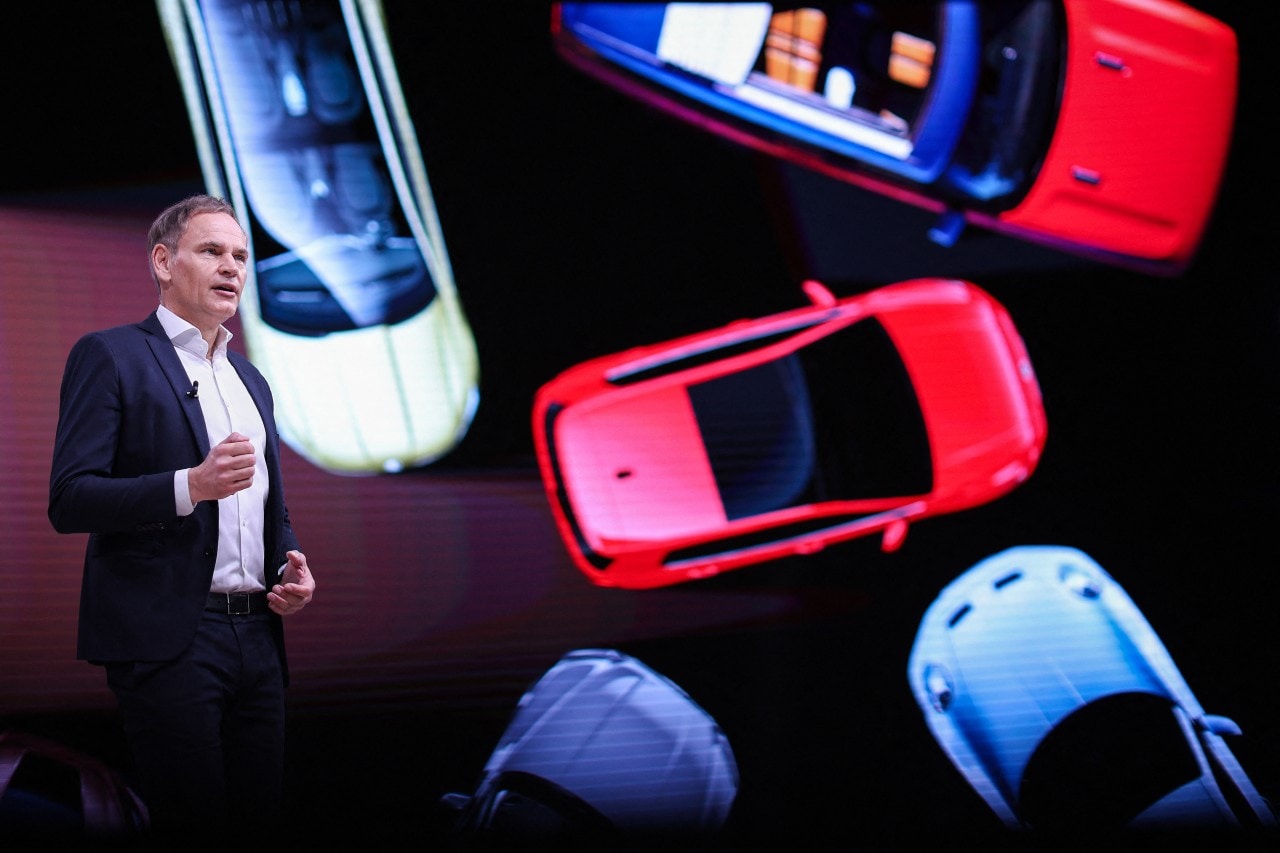
Blume wants to slim down VW and reshape its global footprint, upending a decades-old business model where cars are designed and in some cases made in high-cost Germany for markets overseas. In essence, he wants to make Germany’s largest corporation smaller and less German.
“Over the years we have built up structures, capacities and head count,” Blume said in a Q&A published on the company intranet last month. “Too many interfaces, too many layers, too many duplicate structures.”
Volkswagen is bloated, employing many more workers per car produced than competitors. The company makes around 150 vehicle models, including those of Audi, Porsche and other brands bought over the decades. Much of the office staff working in design, marketing and forecasting are in Germany, where employee protections make it hard to cut workers.
Blume and his team want to halve the number of models—still leaving Volkswagen with many more than peers, they say—and make sure those that survive better match the tastes of consumers in different markets. They also want to cut overhead and a portfolio of some 2,000 investments that include stakes in four German soccer clubs.
But the company’s complex governance, with the billionaire Porsche-Piëch family vying for control with politicians and Europe’s most powerful union, puts a speed limit on change in an industry that is moving fast.
CEO tour
Friday’s supervisory-board meeting comes 10 weeks after the company first said it was working on a new restructuring plan. To sell his plan, Blume fanned out last week to Volkswagen locations on a tour more akin to a political campaign than a corporate roadshow.
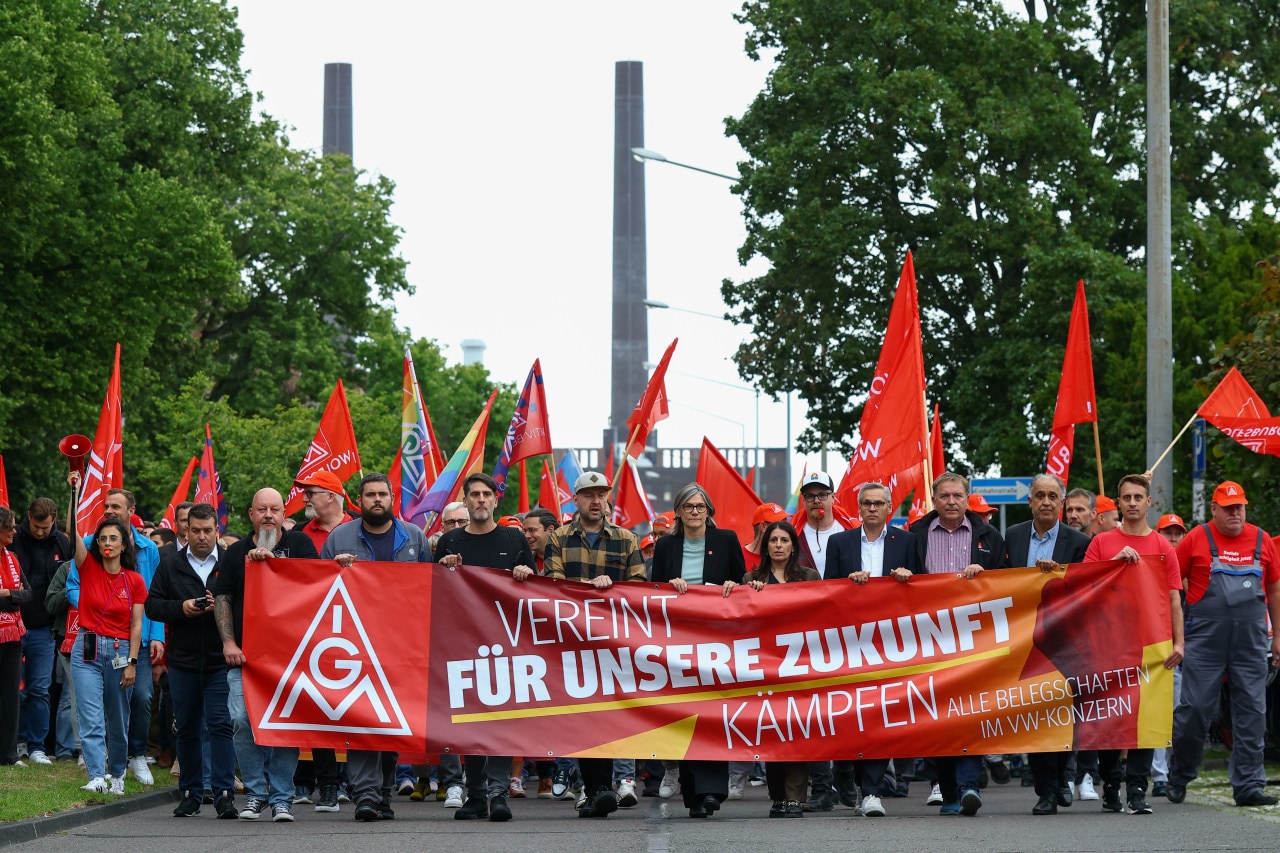
In Wolfsburg, the company headquarters, about 10,000 employees packed into a hall to hear the CEO defend his plan in front of Daniela Cavallo, Volkswagen’s top union representative.
Trade unionists held placards with slogans such as “Our jobs aren’t your balance-sheet adjustment,” according to people present. Blume’s introductory pleasantries about how much he valued communicating with the staff were greeted with boos.
Cavallo, who leads Volkswagen’s group works council—its top union body—acknowledged the company was in a tough spot but said Blume needed a detailed strategy for getting out of it before deciding on job cuts.
“Volkswagen is simply not a corporation that operates solely according to capitalist rules,” she said. “Because of its history, Volkswagen also belongs to us, the employees.”
Another source of power at Volkswagen is campaigning as well. The state of Lower Saxony owns 20% of the carmaker’s voting shares. Last week, state Premier Olaf Lies, one of the Volkswagen board members who voted against Blume’s plan, embarked on a tour of factories that the CEO has said might not be needed.
“Lower Saxony is automotive country, and this must remain so,” Lies said at the Hannover plant, where Volkswagen has for decades built its much-loved campervans.
After Wolfsburg, Blume addressed employees in Emden and Zwickau, towns heavily reliant on their Volkswagen factories. He warned that the plants weren’t competitive enough, even after a roughly 20% reduction in costs last year.
“Other plants are still significantly cheaper,” he said, while stressing that closing a plant was “always the last and most expensive solution.”
When Blume became CEO four years ago, he was welcomed as a peacemaker, a consensus-minded company lifer who would restore relations between bosses and workers.
His combative predecessor Herbert Diess, a former BMW executive, had unsettled the workforce by drawing unfavorable comparisons of Volkswagen’s technology and manufacturing with those of Tesla, which at the time was expanding rapidly. Blume had been the CEO of Volkswagen’s sports-car business Porsche, where years of profitable growth had kept everyone happy.
VW had grown rapidly over the previous two decades, above all in China, to become the world’s second-largest automaker behind Toyota.
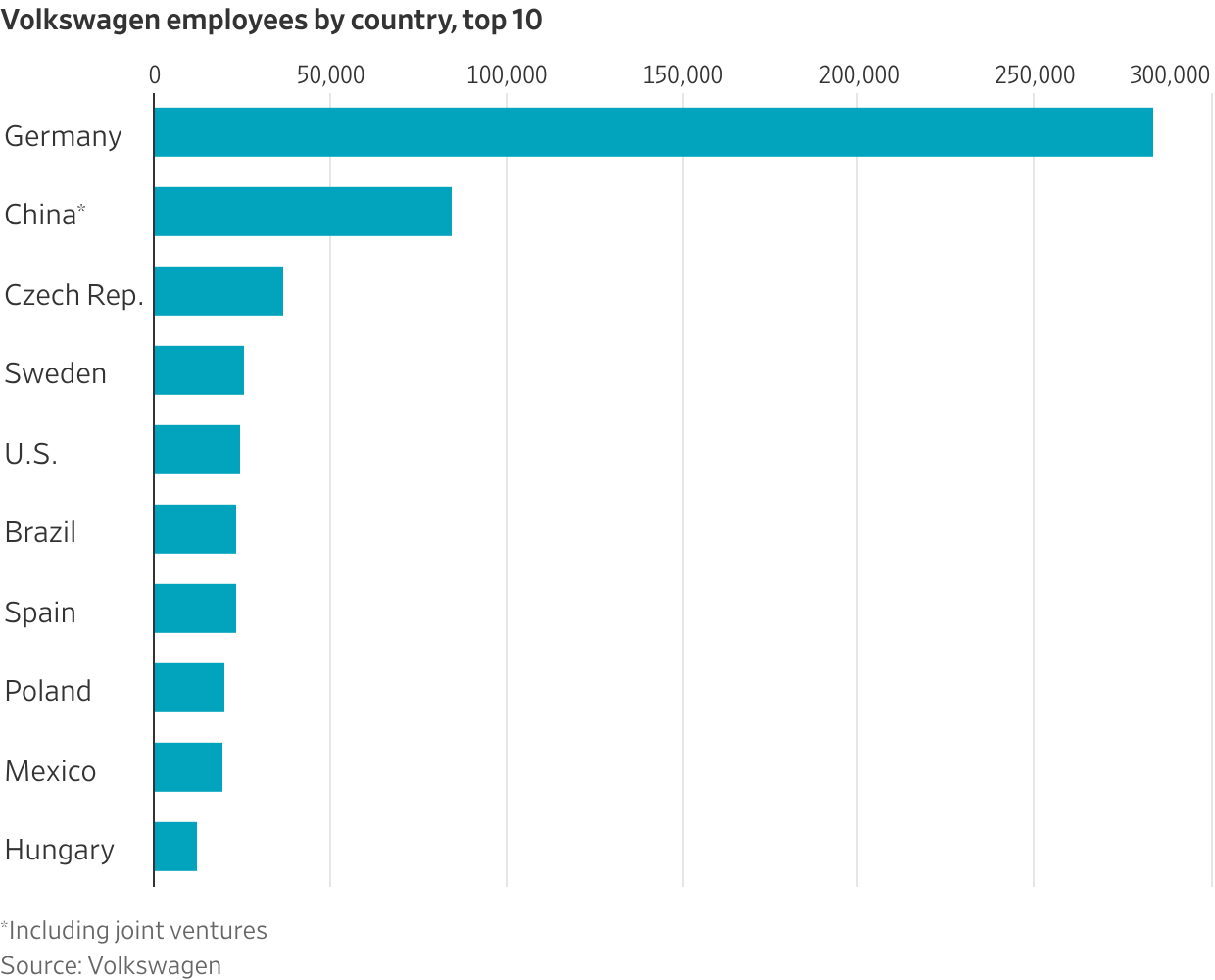
Its core operations, however, stayed in Germany. More than two in five employees worked there—a higher percentage than Japan-based workers at Toyota, which has a more decentralized model of control in its markets around the world.
As part of his drive to transfer power to the regions, Blume pressed ahead with a project to revive sport-utility-vehicle brand Scout Motors as an all-American EV, including with a $2 billion new factory in Blythewood, S.C.
He also cut the size of a Berlin-based subsidiary called Cariad, his predecessor’s project to create a German software giant that would power the computer brains at the heart of modern automobiles. He set up a California-based joint venture with U.S. electric-vehicle maker Rivian to take on tasks Cariad had struggled with.
There was a plan, too, to give the wider U.S. business more autonomy. Even after growth spurts at Audi and Porsche, the company’s market share in North America for years hadn’t moved above 5%.
One problem was that those luxury brands don’t make cars in the U.S. The company builds some Volkswagen-branded vehicles at a small factory in Tennessee, but has been criticized for selling tweaked versions of European products designed in Germany—seemingly never with enough cupholders for American families. Another negative was lingering suspicion over the 2015 diesel scandal, when Volkswagen admitted to cheating on U.S. emissions tests.
In China, Blume pushed a local-for-local strategy by investing billions of dollars in Chinese partners and a Chinese vehicle-development hub.
Alarm at home
Volkswagen’s works council started to sound the alarm when Blume and his team moved from investing abroad to restructuring core operations at home.
Two years ago, the bosses canceled a sacrosanct German jobs guarantee and argued that Volkswagen needed to take the unprecedented step of closing a German factory. It took almost four months for Blume’s team to negotiate a package of job cuts.
Initially outraged, union leaders eventually agreed to capacity and workforce cuts in exchange for a fresh jobs guarantee for the survivors. All the job losses relied on voluntary buyouts and early retirements running over five years.
Similar deals at Audi and Porsche brought German job losses negotiated by Blume’s team to 50,000, out of a global workforce of around 680,000 at the end of 2024. Still, that left it with many more employees than its rivals.
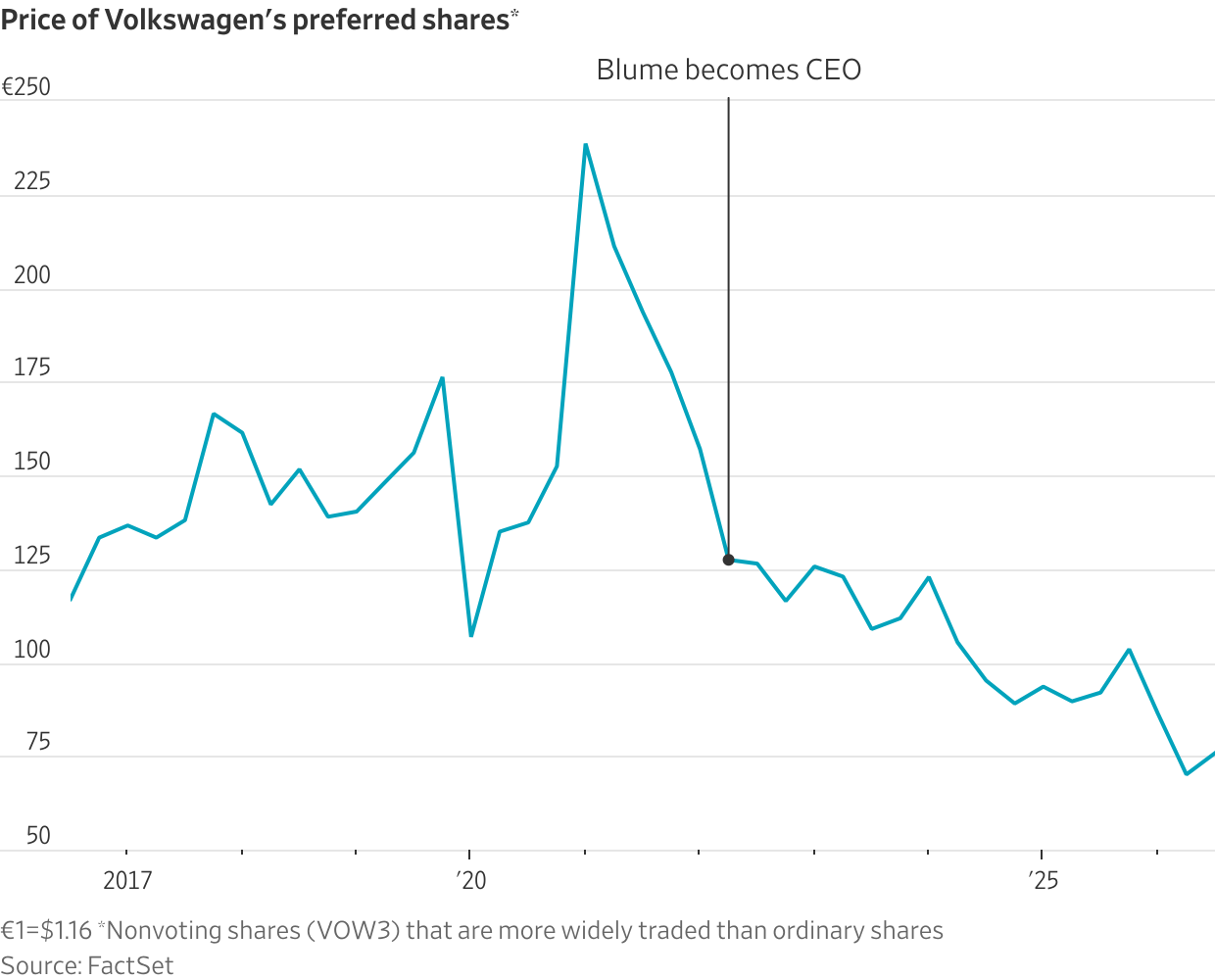
Last year, the company’s fortunes took another hit when the White House introduced auto tariffs, which Volkswagen has said would cost it almost $6 billion a year. That revived old talk of a U.S. factory for Audi, which hadn’t followed its rivals BMW and Mercedes-Benz in setting up a production base for SUVs in the American South.
The idea never gained traction. In January, Blume poured cold water on hopes of an American Audi factory, cut a longstanding target for growth in the U.S. market and told local media that what was needed instead was a “reduction in costs.”
As Blume’s cost-cutting plan took shape, one number was bound to rile up the union and local government: Another 50,000 job losses might be necessary to bring Volkswagen’s overhead costs into line with competitors, his team calculated.
Company town
The focus on overhead put the emphasis squarely on the company’s sprawling headquarters in Wolfsburg.
The original 1930s factory building in town bears marks of shrapnel from World War II, retained as a reminder of Volkswagen’s Nazi origins. Much of the money to build the plant came from funds confiscated from unions after they were banned by Hitler—the justification given by successive works council leaders for the argument that the company belongs as much to its workers as its shareholders and should be run accordingly.
These days, four in five of Volkswagen’s roughly 60,000 employees in Wolfsburg work behind desks rather than on the production lines that once turned out the Beetle and now make European bestsellers such as the VW Golf and Tiguan. It is those white-collar jobs that Blume now has in his sights.
“The next step will focus in particular on costs outside of direct vehicle production. That means management, group-level positions, central functions, development and sales,” he told employees at last week’s town hall in Wolfsburg, adding that around half the cost reduction would need to come from Germany.


Wolfsburg barely existed before the Volkswagen factory, and grew up to serve it. The company owns the city soccer team, helped found its art museum and pays a large share of the taxes that pay for local services. It employs many of Wolfsburg’s roughly 130,000 residents on terms negotiated by the works council, including service functions such as kitchen staff that have long been outsourced at other companies.
When Blume presented the new plan at the July supervisory-board meeting, the votes fell along predictable lines: Ten members linked to Volkswagen’s unions were against, as were two representatives of Lower Saxony. The seven votes cast in favor were by representatives of the Porsche-Piëch family and Qatari sovereign-wealth fund, according to someone familiar with the outcome.
The Porsches and their cousins the Piëchs—the descendants of Ferdinand Porsche, who designed the Beetle for Hitler and founded the Porsche sports-car business—own just over half of Volkswagen’s voting shares through their publicly traded holding company, Porsche SE.
While the stake gives them nominal control, the majority of supervisory-board seats held by union and government representatives requires them to regularly bargain with the other stakeholders.
Last month, the holding company’s CEO, Hans Dieter Pötsch, who also is chairman of Volkswagen’s supervisory board, expressed frustration. “The focus must now be solely on what is necessary from a business and economic perspective. All other considerations must be secondary,” he said when the company released second-quarter financial results.
Getting others to agree on that isn’t easy at a company that workers regard as a cooperative.
“We, too, have a right to the returns we make—like a dividend for the workforce,” Cavallo said during last week’s town hall with Blume in Wolfsburg. “That means domestic factories, good jobs and training here at home, job security and strong industrial regions.”
The government of Lower Saxony has sometimes positioned itself as a consensus-builder that can help other Volkswagen shareholders and workers see eye-to-eye.
If no compromise is reached, the two sides could return to negotiations, or Blume and his team could call an extraordinary general meeting of shareholders to vote on the most contentious parts of his agenda.
Under German corporate law, such proposals would normally need the support of 75% of shareholders. But Volkswagen is subject to a special “Volkswagen law” that raises the threshold to 80% for the most important decisions, potentially giving the state of Lower Saxony a blocking minority. Those legal complexities have never been put to the test.
Write to Stephen Wilmot at stephen.wilmot@wsj.com


