
 E-Paper



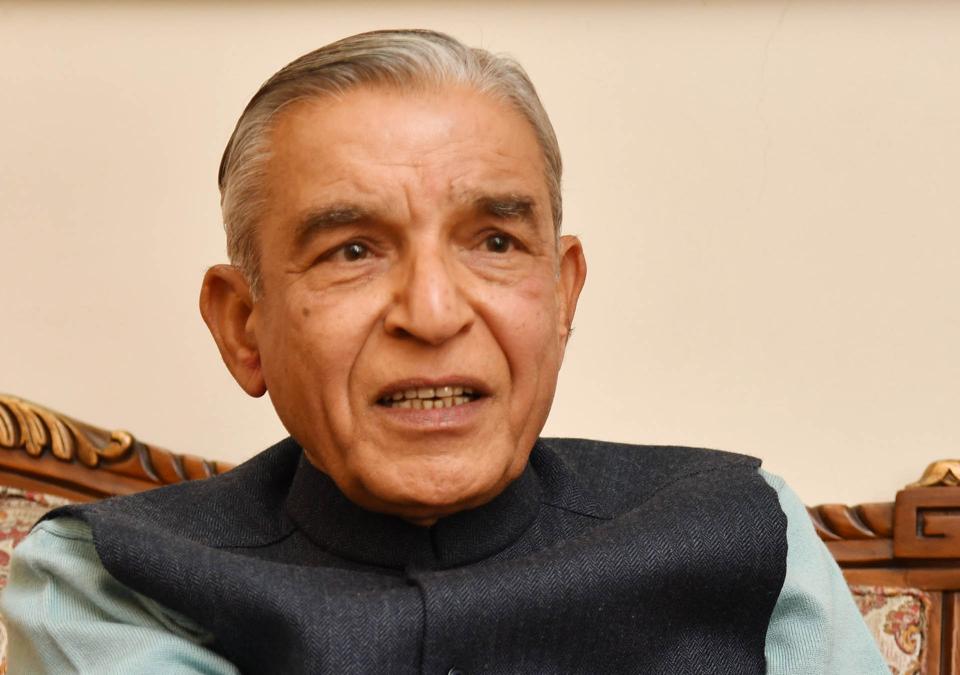
Guest column: Once Chandigarh MC had fixed deposits of ₹500 crore, writes Pawan Kumar Bansal
Chandigarh municipal corporation had hoped for a grant of ₹1,073 crore in the current year but it was allocated just ₹425 crore, which was slashed by 20%, leaving it unable to carry out basic functions

 Prefer HTon Google


The Seventy-fourth Amendment added significant provisions to the Constitution of India for enabling municipalities to function as vibrant tools of local self-government by transfer of funds, functions and functionaries to them. The State Finance Commission, inter-alia, reviews the financial position of the municipalities and makes recommendations to the governor for distribution, between the states and the municipalities, of the net proceeds of taxes, duties, tolls and fees leviable by the state, assignment of these to the municipalities and for provision of grants-in-aid from the Consolidated Fund of the State.
On the basis of recommendation the fourth Delhi Finance Commission, which also functions as such for UT Chandigarh, Chandigarh municipal corporation (MC) had hoped for a grant of ₹1,073 crore in the current year but was allocated a meagre ₹425 crore. This has been further slashed by 20% last month, bringing down the allocation to ₹340 crore. As a result, the MC, today, is unable even to undertake basic functions assigned to it under the Twelfth Schedule. There was a time when the Chandigarh MC had a fixed deposit of over ₹500 cr; in the last six years it has completely dried up.
Today, roads are in a state of utter disrepair with wide potholes seen all around. Expenditure on much-flaunted cycle tracks and walkways have gone down the drain with glaring missing links and perfusive tufts of grass and weeds taking over. Only a few sector parks with RWAs have a semblance of maintenance. The city has gone without bus queue shelters, which had been demolished because of some anonymous whimsical brainwave. Segregation, collection and disposal of garbage have failed to take off and the dumping ground at Dadumajra continues to rise higher and higher with the much acclaimed legacy mining only seeing its inauguration. Meanwhile the residents see no respite from the stench and health hazards.
Primary schools and health facilities transferred to the MC are a shambles. Its contractual employees have to do without salaries for months. In this situation, the UT administration is only content with issuing directions to the corporation, to raise commensurate funds for its activities and the latter has set up a committee to suggest means to augment its resources. Any such exercise only ends up suggesting levy of additional taxes and fees.
Residents already pay a one-time heavy road tax which entirely goes to the UT administration and the Consolidated Fund of India. The MC recently jacked up the house-tax besides levying sewerage cess at the rate of 30% of the water bill. Other recent levies include a cess of nine paise per unit of electricity consumed and imposition of cow cess and liquor cess.
Any further levy, by whatever name called, will increase financial burden on the citizens with no commensurate services offered to them. Any such adventurism is, therefore, better avoided. Payment of its dues as per the recommendation of the fourth Delhi Finance Commission, will provide MC adequate funds for performing its mandated functions.
It is time for the MC to monetise some of the land that vests with it. The land in Shivalik Enclave (originally falling in the revenue estate of Mauli Jagran) up to the Haryana border can be profitably used in the first instance for building a housing-cum-commercial complex. Besides generating substantial funds, it will beautify the area, which today presents an unseemly sight. Sufficient land is available at different locations for building at least three spacious modern marriage halls with adequate parking. Besides the land price, it will also rake in additional regular revenue.
Shops built in Mauli Jagran, AC Fish Market in Sector 43 and those under the second bridge in Sector-17 have remained unallotted all these years. Repeated failure of auctions highlights the urgency of bringing down their reserve prices. An idea mooted at the ‘resources committee’ to permit eateries to temporarily use spaces outside in front for lunch and dinner facilities and charge them appropriately for the same deserves a go-ahead signal. It will generate revenue and also add vive to the otherwise drab market scenes. Leasing out spaces for putting up advertisements and also permitting neon signs on shops can be another source of good revenue. An earlier scheme of handing over of greening and upkeep of road berms and roundabouts to private parties (under CSR) with the permission to display their names now seems to have been forgotten.
It is imperative that the UT administration or the MC do not resort to the easy way out of taxing the people further on specious grounds but to undertake an effective exercise to cut all wasteful expenditure like that on shoddy laying of the ubiquitous paver blocks and realise full potential of the existing assets to build a substantial corpus of funds to draw upon for the Corporation’s effective discharge of its functions.
pkbchd@gmail.com
(The writer is former Union minister and Lok Sabha MP from Chandigarh).


