
 E-Paper



Inspection smells scam at PDS ration godown, probe on
After complaints of under-supply of ration to depots under the subsidised public distribution system (PDS), and allegations that the held-back stock was being sold on the black market, an inspection found 300 excess bags of 50kg rice each at the government godown in Industrial Area, Phase 1, here on Tuesday.


After complaints of under-supply of ration to depots under the subsidised public distribution system (PDS), and allegations that the held-back stock was being sold on the black market, an inspection found 300 excess bags of 50kg rice each at the government godown in Industrial Area, Phase 1, here on Tuesday.
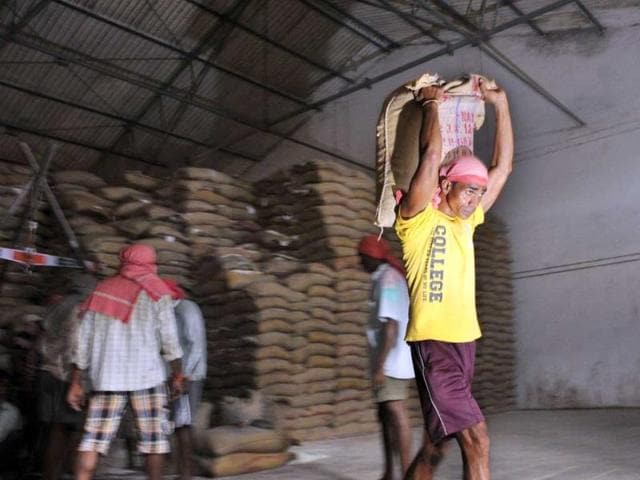
A detailed inquiry is now on to ascertain whether this was indeed going on for past several months, as has been alleged in a complaint by an RTI activist, who wants action immediately on the basis of the inspection.
The first complaint filed on March 30 had alleged that every month the officials and contractors were selling huge quantity of wheat, rice and sugar “by misappropriating stocks at the PR (provincial reserve) centre”.
“On the verbal direction of officials working at the PR centre, the labour contractor does not issue foodgrains to depots by proper weighing. Foodgrains are received in 50kg standard packing. But the contractor is effectively deducting one bag out of 50 from every depot holder; thus, saving huge quantity of foodgrains by misappropriating the actual billed quantity. Later, the godown officials sell this quantity on the black market,” it added.
It was further alleged that depot holders did not complain as they were party to putting the ration on the black market.
In the follow-up complaint to UT adviser and chief vigilance officer Vijay Kumar Dev on Tuesday, seven officials and contractors have been named for “misappropriation and diversion of foodgrains meant for poor ration card holders”, by Rajinder Kumar Gupta, RTI activist and convener of the NGO Khadya Suraksha Adhikar Manch.
Those named include Ashok Kumar, assistant food and supplies officer (AFSO), also the supervisory officer of the godown or PR centre.
It is the AFSO who found the 15,000 kg of excess rice — estimated to be worth over Rs 30 lakh in market, though supposed to be supplied at `3 a kg under PDS — and is now conducting further probe.
Though a vigilance probe has been sought, action so far has seen two inspections.
The first physical check of stock was reportedly conducted by Jai Ram Singh, district food and supplies officer, who too found about 300 bags of 50kg each of rice lying excess as compared to closing stock register. “But the DFSO neither issued any show-cause notice nor registered any FIR,” Gupta complained. The DFSO did not take HT’s calls on Tuesday to state his version.
On April 17, on the directions of Danish Ashraf, joint director, food and supplies, AFSO Ashok and two inspectors of the department conducted a second physical verification and found the same irregularity.
The joint director then transferred two data entry operators from the PR centre, while Ashwani Kumar, the inspector incharge of the centre, proceeded on leave with immediate effect.
Gupta said stricter action should have followed, though Ashraf, when contacted, stressed, “I have already sought a detailed report on the matter. Strict action will be taken once we find anything wrong.”


