
 E-Paper



'Bengaluru was not built for huge population': Karnataka Home Minister suggests expanding city to ease traffic
His remarks came after Deputy Chief Minister DK Shivakumar recently stated that "even God can't fix Bengaluru’s traffic issue."

 Prefer HTon Google


Karnataka Home Minister G Parameshwara acknowledged the severe infrastructure limitations in Bengaluru, stating that the city's roads and transport systems were not designed to accommodate its current population and vehicle density.
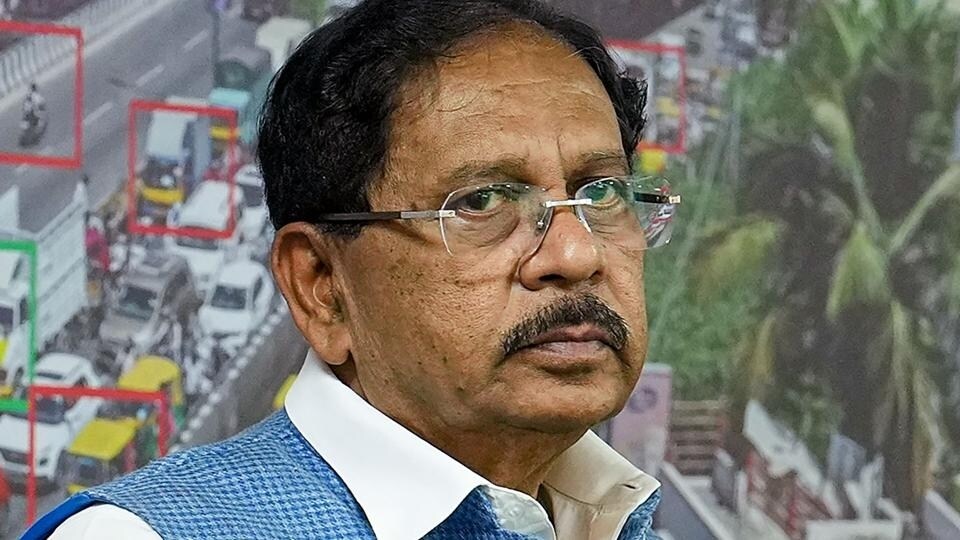
His remarks came after Deputy Chief Minister DK Shivakumar recently stated that "even God can't fix Bengaluru’s traffic issue."
Watch what he said here:
Speaking on the matter, Parameshwara told PTI, "Everybody knows Bengaluru lacks infrastructure. The city was not built for this kind of population and the sheer number of vehicles. We have 1.4 crore people and an equal number of vehicles. Without new infrastructure, traffic congestion will continue to be a major challenge, as it always has been."
He further added that the government is exploring various alternatives to tackle the crisis, with one potential solution being underground road networks.
"The minister in charge, DK Shivakumar, is considering multiple options. One of them is going underground, and in fact, we have already started work on that. However, it will take time and significant investment. Fixing Bengaluru’s traffic issues immediately is difficult, and it will take a little longer to see major improvements," he explained.
'Even god can't fix Bengaluru's traffic soon'
Earlier on Thursday, Karnataka Deputy Chief Minister DK Shivakumar said Bengaluru’s traffic woes are so severe that even divine intervention wouldn’t offer an immediate fix.
Speaking at the launch of Namma Raste, a guidebook on road design and maintenance, he said resolving the city's congestion issues would take at least three years.
Shivakumar assured that major projects like tunnel roads and elevated corridors would bring relief once completed. However, delays due to financial, technical, and land acquisition challenges have slowed progress.
"The tunnel road work should have started already, but we are facing hurdles. The 40-km double-decker road project is ready, and several other initiatives will take shape in the coming years. Additionally, 1,700 km of roads are being white-topped," he stated as per the publication.
(Also Read: Bengaluru power cut: Several areas to face outage on Sunday. Check full list here)


