
Sign in

In Ujjain, groups bar non-Hindus from entering Garba Pandal

Identity cards have been made mandatory for entry into Garba events in Ujjain, Bhopal, Indore, Narmadapuram and Khandwa districts, according to orders issued by the administration

Updated on: Sep 30, 2022, 21:21:32 IST
Share
Share via
  • facebook
  • twitter
  • linkedin
  • whatsapp
Copy link
  • copy link

Bhopal/Ujjain: Amid controversy over identity cards and police action against Muslims for entering Garba Pandal in Indore, a Garba organiser in Ujjain has barred entry of non-Hindus to the event.
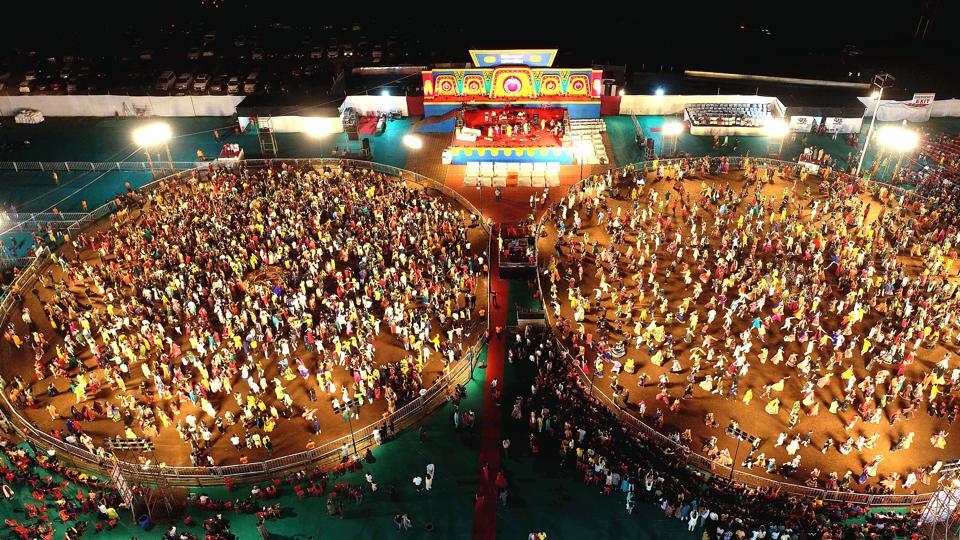
People perform Garba dance during the ongoing Navaratri festival in Bhopal on Thursday. (ANI/Representative Image)

“Non-Hindus come to Graba pandal to create nuisance and take photos of women. They don’t have any faith so we have decided to ban their entry to provide a safe environment for women,” said Bahadur Singh Rathore, president of Ujjain-based group, ‘Sanskriti Samiti’.

Identity cards have been made mandatory for entry into Garba events in Ujjain, Bhopal, Indore, Narmadapuram and Khandwa, according to orders issued by the administration.

In Indore, eight Muslim men were arrested for entering a Garba pandal on Tuesday.

On Thursday evening, 35-year-old Imran Khan was arrested from Palsikar colony for allegedly passing lewd comments on women. Khan was beaten by the organisers and taken to Ravji Bazar police station. Pritam Singh Thakur, town inspector Ravji Bazar, said he was arrested under section 151 (creating disturbance) of CrPC.

Madya Pradesh culture minister Usha Thakur has already demanded a ban on entry of non-Hindus to Garba events.

“Garba Pandals is becoming a medium for love-jihad. Garba is a matter of faith. We please Goddess Durga by dancing and those who have no faith in our goddess shouldn’t be allowed into the pandal,” the minister said.

Home minister Narottam Mishra said identity cards were made compulsory to keep away the anti-social elements and maintain law and order.
  • Shruti Tomar
    ABOUT THE AUTHOR
    Shruti Tomar

    I have spent over a decade chronicling Madhya Pradesh’s political and social landscape, covering politics, investigative journalism, crime, human interest, and government policy, blending sharp insight with ground‑level depth. I have closely tracked three assembly elections, three Lok Sabha elections, leadership transitions in MP while exposing governance lapses, tender irregularities, and flawed policy rollouts. My reports have revealed gaps in the Cheetah project, irregularities in medical education, rigging in recruitment exams, and loopholes in policy implementation. In crime reporting, I have moved beyond FIRs to map systemic patterns — from organised crime networks and gender‑based violence to custodial accountability — balancing urgency with sensitivity. My journalism is defined by a commitment to human interest. I have profiled the marginalised Bancchda community, documented atrocities against tribal groups, and highlighted efforts to preserve their culture through heritage liquor and revival of spiritual practices. I have reported on farmers struggling with failed MSP promises, giving voice to those often reduced to statistics in policy files. Passionate about field reporting, I have reported on rampant sand mining in Chambal and Narmada, pharmaceutical companies supplying medicines under altered names, the dire condition of schools and colleges, the plight of commercial sex workers, and skewed sex ratios in specific districts. Beyond deadlines, and as HT’s state correspondent and assistant editor in Madhya Pradesh, I engage with ministers, farmers, students, and activists, believing the best policy stories begin with a single human voice. A postgraduate in Journalism and Mass Communication, I also hold a diploma in sports journalism.Read More