
 E-Paper



Air quality takes a hit as farm fires rage in Punjab
In this kharif season, Sangrur tops the chart with a maximum of 1,507 cases of stubble burning, which is 20% of the total 7,864 cases reported in the state to date.Last year too, Sangrur reported the highest 5,613 cases in the state.

 Prefer HTon Google


Sangrur district continued to top the charts, reporting 50% of the total farm fire cases reported in the state on Friday. Of the total 238 crop residue burning cases on Friday, Sangrur reported 119 cases.
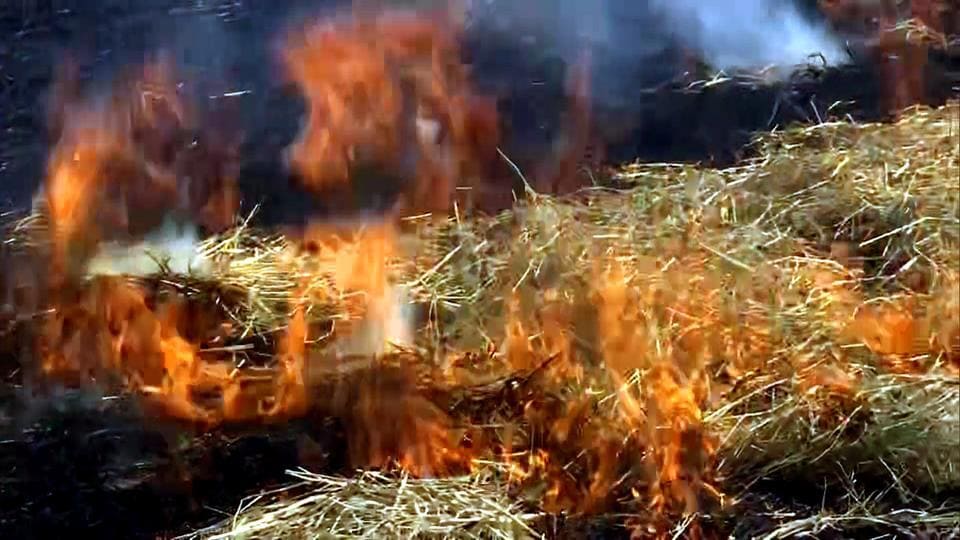
In this kharif season, Sangrur tops the chart with a maximum of 1,507 cases of stubble burning, which is 20% of the total 7,864 cases reported in the state to date.
Last year too, Sangrur reported the highest 5,613 cases in the state.
Commission for Air Quality Management (CAQM) had already issued notices on November 11 to deputy commissioners and senior superintendents of police in Sangrur and Ferozepur, directing them to send a detailed ‘explanation’ on the surge in farm fires in these districts to the commission.
As per available information, the Sangrur district administration has imposed environmental compensation of ₹9.65 lakh in 294 cases, of which ₹2.87 lakh has already been recovered. As many as 424 FIRs under section 223 (disobedience to order duly promulgated by public servant) of Bharatiya Nyaya Sanhita (BNS) have been registered so far, while the red entries were made in 294 cases to date.
Muktsar recorded 23 cases of stubble burning on Friday followed by 21 in Patiala and 20 each in Bathinda and Mansa.
One of the officials, who did not wish to be named, said despite taking stringent action farmers in these red hotspot districts have shown reluctance to stop burning stubble and adopt in-situ and ex-situ measures.
“Even though the cases have been registered, we are sceptical that these will be taken to a logical conclusion as the farmer unions in the state have reacted strongly and condemned the action against the farmers. The farm unions’ strong base is another reason behind farmers reluctance in adopting scientific techniques to manage stubble,” the official said.
Manjit Singh, an activist of BKU (Doaba), said the scores of farmers have no logistics and finances to manage stubble. “Instead of providing required machinery and other financial backing to the farmers to tackle stubble, the state government had resorted to registration of FIRs and making red entries,” he said.
He added the central government should get serious and provide concrete alternatives mainly coming up with minimum support price (MSP) and assured marketing for alternative crops.
Meanwhile, Rupnagar district remained the most polluted with an air quality index of 248, Jalandhar 247, Khanna 219, Amritsar 217 and Mandi Gobindgarh 212, all in the poor category. Bathinda recorded AQI in the moderate category with 148 and 196 each in Ludhiana and Patiala.
Air quality index
Rupnagar 248,
Jalandhar 247,
Khanna 219,
Amritsar 217,
Mandi Gobindgarh 212
Bathinda 148
Ludhiana 196
Patiala 196


