
 E-Paper



Amritsar sees worst air quality in state post Diwali
On October 30, a day before the Diwali festival, the air quality in these areas remained in ‘moderate’ category with Amritsar reporting AQI of 186, followed by 153 in Mandi Gobindgarh, 149 in Patiala, 132 in Ludhiana, 127 in Bathinda, 123 in Jalandhar and 111 in Khanna.

 Prefer HTon Google


The air quality across the state worsened due to bursting of crackers amid Diwali celebrations on Thursday with Amritsar remaining at the top of the pollution chart with an Air Quality Index (AQI) level of 335. Last year, the pollution level (average AQI 207) recorded on November 12 post the festival was less than this year.
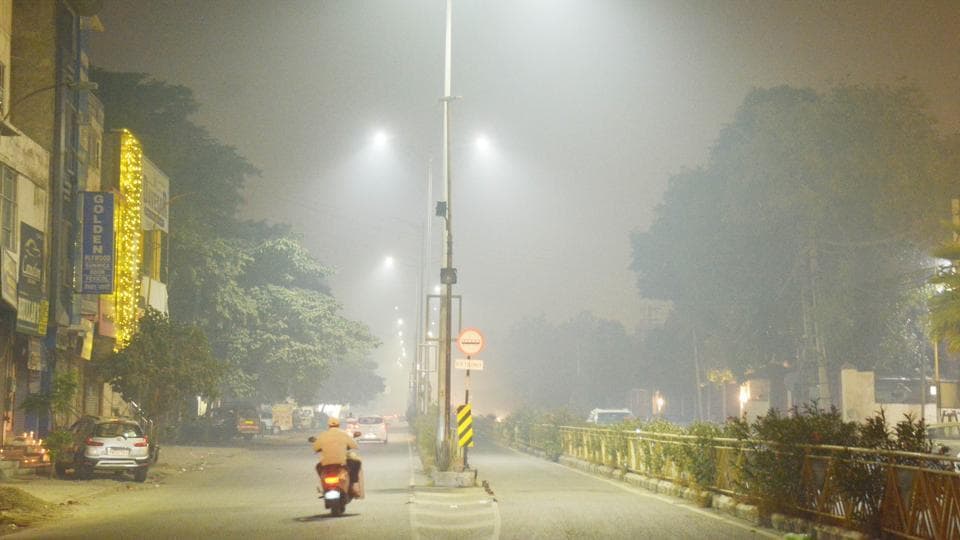
The average AQI of Punjab on Diwali has remained 258.5 since 2021. It was 207 last year, 224 in 2022 and 268 in 2021. As per the data from the Central Pollution Control Board (CPCB) on Friday morning, Amritsar had an AQI level of 335, which falls in the ‘very poor’ bracket, followed by 330 in Mandi Gobindgarh and 302 in Khanna. Patiala witnessed an AQI of 281, while Jalandhar reported 250 followed by Ludhiana (223), all in the ‘poor’ category. The air quality in Bathinda remained at moderate level of 113.
On October 30, a day before the Diwali festival, the air quality in these areas remained in ‘moderate’ category with Amritsar reporting AQI of 186, followed by 153 in Mandi Gobindgarh, 149 in Patiala, 132 in Ludhiana, 127 in Bathinda, 123 in Jalandhar and 111 in Khanna.
Punjab Pollution Control Board chairman Adarsh Pal Vig said the process of calculating and monitoring the air quality levels is still on as the Diwali festival has been extended by one day this year. “As per the ground situation, there were no serious reports of thick smog caused due to bursting of crackers. However, we have a certain procedure to come up with average figures related to the AQI to assess pollution levels in and around the Diwali festival. Usually, the AQI data of 15 days is assessed,” Vig said.
He added that people were strictly directed to follow the instructions related to bursting of green crackers within the stipulated time (8 pm to 10 pm).
Last year, a day after Diwali, Bathinda remained the most polluted with 338 AQI level, followed by Ludhiana (258), Jalandhar (252), Amritsar (246), Patiala (228), Khanna (205) and Mandi Gobindgarh (162).
An AQI between zero and 50 is considered ‘good’, 51 and 100 ‘satisfactory’, 101 and 200 ‘moderate’, 201 and 300 ‘poor’, 301 and 400 ‘very poor’, 401 and 450 ‘severe’ and above 450 ‘severe plus’.


