
 E-Paper


Bhavey Nagpal is a staff correspondent based at Karnal. He reports on crime, politics, agriculture, health, railways and migration for northern Haryana districts. He has a special interest for heritage and human interest stories. He has reported extensively on farmer's agitation against the agricultural laws.
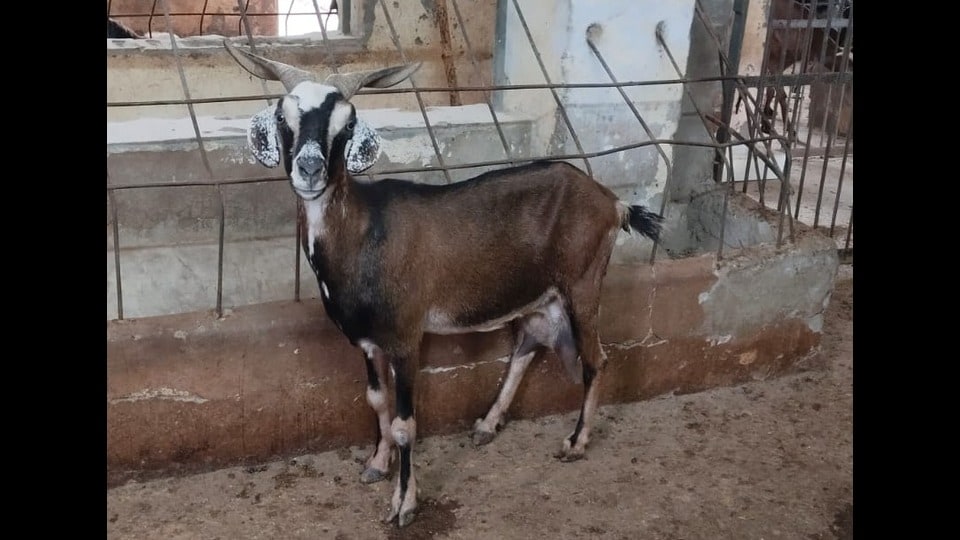
For the first time: Karnal’s NDRI dairy mela to feature high-yielding goats
Director of the institute Dheer Singh said the scientists started an extensive research in goat breeding in 1971 and developed the two cross-bred goat breeds in 2006
Published on: Nov 26, 2026, 07:41:40 IST


Share via
Copy link
The three-day dairy mela organised annually by the National Dairy Research Institute (NDRI), Karnal, will showcase goats for the first time this season starting Thursday to promote non-bovine milk among farmers.
The national dairy mela and agriculture expo, popular among farmers across Punjab, Haryana, Uttar Pradesh, Delhi and Rajasthan, usually features cattle of various varieties.
Officials said the decision to include goats followed requests from farmers and aligned with the Indian Council of Agricultural Research (ICAR)’s efforts to popularise non-bovine milk among the public.
Director of the institute Dheer Singh said the scientists started an extensive research in goat breeding in 1971 and developed the two crossbred goat breeds in 2006.
“The indigenous Beetal goat of Punjab was crossed with the Saanen breed of Switzerland and the Alpine breed of North America. Saanen × Beetal is the preferred cross for commercial dairy goat farming in Punjab and Haryana, with expectations of up to 3–4 litres/day under good management, while Alpine × Beetal offers a slightly more balanced option — good milk gains with strong adaptability and reproduction efficiency,” he said.
“Both developed breeds are high-yielding, producing around 400–450 litres of milk during a lactation period of approximately 150 days, compared with indigenous breeds, which yield between 150 and 170 litres per lactation. Crossbreds typically show better disease resistance and adaptability than pure exotic breeds, which can struggle with Indian heat and parasites. For north Haryana-region farmers, these crosses are the institute’s flagship recommendation for upgrading native goat milk production,” he said.
The director said goat milk has therapeutic values and is easily digestible due to less fat molecules, offering considerable nutritional and health benefits. NDRI will register these breeds to secure national recognition.
“The milk contains a large amount of functionally active lipids, lactose, immunoglobulin, various peptides, nucleotides, oligosaccharides and metabolites. Despite having unique microbial properties, these species have not received much attention over the years. However, we have developed a few products made from non-bovine milk and ICAR is also leading the effort to popularise this milk,” Singh told the HT.
Head of dairy extension and organising secretary, Gopal Sankhala said, “To familiarise farmers with these breeds, the institute will showcase the varieties at the mela scheduled to be held from November 26 to 28.”
He said emerging technologies such as green ammonia as a future alternative for agriculture at the farm level will be presented to farmers. Usage of Artificial Intelligence, safe pesticide use, natural farming, and modern dairy management will also be brought together on a single platform to prepare farmers for the agriculture of the future.


