
 E-Paper



Guest Column | ‘Fearless Governance’ is about ‘We’, not ‘Me’
‘Fearless Governance’ is about people and their basic needs, which are expected to be provided by those in governance — appointed or elected — to serve fearlessly

 Prefer HTon Google


Voters elect the persons they want to be governed by. The majority then forms the government. The administration recruits, selects and appoints its public servants for administering them. The elected and the recruited, therefore, govern and help the country.
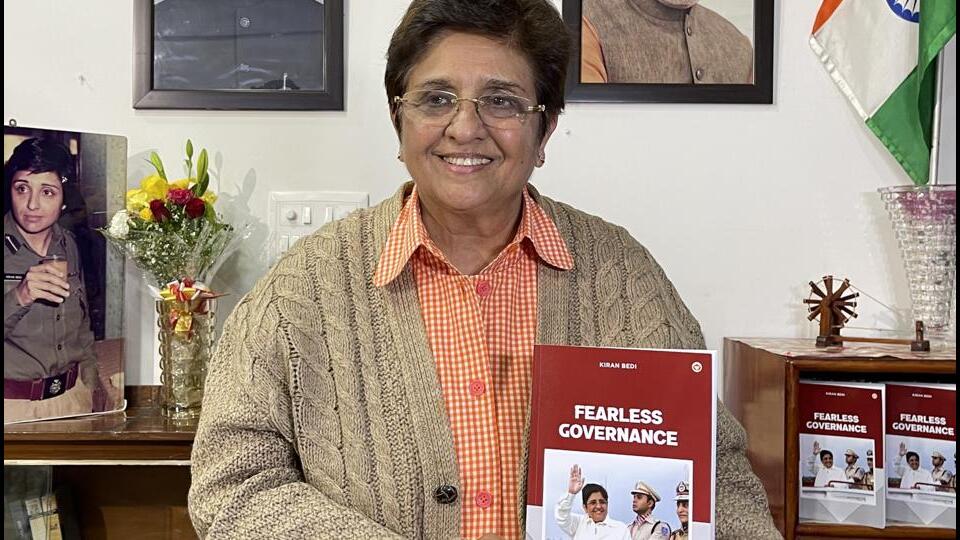
Thanks to Prime Minister Narendra Modi, I got the opportunity to govern, administer and serve Puducherry as the Lieutenant Governor for nearly five years. His single instruction was to ensure financial prudence in administering the Union Territory. He said, “Kiran ji wahan ja kar paise ka dhyan rakhna.”And I did it against all herculean odds.
The financial powers are with the Lt Governor, as per the rules, yet no political effort was spared to hound the officers advising financial prudence. The office of the Lt Governor was taken to the highest courts of the land to obstruct the exercise of correct use of public money. The legal battles cost energy and money.
A thoroughly corrupt system was in place. Financial irregularities were enormous. The defunct state public sector companies were being given financial grants. Employees’ provident fund was abused to pay and meet office expenses; audit objections were pending compliance for years. The Cooperative Bank gave away loans without due securities, and to the persons of influence. I saw hundreds of excess recruitments, all as patronage.
The book “Fearless Governance” is about “We”, not “Me”. It is an outcry for conscientious service and leadership. It is about people and their basic needs, which are expected to be provided by those in governance — appointed or elected — to serve fearlessly.
It’s about the people, loving and respecting what officials ought to be doing. It’s about puncturing vested interests that corrode the vitals of administration.
A lot depends on financial prudence. How public money is prioritised and spent? Not about transactional sops announced without provisioning for them. It is like robbing Peter to pay Paul.
It is about opening up the doors and the systems. It’s about visible leadership and authentic communication. It’s about placing on the centre stage the ordinary person who has no powerful connections, and giving people the faith that one is for all, always. It’s also about the miracle of teamwork. Trust is what the country needs the most.
Government is one organic whole
The government is one organic whole. Constant upskilling and retraining is the need of the hour, always. Governance is about exercising responsibility for the present and future needs to provide quality of life. It’s about their responsible living and doing. It’s about clean living, about giving and not taking. It’s about joy and celebration, promoting openness and have no secrets.
I have demystified governance through sustained communication and regular people engagement to remain responsive. The book explains the purpose of one’s power and position as it is a product of when I took up the responsibility of Puducherry as its Lt Governor.
I saw a closed Raj Niwas. Not accessible at all. Not celebrating anything. An isolated palace with an entourage of personal staff for maximum comfort. But very rich in flora and fauna. Secretariat staff, too, was lean. To do minimum, perhaps. No practice of schedules of meeting with a periodicity. Also had occasional dinners with select staff and all the generosity of cuisine.
I also did not see websites of any department updated, barring an exception. The Raj Niwas website was just for the sake of it.
The book fleshed out the ideas in seven parts. The first is about the call, the calling and the strategy. It gives an insight into how I had to prepare myself for this onerous responsibility. When I began, I did not know any officer from my past postings. I also did not know Tamil. Only seniors and a few knew how to converse in English. Hence communication was limited. The position and gender kept most at bay.
Now, comes the challenge. How do we clean up the city? How do we put systems in place where an ordinary person is heard? How do we track grievances? What is the role of the Lt Governor as the administrator? How should we open up the Raj Niwas? What about visitors wanting to see this iconic building of Puducherry? What about the mafias in medical seat sale and land grabbing of senior citizens, too weak to defend or away to France and unable to defend? What about the colossal funds going for no work done, just because unable to take politically decisions?
Who would bell the cats? At the top of it, questioning the legal powers, as laid down under the law, I was before the high courts and the Supreme Court.
Those not comfortable with my ways to set the things right held press conferences to misrepresent and misinform the people, and even challenge the office of Lt Governor. The book explains how this was countered, making the tenure one of trials and tribulations, yet making amendments to the broken-down systems by putting systems that started to deliver on autopilot.
The challenge of Covid-19 finds a particular chapter in the book on how only the intervention of the Government of India rescued the day. In the end, the UT got the highest ratings in governance. What if we all had worked together in a more significant interest? Puducherry could have been a model for emulation.
Fearless leadership practices which made the change possible are for future generations to learn from. These measures are suitable for private and government sectors, as Ms Indra Nooyi said at the book launch. She termed it “a blueprint for Good Governance”.
For me, governing and administering is all about fearless, duty conscious, and patriotic governance — by the elected and the appointed — for a developed India.
kiranbedioffice@gmail.com
(Views expressed are her personal)


